Mastering the Details: Finding the Best Black & Grey Realism Tattoo Artist in Vaughan/Toronto
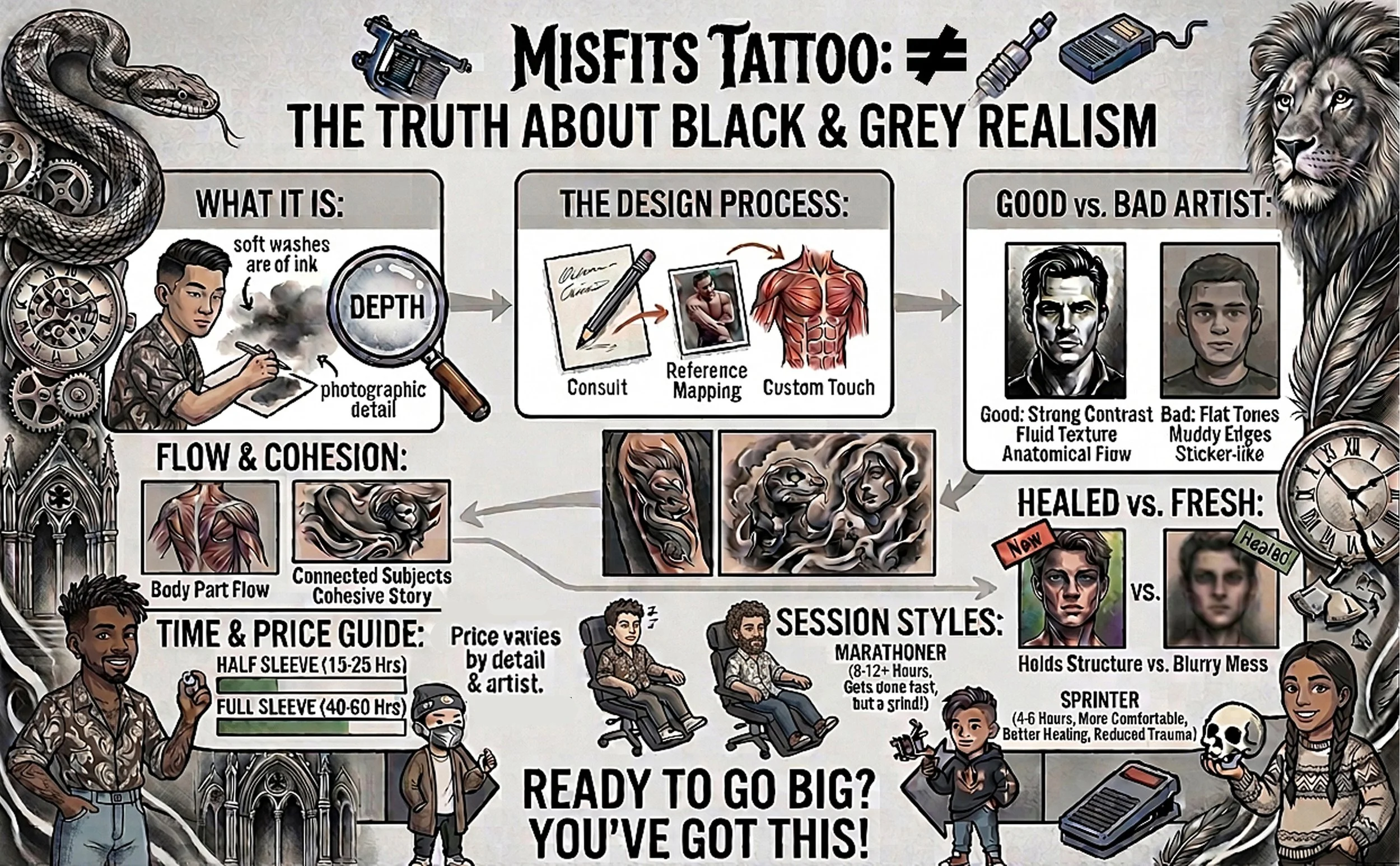
So, you’ve decided to go big. You want a piece that looks like it could breathe, a portrait that stares back, or a landscape so detailed you can almost smell the pine. You’re looking for black and grey realism, the heavy hitter of the tattoo world.
But here’s the truth: realism is unforgiving. There’s no thick traditional outline to hide behind. If the artist misses the mark, you aren’t just left with a bad tattoo—you’re left with a permanent smudge. If you’re hunting for the best tattoo shop in Vaughan/Toronto to handle your vision, here is everything you need to know before you sit in the chair.
What Actually Is Black & Grey Realism?
In the simplest terms, it’s fine art on skin. Using only black ink and varying degrees of water to create "washes," a realism tattoo artist in Vaughan/Toronto creates depth, 3D effects, and photographic detail. It’s about soft transitions and perfect contrast rather than bold lines.
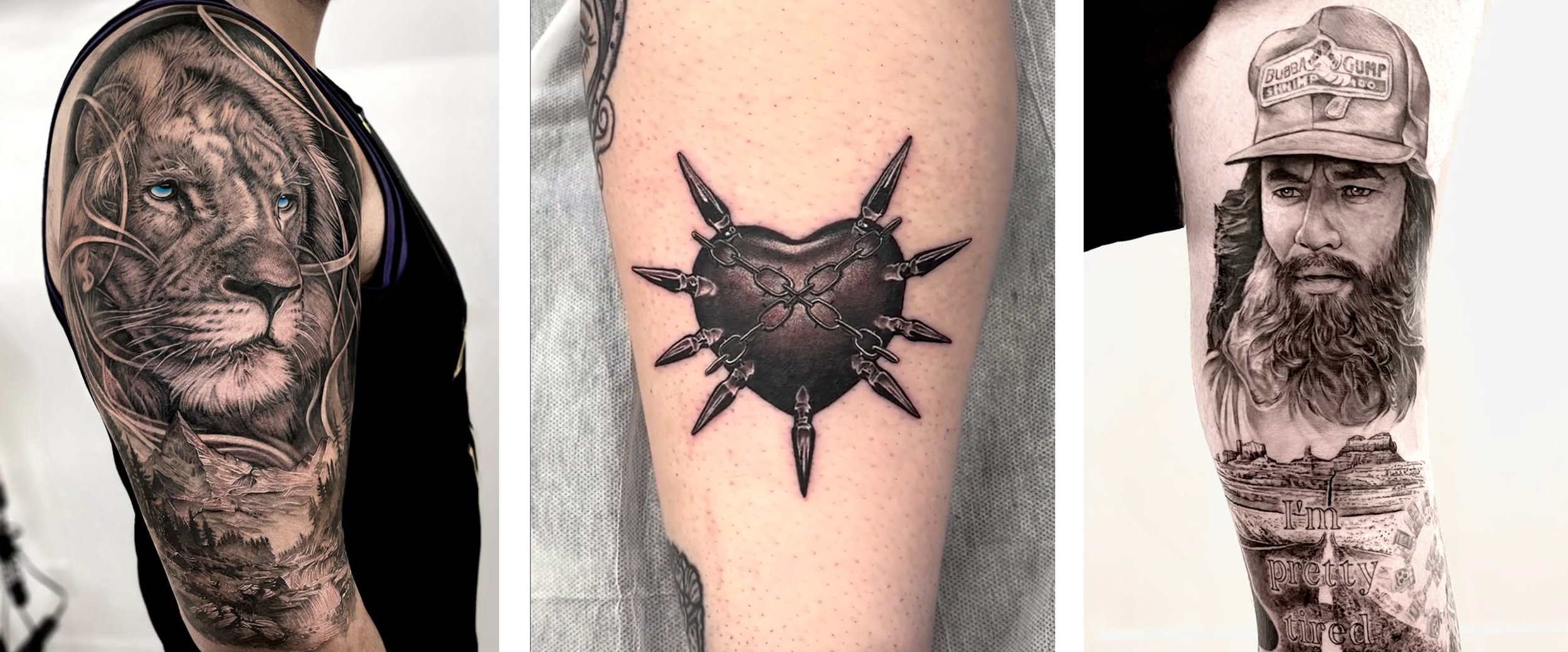
The Design Process: From Reference to Skin
Realism starts with a high-quality reference photo. Your artist isn't just "drawing", they are mapping out light and shadow.
The Consult: You bring the idea and plenty of reference photos; we bring the technical eye.
The Mapping: We look at how the muscles move. A face on a forearm needs to sit perfectly so it doesn't "warp" when you twist your wrist.
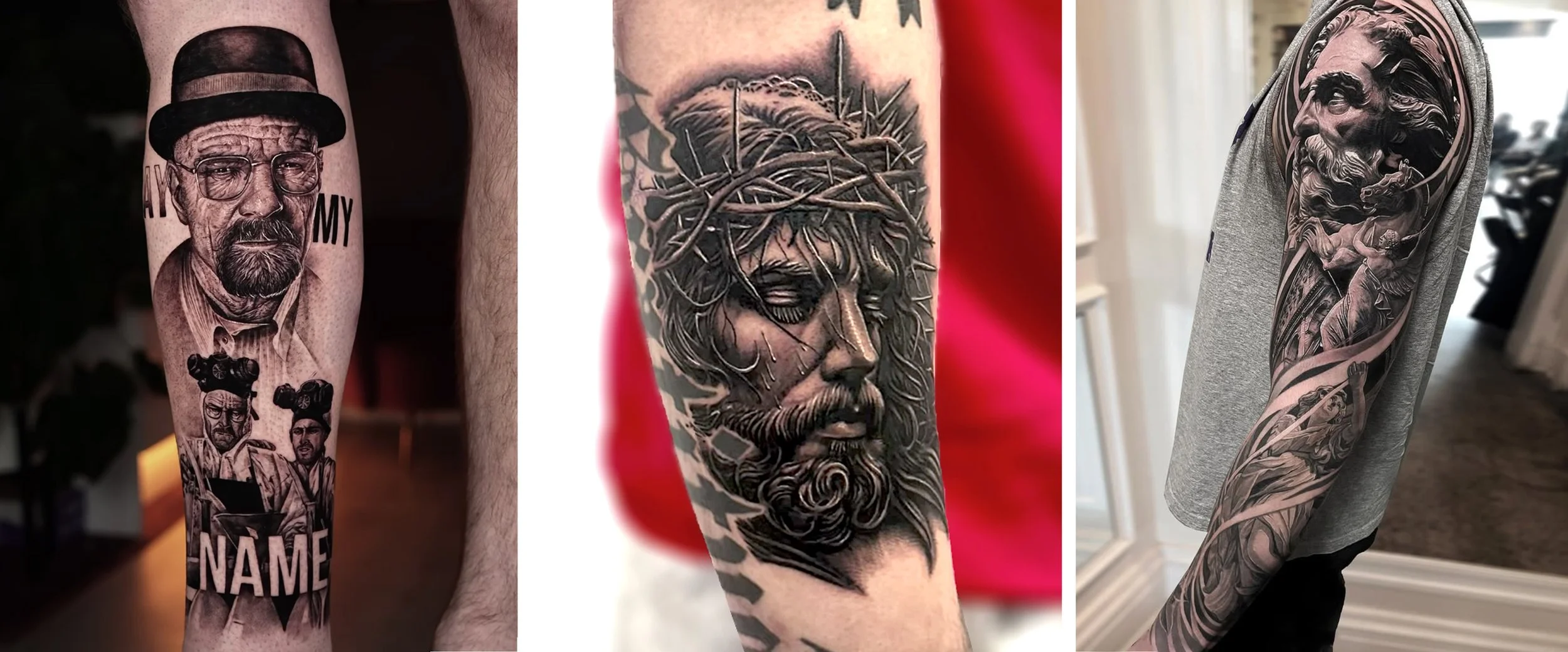
The Custom Touch: A great artist won't just copy a Pinterest photo—they’ll add custom textures, lighting, background and design elements to make it uniquely yours.
The Design: You’ll typically receive a design from the artist a few days before your actual appointment. Now’s the chance to communicate with your artist and make any changes and edits to the design before the actual tattoo day!
Pro-Tip: How to Tell a Good Artist from a Bad One
Don't just look at their best work; look at their consistency. Realism isn't just about copying a photo; it’s about engineering a piece of art that lives on a moving human canvas.
Contrast: Does the tattoo have deep blacks and bright skin-gaps/whites? Or does it look like a flat, grey cloud?
Textures: Can you tell the difference between the texture of hair, fur, and skin? Realism is all about details.
Anatomical Flow: A top-tier artist doesn't just "slap" a stencil on. They look at how your muscles wrap and move. A face on a forearm should stay centered when you twist your wrist, a sleeve should follow the natural "S" curves of your arm. If the tattoo looks like a flat sticker that ignores your body's shape, it’s a red flag.
Cohesion & Transitions: This is the "secret sauce." Bad artists just "collage" images together with awkward gaps or messy smoke. A pro uses background elements—like lighting, depth of field, or architectural textures—to melt different subjects together so they feel like one single, epic story rather than five random pictures.
Proportions: If it’s a portrait, do the eyes line up? Does the face look warped on that area of the body? If the geometry is off by a hair, the whole piece fails.
The "Healed vs. Fresh" Trap
Every tattoo looks incredible under studio lights while it’s fresh and saturated. But black and grey realism in Vaughan/Toronto is won or lost in the healing process.
Fresh: High contrast, sharp whites, looks "popping."
Healed: The ink settles under the skin. A "bad" realism tattoo often disappears or becomes a blurry mess after six months because the artist didn't use enough dark tones to hold the structure. Ask to see healed photos!
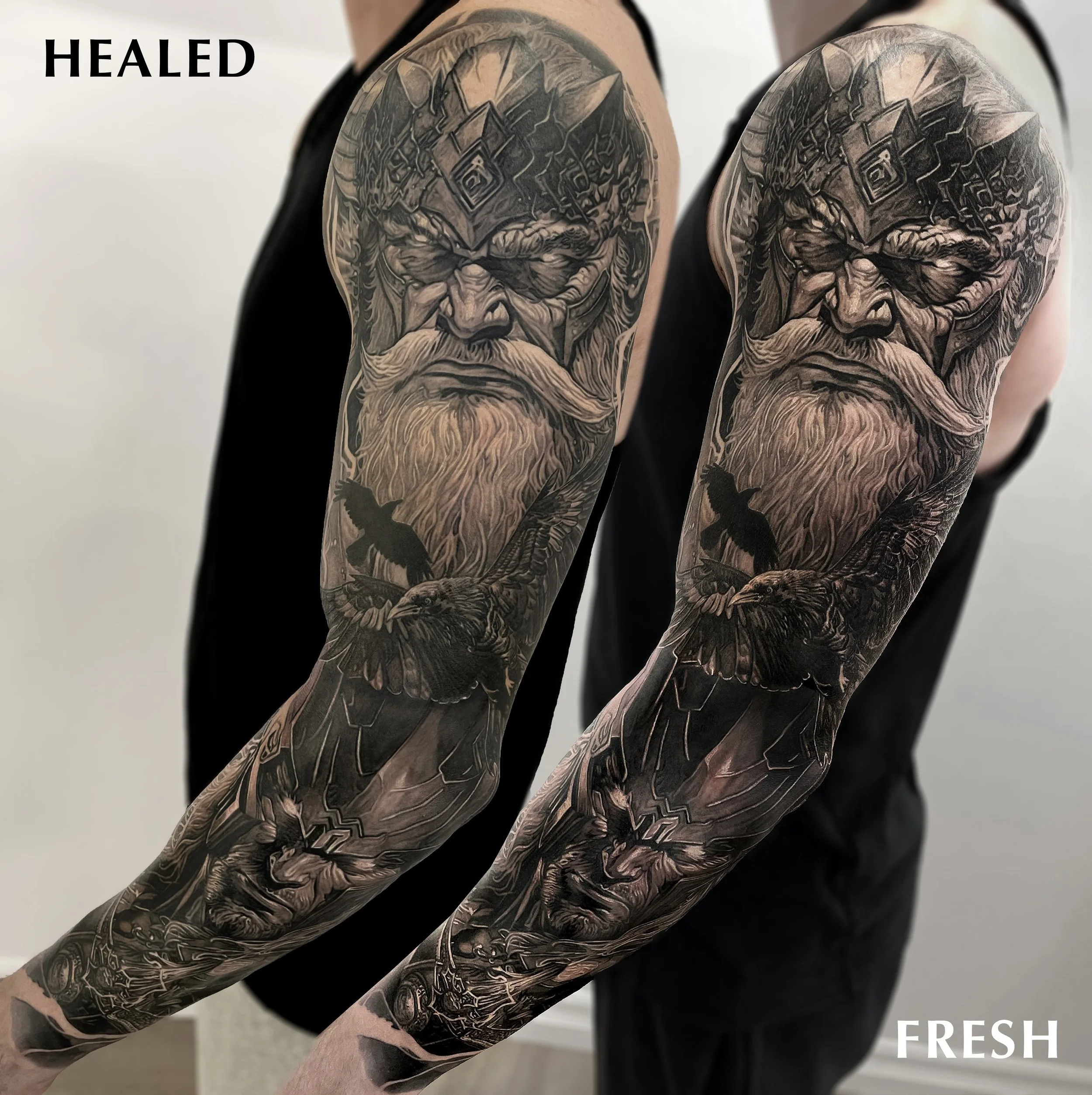
Healed vs. Fresh Norse Mythology sleeve done by our artist— Martin
Why Your Shop Choice Matters
Realism sessions are long. You’re going to be there for a while. You need a shop that’s sterile (obviously), but also one where the vibe doesn't suck. Choosing the right shop means finding a place that understands the technical precision required for this style.
Quality over Speed: Time
Quality isn't cheap, and speed is the enemy of detail. How long does it take?
Half Sleeve: Generally 15–25 hours (2 to 5 full-day sessions).
Full Sleeve: Expect 40–60+ hours.
Note: These are estimates. If you want "micro-realism" (insane detail in a small space) or have skin that takes ink differently, it might take longer. We don't rush perfection.
Finding Your Rhythm: Session Styles
Every artist—and every client—has a different "pain tolerance" and workflow.
The Marathoners: Some artists prefer full-day sessions (8-12+ hours). This is great for getting large chunks of a sleeve done quickly, but it’s a mental and physical grind for the client.
The Sprinters: Other artists prefer shorter sessions (4-6 hours). This keeps the client more comfortable, reduces skin trauma, and allows for better healing between sittings.
There’s no "right" way—it’s all about what works for your body and your artist’s process.
Ready to start your realism journey? Whether it’s a tribute piece or a religious sleeve, come see why Misfits Tattoo the go-to for black and grey realism tattoos in Vaughan/Toronto.
[Explore our Artists & Book Your Consultation Here]