Is Your New Tattoo Infected? How to Tell and What to Do Next
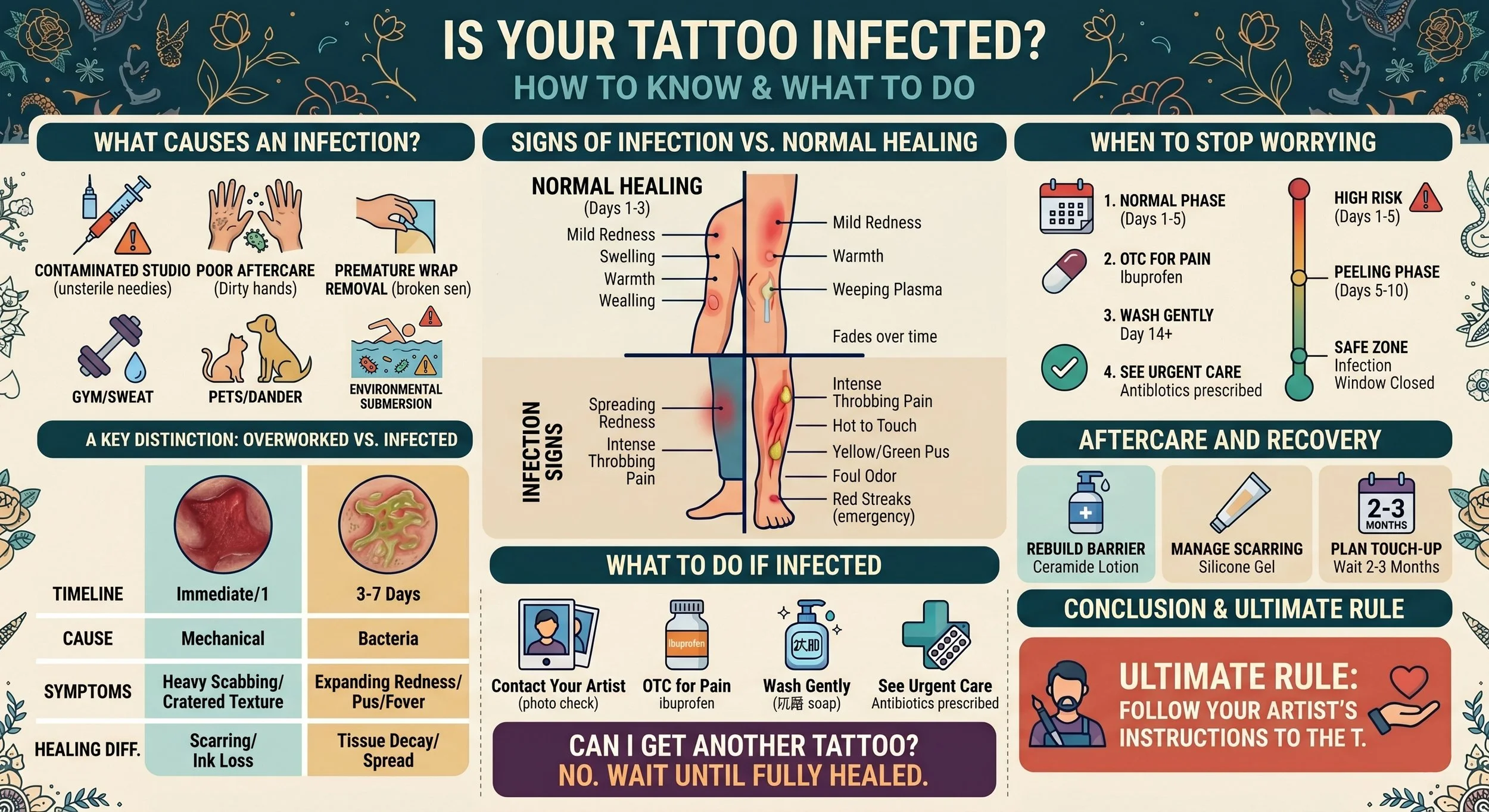
Getting a new tattoo is an investment in your skin and your personal collection. But because a fresh tattoo is essentially an open wound, the healing phase requires strict attention. While a baseline level of redness, swelling, and tenderness is completely normal for the first few days, knowing where normal healing ends and an infection begins is crucial.
This guide breaks down the science of tattoo infections, how to spot the warning signs early, and exactly how to handle it.
What is a Tattoo Infection?
An infection occurs when harmful microbes—usually bacteria like Staphylococcus aureus or Streptococcus—penetrate the dermis (the deeper layer of skin where tattoo ink sits) and begin to multiply.
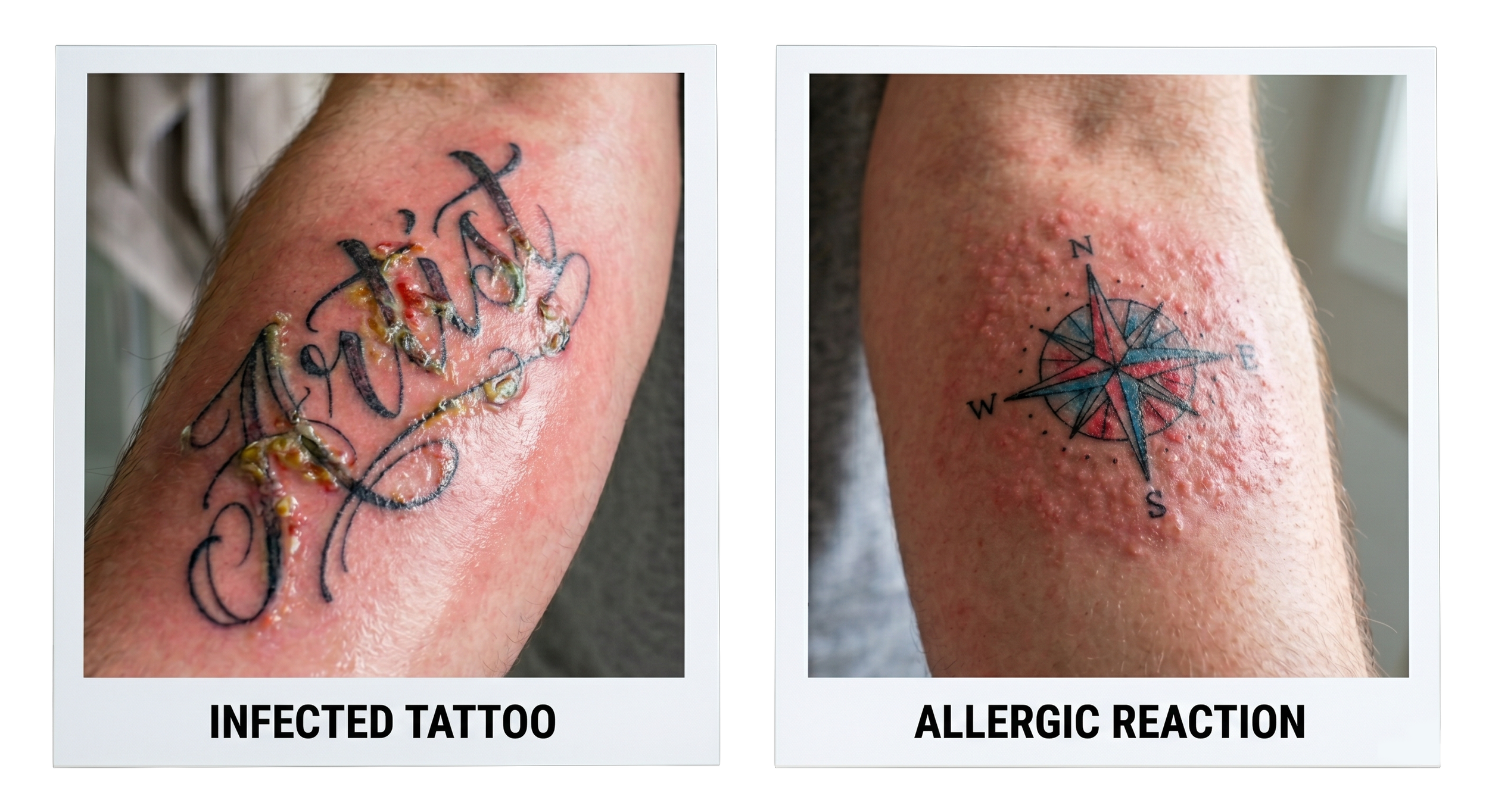
It is important to distinguish an infection from a standard allergic reaction. An allergic reaction is typically a response to a specific pigment (most commonly red ink) and causes localized itching, bumps, or raised skin without systemic symptoms like a fever. An infection, however, is an active bacterial assault on your immune system that will aggressively worsen without intervention.
What Causes a Tattoo to Get Infected?
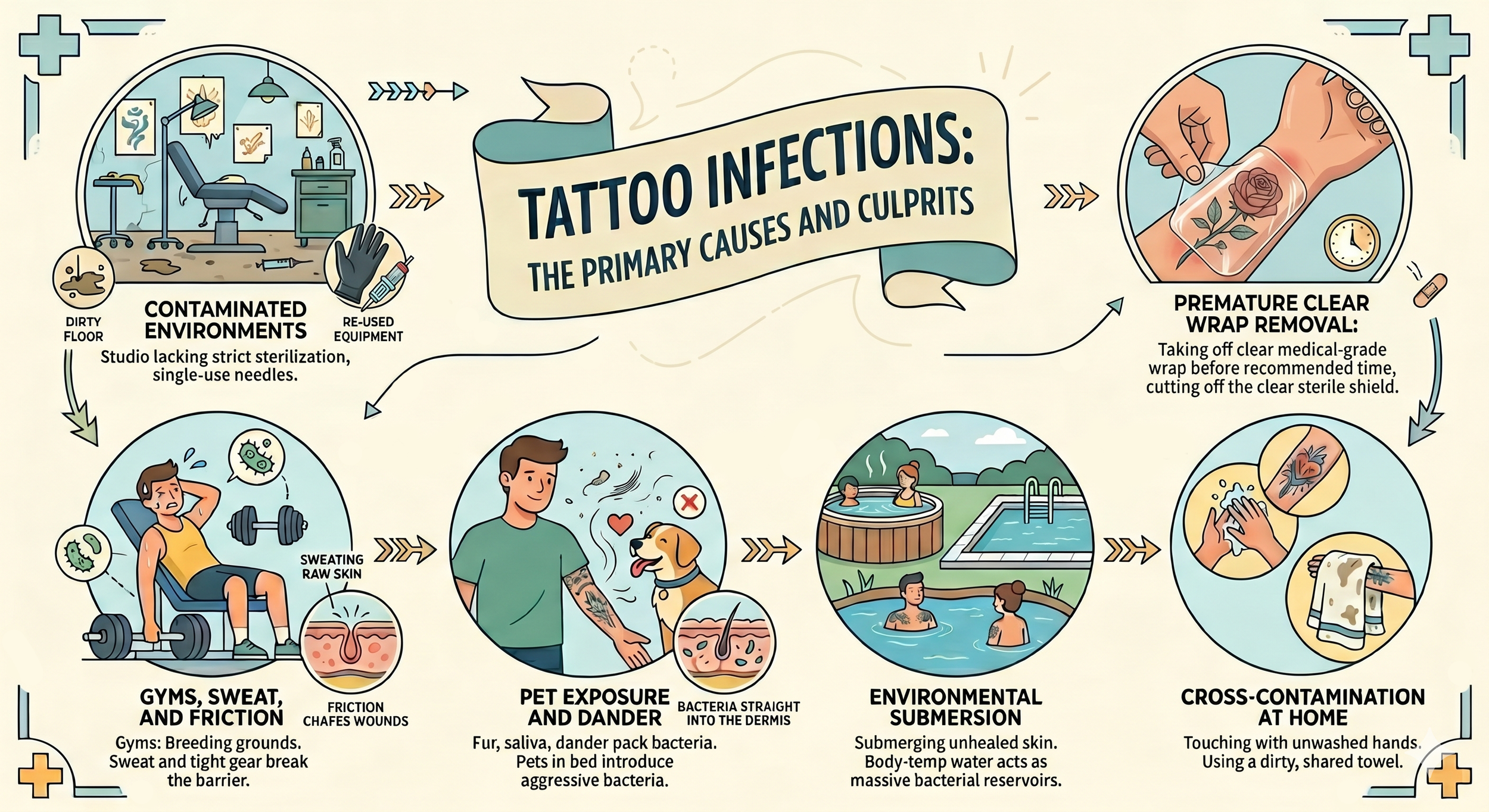
Tattoo infections are rarely a mystery; they usually stem from a break in the sterile chain. The primary culprits include:
Contaminated Environments: Getting tattooed in a studio that doesn't strictly adhere to hospital-grade sterilization protocols, cross-contamination barriers, and single-use, disposable needles.
Premature Wrap Removal: Taking off your medical-grade adhesive wrap before the recommended window, which cuts off the sterile environment your skin needs during its most vulnerable phase.
Gyms, Sweat, and Friction: Heading to the gym too early is one of the leading causes of infection. Gym equipment, mats, and weights are notorious breeding grounds for heavy bacteria like Staph. When you lift or do intense cardio, profuse sweating pushes against the raw skin, while tight workout gear creates friction that chafes and re-opens the healing micro-wounds.
Pet Exposure and Dander: We love our pets, but their fur, saliva, and dander are packed with bacteria. Letting a dog or cat sleep in your bed with an exposed fresh tattoo, allowing them to lick the area, or even letting stray pet hair get trapped under your clothes can introduce aggressive bacteria straight into the dermis.
Environmental Submersion: Submerging the unhealed skin in body-temperature water (lakes, pools, hot tubs, or baths), which act as massive bacterial reservoirs.
Cross-Contamination at Home: Touching your fresh tattoo with unwashed hands or using a dirty, shared bath towel to dry it after a shower.
How to Know if Your Tattoo is Infected (The Signs)
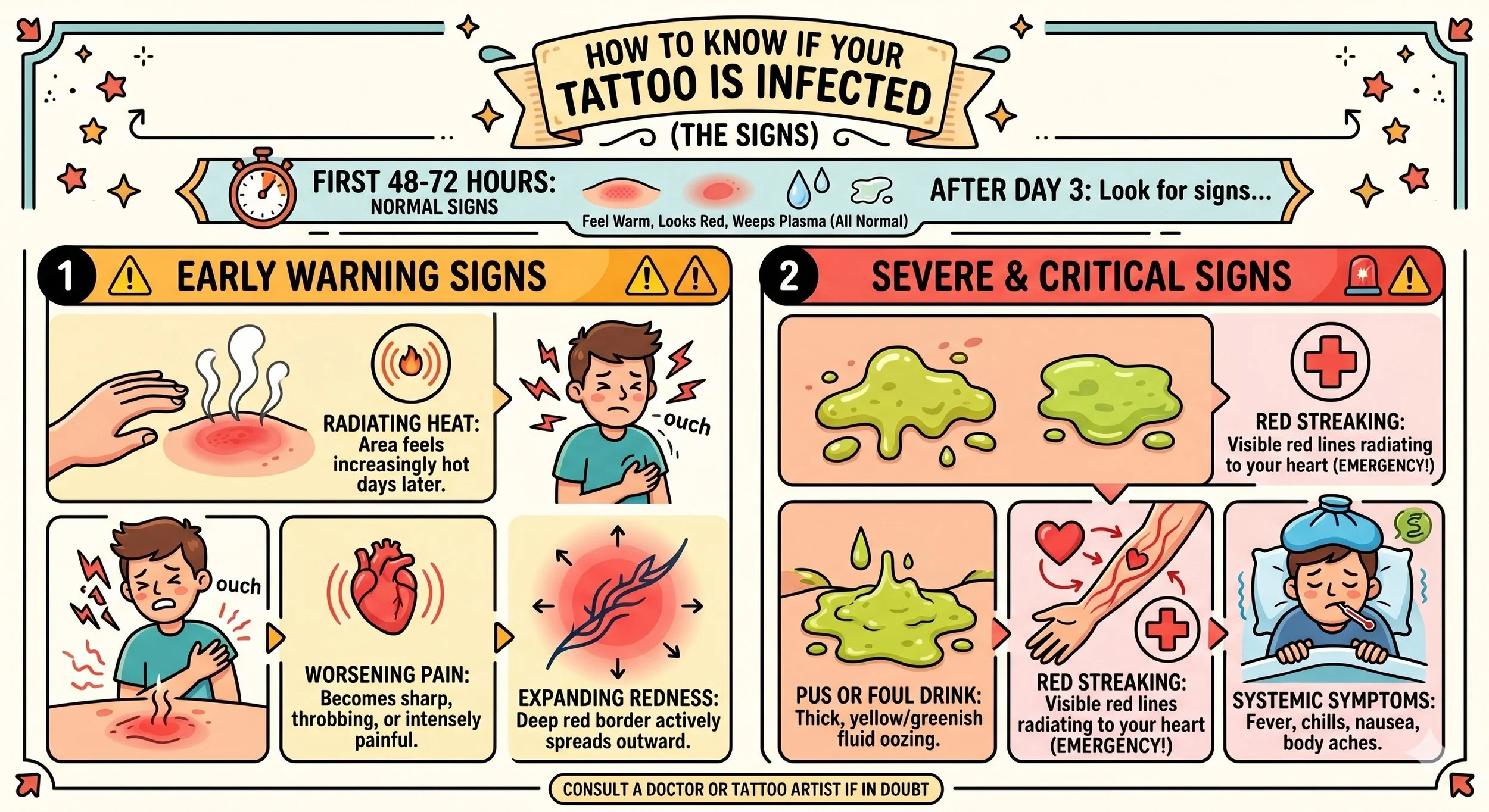
It is completely normal for a tattoo to feel warm, look red, and weep clear plasma or a bit of excess ink for the first 48 to 72 hours. However, if your tattoo exhibits any of the following symptoms after the third day, it is likely infected.
Early Warning Signs
Radiating Heat: The area feels increasingly hot to the touch days after the session, rather than cooling down.
Worsening Pain: Instead of a dull, sunburn-like ache that fades, the pain becomes sharp, throbbing, or intensely painful to touch.
Expanding Redness: A deep red or dark pink border that actively spreads outward from the tattoo lines.
Severe & Critical Signs
Pus or Foul-Smelling Drainage: Thick, yellow, or greenish fluid or pus oozing from the open skin.
Skin Texture: Bumps, open sores, or unusually hard/raised tissue.
Red Streaking: Visible red lines radiating from the tattoo toward your heart. This is a medical emergency indicating the infection is entering your lymphatic system.
Systemic Symptoms: Developing a fever, chills, nausea, or general body aches.
What to Do If You Suspect an Infection
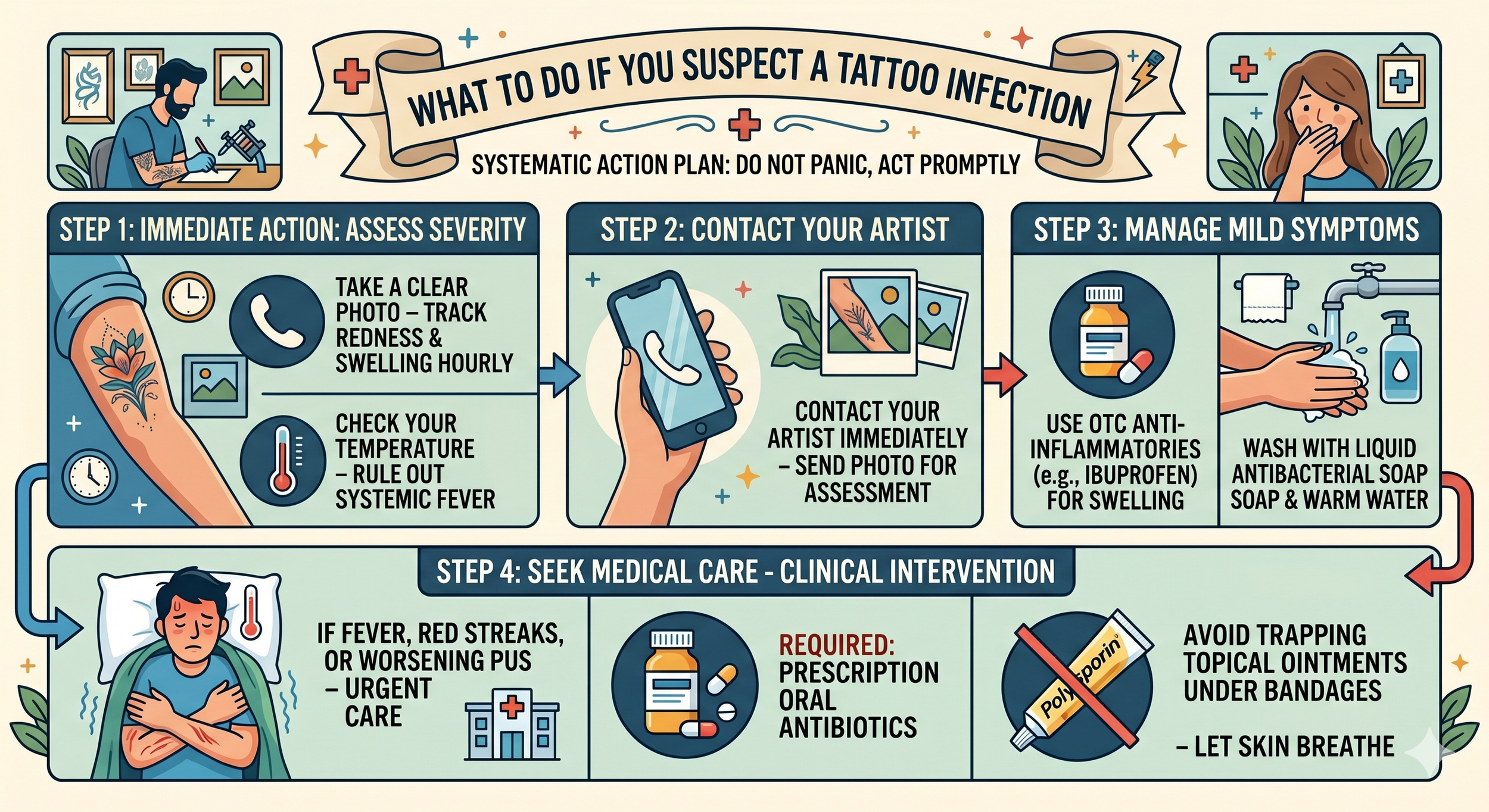
If your tattoo is showing signs of bacterial infection, you need to act systematically. Do not panic, but do not ignore it hoping it will clear up on its own.
Assess the Severity:
Immediate Action
Take a clear, well-lit photo of the tattoo to track whether the redness or swelling is actively spreading hour by hour. Check your temperature to rule out a systemic fever.
Contact Your Artist Immediately:
Professional Assessment
Send a photo to your tattoo artist. While artists are not medical doctors, experienced professionals see hundreds of healing tattoos and can instantly help you differentiate between heavy scabbing, ink rejection, a plasma buildup, and a genuine infection.
Manage Mild Symptoms Temporarily:
Over-the-Counter Relief
For mild, localized inflammation while you arrange a check-in, you can use over-the-counter anti-inflammatories like ibuprofen to manage swelling and pain. Wash the area only with a liquid, fragrance-free antibacterial soap and warm water, then pat dry with a clean paper towel.
Seek Medical Care:
Clinical Intervention
If you have a fever, red streaks, or worsening pus, go straight to a walk-in clinic or urgent care. Bacterial skin infections require prescription oral antibiotics. Topical antibiotic ointments (like Polysporin) should not be heavily trapped under a bandage, as they suffocated the skin and can ruin the ink consistency.
Can I Get Another Tattoo While I Have an Active Tattoo Infection?
The short answer is absolutely not. If you have an appointment booked for a completely different piece on a separate part of your body, you need to contact your artist and reschedule immediately.
Even if the new design is nowhere near the infected site, getting tattooed while fighting an active infection is highly dangerous for two major reasons:
1. Your Immune System is Already Compromised
A bacterial infection isn’t just localized to the surface of your skin; your entire immune system is actively working overtime to fight off the bacteria and keep it from entering your bloodstream. Getting a new tattoo creates a brand-new, open wound. Because your body's resources are already split and exhausted, your white blood cells cannot effectively defend the new site. This drastically increases the probability that your new tattoo will also get infected.
2. Cross-Contamination Risk
Bacteria like Staph can easily travel. If you are touching or cleaning your infected tattoo, the bacteria can get onto your hands, clothing, or bedsheets. Introducing a fresh, open wound to your body while that bacteria is active in your immediate environment creates a perfect storm for cross-contamination.
3. Healing Quality Will Suffer
Your body only has so much healing energy. If it is forced to fight a bacterial infection on one limb while trying to heal a clean tattoo on another, neither will get the resources they need. Your new tattoo will likely suffer from prolonged inflammation, heavy scabbing, and poor ink retention.
The Verdict: Wait until your current infection is 100% cleared, your course of antibiotics is entirely finished, and the skin has completely closed up before putting your body through another tattoo session. Any reputable professional will completely understand and prefer that you reschedule for your own safety.
How to Prevent Infection: What to Avoid
Prevention is entirely within your control. To ensure your tattoo heals crisply with maximum color retention and zero complications, strictly avoid these common mistakes:
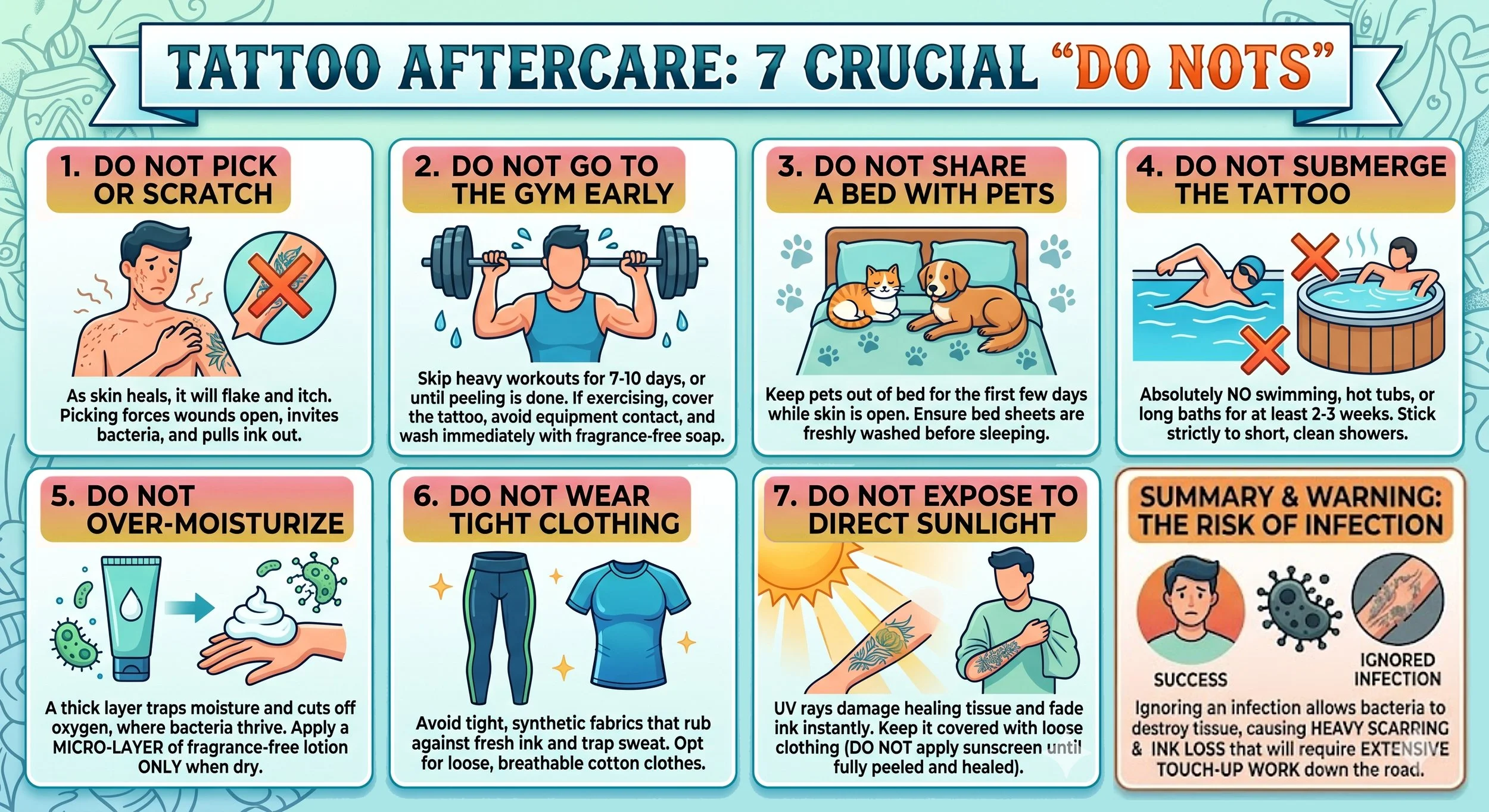
DO NOT Pick or Scratch: As the skin heals, it will flake and itch. Picking at scabs forces the wound open again, inviting bacteria straight into the dermis and pulling the settled ink out with it.
DO NOT Go to the Gym Early: Skip the heavy workouts for at least the first 7 to 10 days, or until the tattoo has fully finished peeling. If you must do light exercise, ensure the tattoo is completely covered, avoid any contact with equipment, and wash it immediately afterward with fragrance-free antibacterial soap.
DO NOT Share a Bed with Pets: Keep pets out of your bed for the first few days while the skin is actively open. Ensure your bed sheets are freshly washed before you sleep on them with a new tattoo.
DO NOT Submerge the Tattoo: Absolutely no swimming, hot tubs, or long baths for at least 2 to 3 weeks. Stick strictly to short, clean showers.
DO NOT Over-Moisturize: Applying a thick layer of ointment or lotion traps moisture and cuts off oxygen to the skin. This creates a warm, humid environment where bacteria thrive. Apply a micro-layer of fragrance-free lotion only when dry.
DO NOT Wear Tight Clothing: Avoid tight, synthetic fabrics that rub against the fresh ink and trap sweat. Opt for loose, breathable cotton clothes.
DO NOT Expose to Direct Sunlight: UV rays damage healing tissue and fade ink instantly. Keep it covered with loose clothing (do not apply sunscreen until the tattoo is fully peeled and healed).
A Note on Ink Settlement: A minor infection treated early with oral antibiotics will rarely ruin a tattoo permanently. However, ignoring an infection allows the bacteria to destroy the localized tissue, which causes heavy scarring and patchy ink loss that will require extensive touch-up work down the road.
The Critical Distinction: Infected vs. Overworked
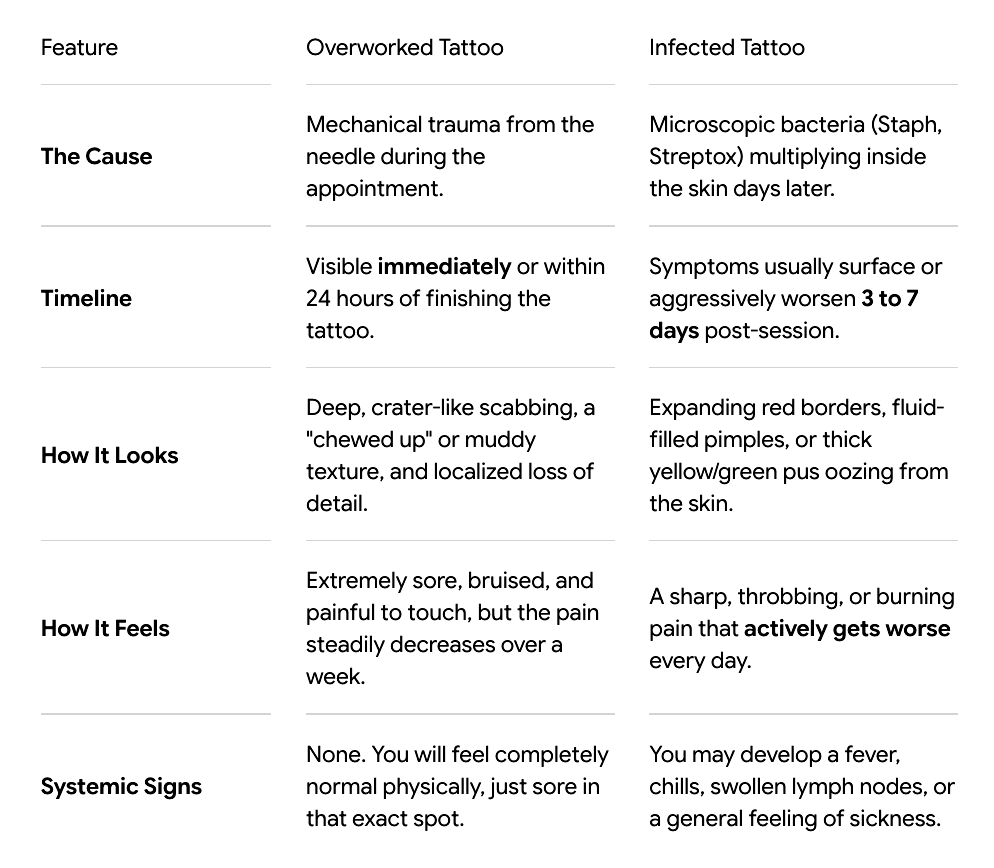
An overworked tattoo occurs during the session if an artist goes too deep into the skin, runs the machine too slowly, or passes over the same area too many times. This causes severe localized tissue trauma.
An "overworked" tattoo is one of the most common things people mistake for an infection. Because both conditions cause significant inflammation, it’s incredibly easy for a client to panic.
While an overworked tattoo looks alarming and can heal poorly, it is not an infection—though an overworked tattoo is at a much higher risk of becoming infected because the skin barrier is completely compromised.
Here is how to tell the difference side-by-side:
The Healing Difference
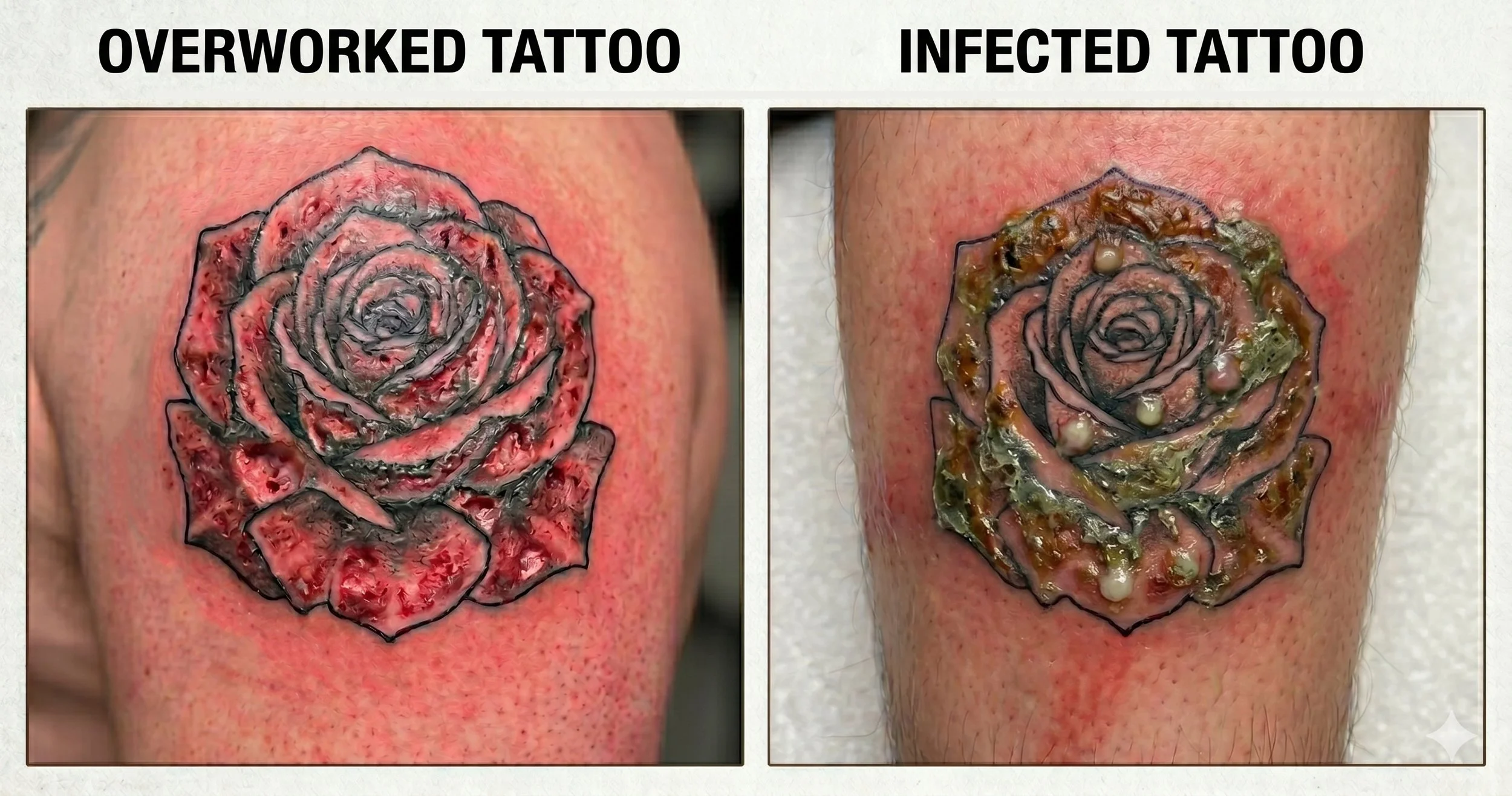
An overworked tattoo will often form thick, heavy, plastic-like scabs that take weeks to fall off. When it finally heals, it frequently leaves behind scarring (raised, shiny skin) or patchy ink loss where the tissue blew out or rejected the pigment.
An infection, on the other hand, will actively eat away at the tissue and spread across healthy parts of the skin until it is stopped by medical antibiotics.
When Can You Stop Worrying About an Infection?
The constant anxiety of checking your skin every hour can be exhausting. Fortunately, your risk of infection drops drastically as the skin undergoes its natural healing phases.
Here is the general timeline for when you can finally breathe a sigh of relief:
The High-Risk Window (Days 1–5): This is the most critical phase. Because the skin barrier is completely open, bacteria can easily penetrate the dermis. Once you successfully cross the 5-day mark without any radiating heat, spreading redness, or foul drainage, your risk drops significantly.
The Peeling Phase (Days 5–10): By this point, the initial open wound has closed, and the top layer of skin will begin to flake or peel like a sunburn. While the new skin underneath is still incredibly delicate and prone to scarring if picked, the risk of a deep bacterial infection entering the bloodstream is now minimal.
The Safe Zone (Day 14 and Beyond): Once the tattoo has completely finished peeling and the surface skin feels smooth and uniform, the infection window is officially closed. At this stage, the tattoo is fully sealed.
The Golden Rule: You can stop worrying about an infection the moment the outer layer of skin is fully closed, smooth, and no longer flaking. However, keep in mind that the deeper layers of the dermis can take up to 4 to 6 weeks to fully recover, so continue treating your skin with care and keeping it out of prolonged direct sunlight until it is completely settled.
What to Do After a Tattoo Infection Heals
If you had to fight off an infection, your skin went through an immense amount of stress. Once a doctor has cleared the bacterial infection and your skin has completely closed up, your main focus shifts from medical safety to aesthetic damage control.
Here is your step-by-step action plan to rescue your ink and restore your skin:
1. Rebuild the Skin Barrier
The combination of bacterial damage and harsh antibacterial soaps or oral antibiotics will leave your skin incredibly dry, sensitive, and depleted.
Hydrate gently: Switch to a premium, fragrance-free, deeply hydrating lotion. Look for ingredients like ceramides or hyaluronic acid to help restore the compromised skin barrier.
Do not scrub: The newly healed skin will be thin and shiny. Avoid harsh body scrubs or intense exfoliation in that area for at least a month.
2. Manage and Minimize Scarring
Infections often leave behind raised, thick, or shiny tissue known as hypertrophic scarring.
Silicone Gel: Once the skin is 100% closed with no open scabs, applying a medical-grade silicone scar gel daily can significantly help flatten and soften any raised tissue.
Massage the Area: Firmly massaging the healed tattoo with lotion for a few minutes a day helps break up the collagen bundles forming the scar tissue, keeping the skin more pliable.
3. Schedule a Touch-Up Consultation
Because an infection actively attacks the dermis, it almost always leaves behind patchy areas, faded lines, or completely dropped ink.
Wait for deep healing: Do not rush back into the studio immediately. Your skin needs a minimum of 2 to 3 months to fully settle and mature beneath the surface before it is safe to needle over it again.
Consult your artist: Book a consultation to assess the damage. An experienced artist can evaluate the density of any leftover scar tissue and map out a plan to cleanly re-saturate the lost pigment, completely saving your design.
Final Thoughts: Respect the Process
At the end of the day, a tattoo is a collaborative effort between your artist’s technical execution and your commitment to the healing process. While discovering an infection can be stressful, catching the signs early and taking immediate, systematic action will protect both your physical health and your body art.
Ultimately, the absolute easiest and most effective way to avoid an infection entirely is to follow your tattoo artist's aftercare instructions accurately and to the absolute T. Professional artists understand the exact parameters of how their specific machinery, needle configurations, and pigment lines interact with the skin. Trust their expertise, maintain a sterile environment at home, keep your pets at a safe distance during the initial days, and give your body the rest it needs to lock that ink into place. If anything ever looks or feels outside the realm of normal healing, don't guess—reach out to a professional immediately.
Ready to Collect Your Next Piece?
If you are ready to invest in a flawless tattoo experience backed by medical-grade standards and pristine sterilization protocols, we are here to bring your vision to life. Explore our diverse roster of resident artists to find the perfect specialist for your design style—whether you are looking for crisp fine line work, bold traditional Japanese irezumi, or high-end realism.
Are you ready to book your next session with Misfits Tattoo? Head over to our booking page to submit your project inquiry and lock in your consultation today.