Over-Moisturized Tattoos: Signs, Risks, and How to Fix It
Investing in custom body art is an exciting experience, but the final outcome depends entirely on how you treat your skin during the recovery phase. Professional tattoo aftercare is a delicate balancing act. While dry, peeling, and flaking skin are completely standard stages of healing, a surprisingly frequent pitfall is overcompensating and going too far in the opposite direction: over-moisturization.
It is completely natural to want to protect your new ink and keep it hydrated. However, drowning a fresh tattoo in heavy ointments or thick lotions suffocates the skin and creates a breeding ground for complications. Recognizing the early warning signs of a saturated tattoo can mean the difference between a pristine, crisp design and a patchy piece that requires extensive touch-ups.
The Warning Signs: Bubbling, Pimples, and Clogged Pores
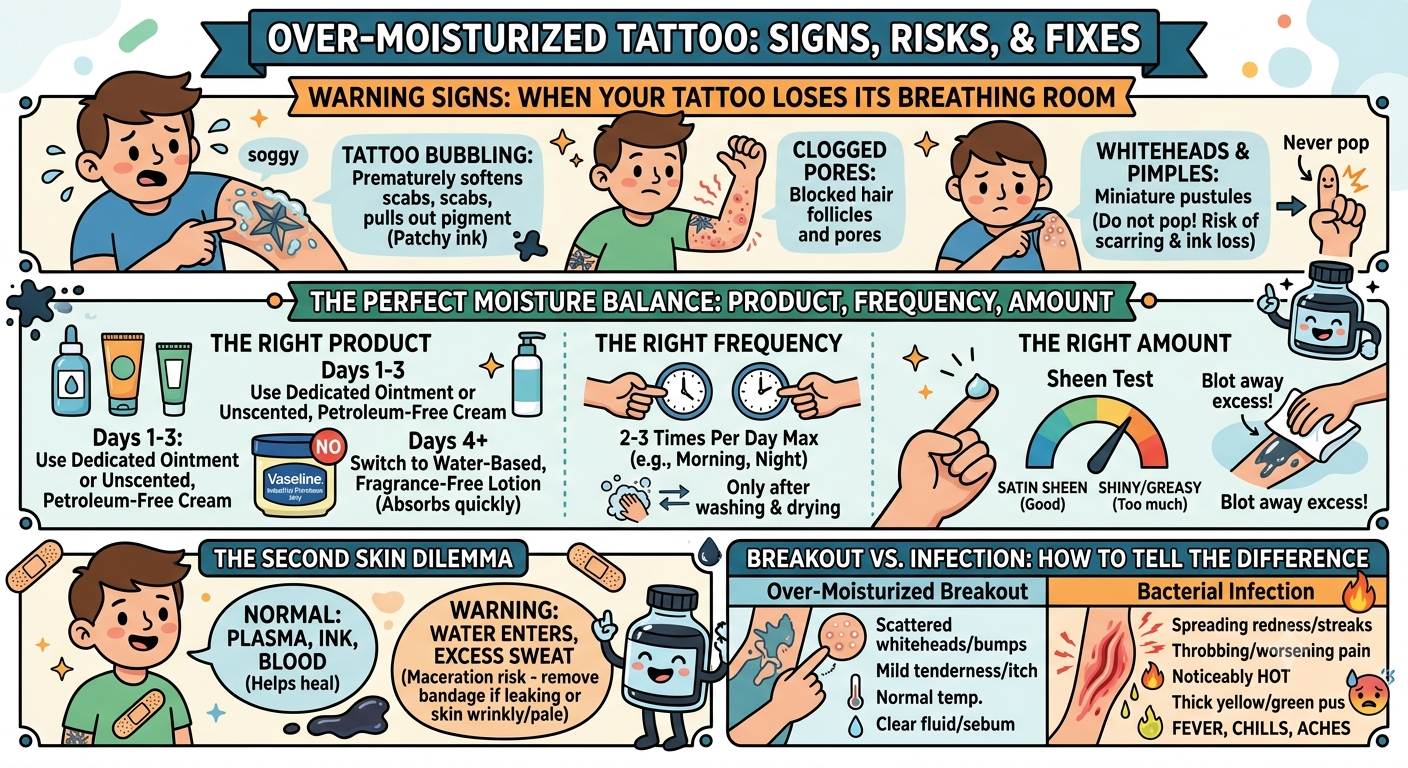
When a tattoo receives too much moisture, it loses its ability to breathe. A healing tattoo is essentially a fresh, open wound. To recover correctly, it requires an optimal balance of environmental oxygen and minimal, controlled hydration.
When thick, petroleum-based products or heavy body lotions are applied too frequently, they create an occlusive barrier—essentially a tight, airtight seal over the surface. This traps moisture underneath, leading to several distinct and frustrating symptoms:
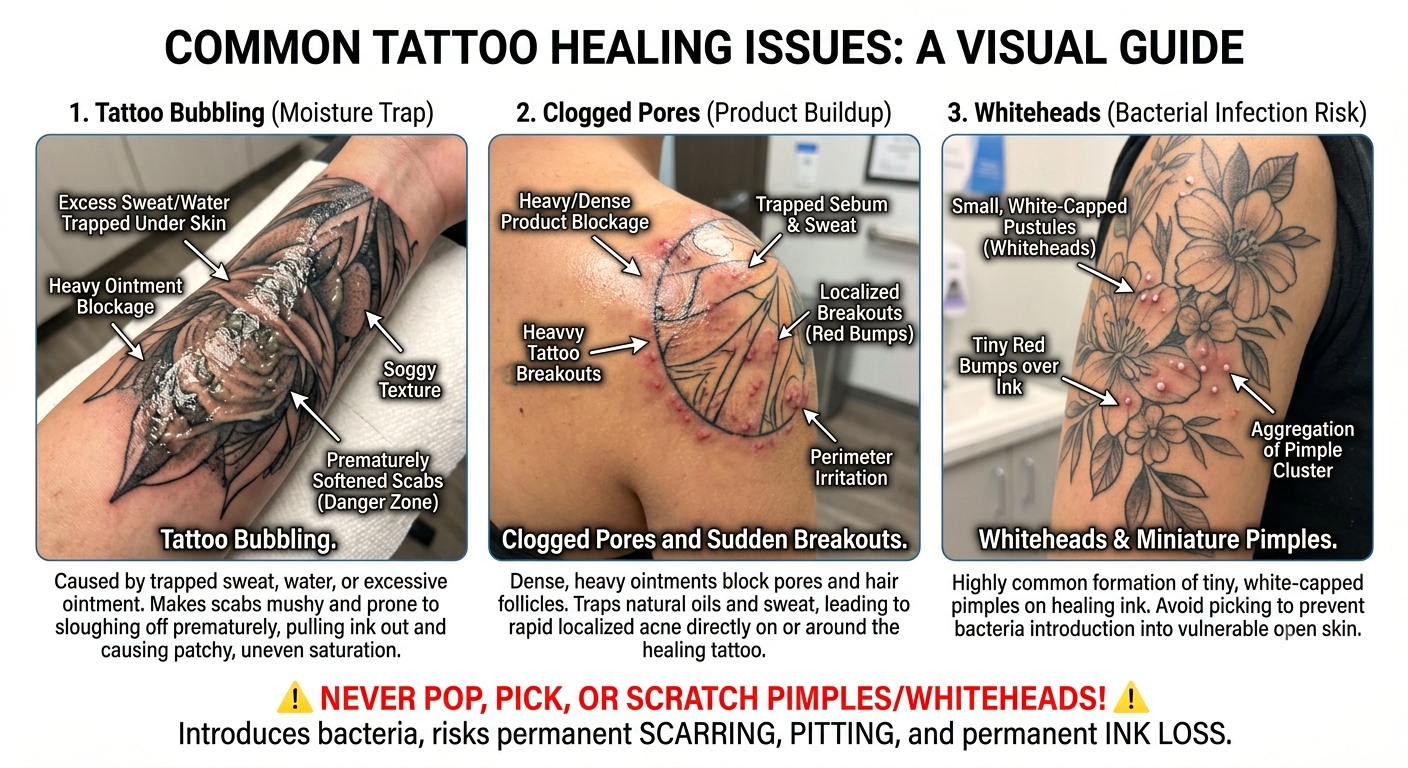
1. Tattoo Bubbling
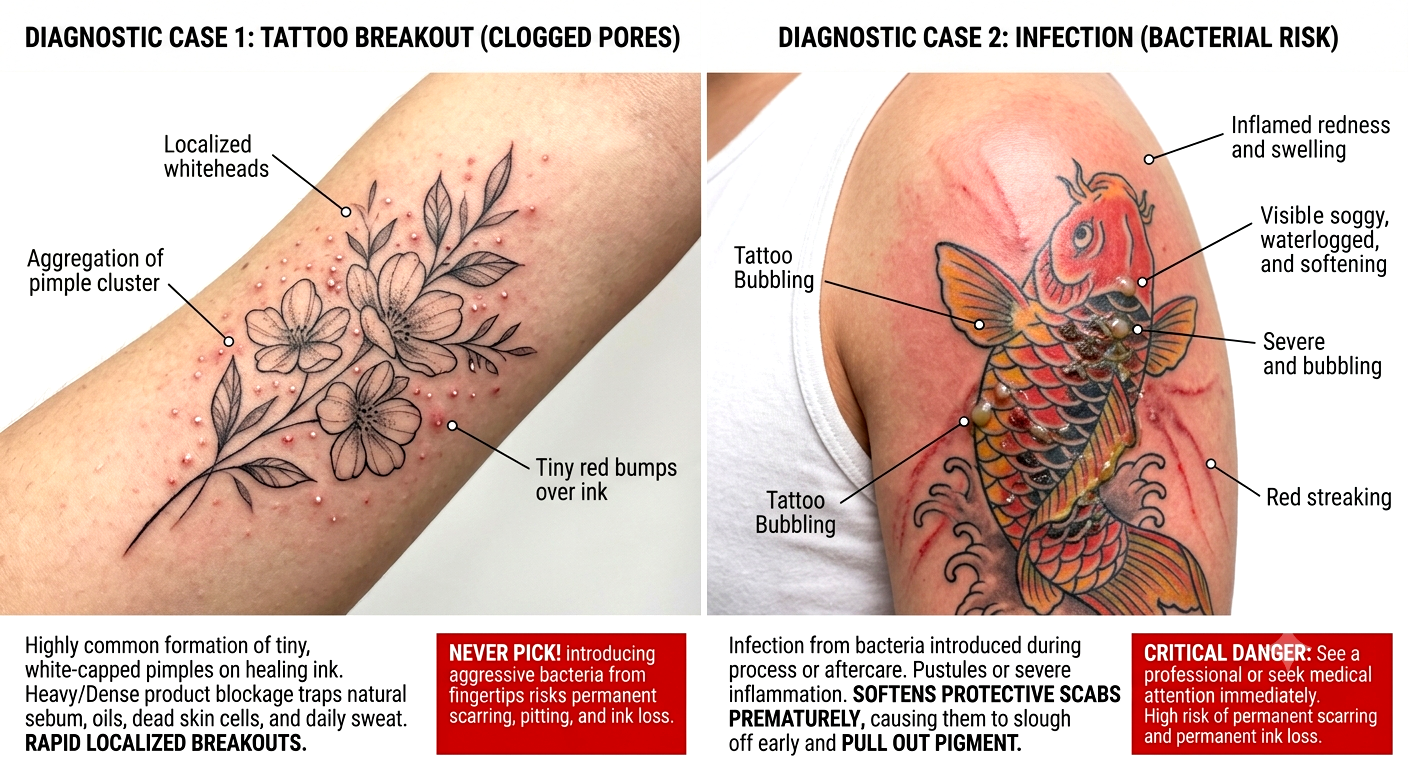
This occurs when excess water or sweat gets trapped directly under the healing layers of skin or beneath a thick wall of ointment. The skin swells, taking on a soggy, waterlogged, or bubbling texture.
The primary danger here is that bubbling prematurely softens the protective scabs forming over the ink. If these scabs become mushy and slough off too early, they frequently pull the pigment out with them, leaving you with patchy, faded lines and uneven saturation.
2. Clogged Pores and Sudden Breakouts
Heavy, dense products block your skin's hair follicles and pores, trapping your body's natural sebum (oil), dead skin cells, and daily sweat. This rapidly leads to localized breakouts directly around or scattered throughout the perimeter of the design.
3. Whiteheads and Miniature Pimples
It is highly common to see tiny, white-capped pustules or small red bumps form over the ink.
Critical Warning: Never, under any circumstances, pick, pop, or scratch a pimple or whitehead on a healing tattoo. Popping these bumps introduces aggressive bacteria from your fingertips directly into the deep, vulnerable layers of open skin. This drastically elevates your risk of permanent scarring, pitting, and permanent ink loss.
The Perfect Moisture Balance: Product, Frequency, and Amount
Preventing over-moisturization is simple once you understand the mechanics of proper product selection and application. To keep your ink crisp and your skin healthy, adhere strictly to the following parameters:
The Right Product
Days 1 to 3: Use a dedicated, specialty tattoo aftercare ointment or a very thin layer of an unscented, petroleum-free cream. Avoid heavy, pure petroleum jelly (like industrial Vaseline), which is completely non-porous and traps heat and fluids.
Days 4 and onward: Switch to a premium, water-based, fragrance-free lotion. Look for options that absorb quickly without leaving a greasy residue. Avoid heavily scented cosmetic lotions, which contain alcohols and artificial fragrances that irritate open skin.
The Right Frequency
You should only moisturize your tattoo 2 to 3 times per day—typically once in the morning, once at night, and optionally once mid-day if your environment is exceptionally dry.
Never apply product just because the tattoo feels slightly tight. A little bit of tightness is a natural part of the skin knitting back together. Only apply product immediately after you have washed and fully dried the tattoo. Applying fresh lotion on top of old, unwashed lotion traps bacteria.
The Right Amount
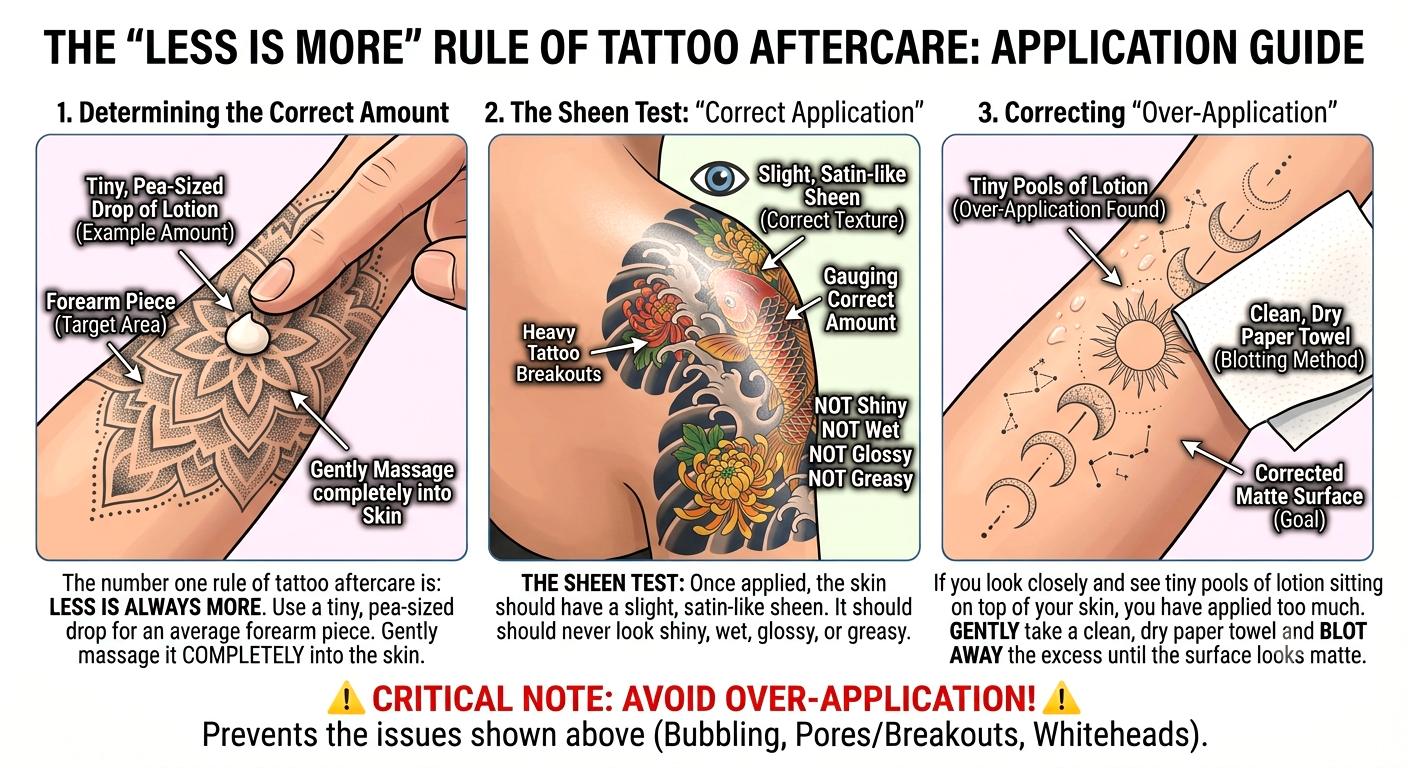
The number one rule of tattoo aftercare is: less is always more.
To gauge the correct amount, use a tiny, pea-sized drop for an average forearm piece. Gently massage it completely into the skin.
The Sheen Test: Once applied, the skin should have a slight, satin-like sheen. It should never look shiny, wet, glossy, or greasy. If you look closely and see tiny pools of lotion sitting on top of your skin, you have applied too much. Gently take a clean, dry paper towel and blot away the excess until the surface looks matte.
The Second Skin Dilemma: Trapped Fluid vs. Over-Moisturization
Modern aftercare frequently utilizes medical-grade, transparent adhesive bandages (often referred to as "Second Skin" or Saniderm). A common point of confusion for clients is seeing a dark, murky bubble of fluid build up under the plastic within the first 24 to 48 hours.
This accumulation is a natural mixture of excess ink, plasma, and blood. It is entirely normal and actually helps the wound heal. However, if the seal of the bandage breaks and water enters while showering, or if you sweat excessively underneath it, the bandage can hold too much liquid against the skin for too long. If the fluid bubble begins to leak, or if the skin underneath looks highly wrinkly, pale, and waterlogged (macerated), the bandage needs to be removed early to prevent deep moisture damage.
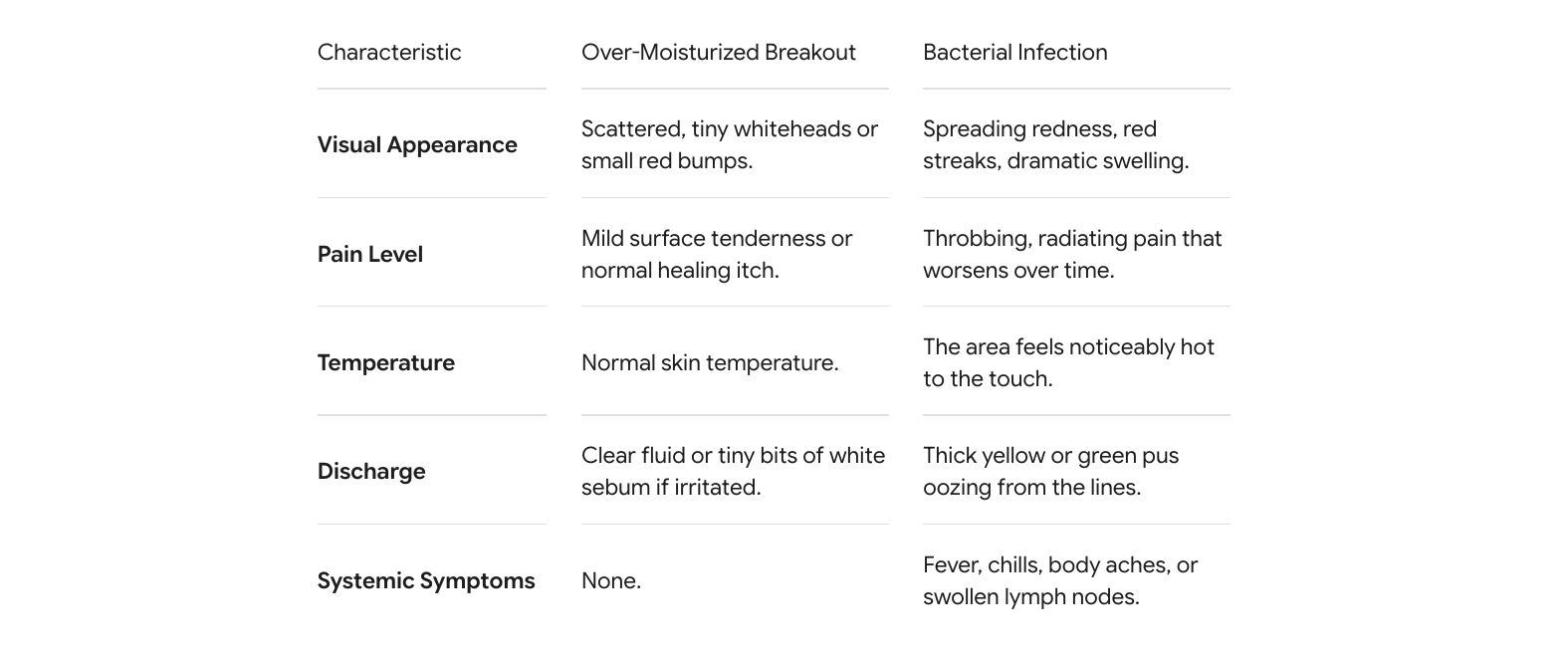
Breakout vs. Infection: How to Tell the Difference
It is vital to distinguish between a simple breakout caused by heavy lotion and a developing medical issue. Treating an infection as a simple moisture issue can lead to serious health and aesthetic complications.
How to Fix an Over-Moisturized Tattoo
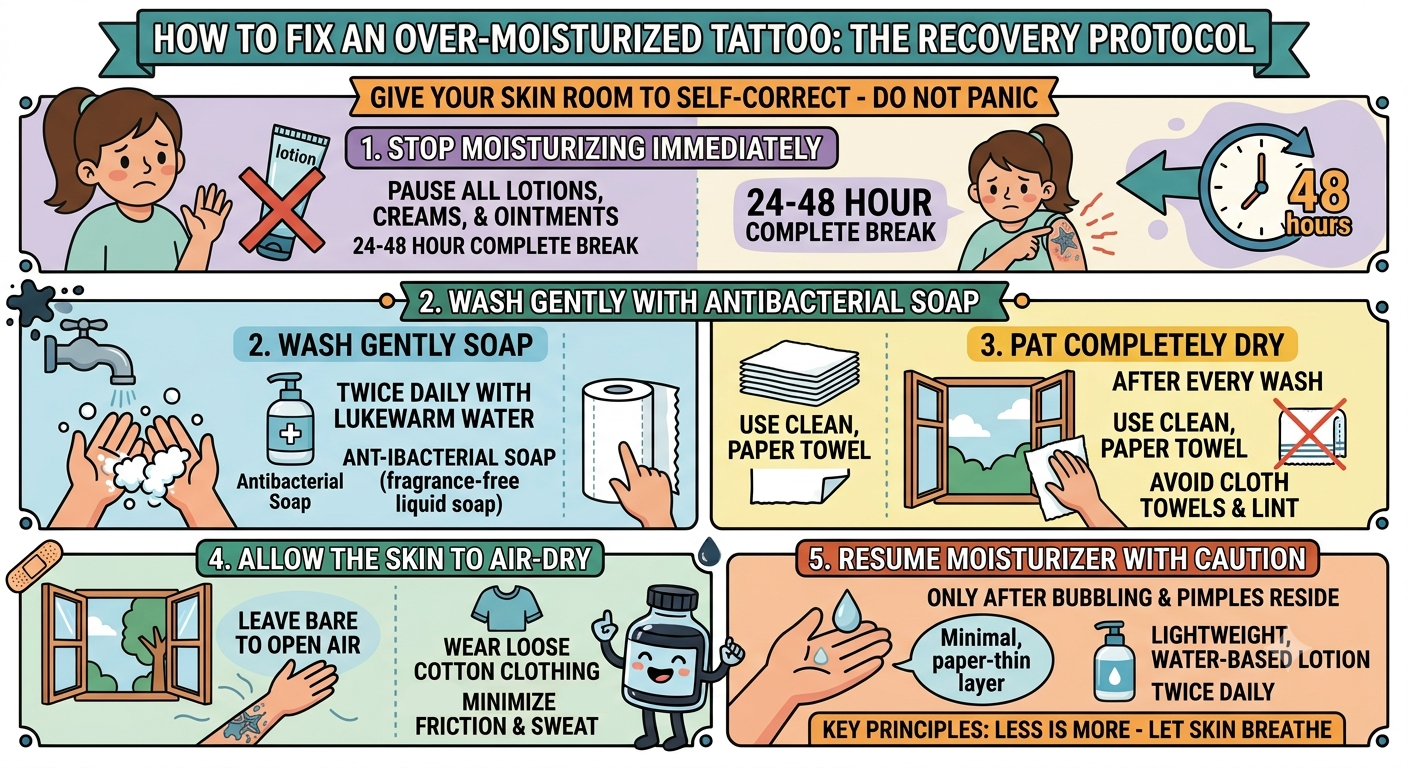
If you realize you have been applying your aftercare products too heavily, do not panic. Your skin is remarkably resilient if you step back and give it the room it needs to self-correct. Follow this precise protocol to dry out the area safely:
1. Stop moisturizing immediately:
Day 1-2.
Pause all lotion, cream, or ointment applications entirely for the next 24 to 48 hours. Your skin needs a complete break to breathe and reset its natural balance.
2. Wash gently with antibacterial soap:
Twice daily.
Wash the area gently using lukewarm water and a fragrance-free, hospital-grade antibacterial liquid soap. Use only your clean hands—never a washcloth, sponge, or loofah, which can tear delicate scabbing.
3. Pat completely dry:
After every wash.
Pat the area dry using a clean, single-use paper towel. Avoid standard cotton bath towels, as they harbor ambient bacteria and leave behind fine lint that can get trapped in the texture of the tattoo.
4. Allow the skin to air-dry:
Ongoing.
Leave the tattoo completely bare to the open air as much as possible. Wear loose, light, and highly breathable cotton clothing over the area to minimize friction and prevent sweat buildup.
5. Resume moisturizer with caution:
After skin resets.
Once the bubbling completely subsides and any whiteheads dry up and flake away naturally, you can resume moisturizing. Drop down to a minimal, paper-thin layer of a lightweight, water-based aftercare lotion just twice a day.
The Long-Term Consequences: Can It Ruin the Ink?
Yes, severe over-moisturization can permanently alter the final appearance of your tattoo. When skin becomes waterlogged, the scabs soften and expand. As these bloated scabs eventually dry out and fall away, they frequently pull the embedded ink particles out of the dermis (the second layer of skin where ink sits).
This results in holidays (unintentional blank spots or gaps in the solid shading), blurred or blown-out fine lines, and a distinctly faded, washed-out appearance once the piece is fully healed. While a skilled artist can usually fix these issues during a touch-up session, preventing the damage during initial aftercare saves you time, discomfort, and preservation of the original artwork.
When to Consult Your Artist or a Dermatologist
If the minor bubbling or breakouts do not show signs of improvement within 48 hours of stopping your lotion routine, or if you notice any of the infection signs outlined in our comparison chart above, seek professional medical attention or consult a dermatologist immediately.
For general texture concerns, minor peeling questions, or advice on how your specific design is settling, reaching out directly to your professional tattoo artist is your best resource. An experienced artist can assess the current state of your skin and provide customized guidance tailored specifically to your placement, line weight, and skin type.
Experience Elite Artistry at Misfits Tattoo
The absolute best way to ensure a flawless tattoo journey is to partner with dedicated professionals who prioritize a clean, upscale environment and provide thorough, comprehensive aftercare education from start to finish.
At Misfits Tattoo in Vaughan, Ontario, our team of premier artists is committed to executing flawless, high-end custom designs tailored entirely to your personal aesthetic. We pair master-level craftsmanship with advanced wireless rotary technology and a pristine and sterile studio environment to guarantee your absolute safety, comfort, and luxury throughout the entire process.
Ready to bring your next tattoo concept to life with confidence? Explore our talented artists' portfolios and secure your consultation or booking session with us today.