Everyone loves a spontaneous tattoo decision. Walking past a shop on a sunny Saturday, feeling inspired on a random Tuesday in January, or finally pulling the trigger on a piece you have been saving in your camera roll for two years? Pure excitement. Realizing two days later that your brand-new sleeve clashes with your beach vacation, your daily gym routine, or your heaviest wool sweater? That is a scheduling plot twist nobody wants to deal with while trying to heal permanent art.
In professional tattooing, timing your appointment involves way more than just finding an open slot on your calendar or waiting for tax refund season. You have to factor in UV exposure, sweat, swimming pools, dry winter air, heavy layers rubbing against healing skin, and your own seasonal social plans. A lot of clients assume that as long as they wash their tattoo and apply a little ointment, the weather outside doesn’t matter. In reality, your skin reacts dramatically to temperature shifts, humidity levels, and sunlight—and those factors can turn an easy two-week heal into a frustrating battle with irritation, scabbing, or premature fading.
Even if you already have a specific design and placement locked in, asking when to book is one of the smartest moves you can make before putting down a deposit. Whether you are planning your very first minimalist fine-line piece or gearing up for a multi-session full back project, the calendar can either work with your aftercare routine or fight against it every step of the way.
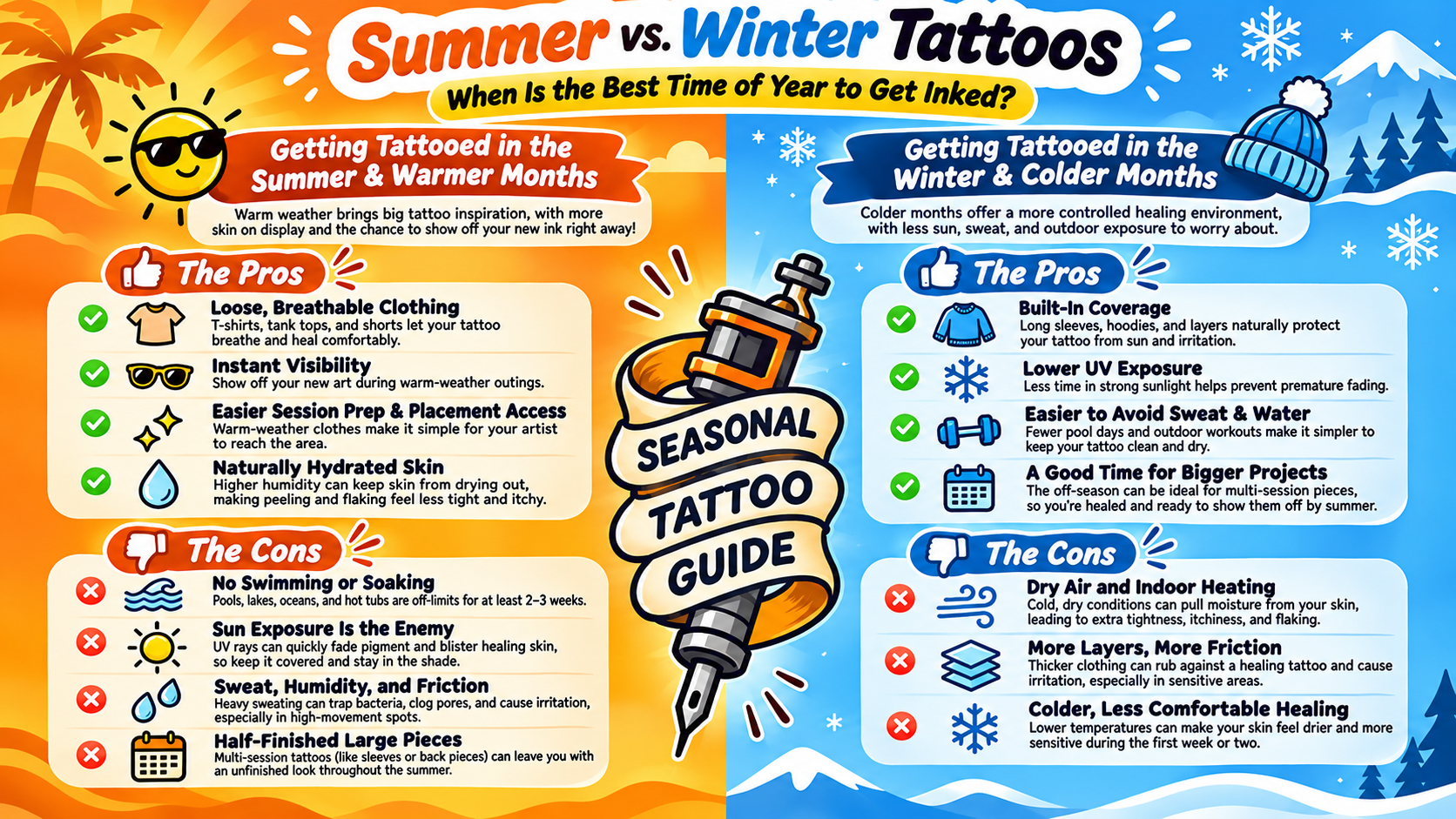
Before you lock in a date for your next piece, break down the real pros and cons of getting tattooed in the warmer months versus the colder months (and see which season actually fits your lifestyle, placement, and healing habits best).
Why Timing Matters When You’re Getting Tattooed
A fresh tattoo is essentially a controlled open wound that needs roughly two to four weeks for the top layer of skin to close and up to three or four months for the deeper dermis layers to fully settle. During that initial healing window, your environment dictates how smoothly your body does its job.
Extreme heat, direct sunlight, chlorine, lake water, freezing wind, and dry indoor heating all interact with healing skin in very different ways. Choosing the right season doesn’t just make those first two weeks less annoying—it protects crisp linework and packed color from premature UV fading, lowers your risk of bacterial infection from sweat or water, and saves you from having to sit out your favorite seasonal trips and workouts while your ink recovers.
Getting Tattooed in the Summer & Warmer Months
Warm weather naturally puts people in the mood for change. Once shorts, tank tops, and short sleeves come out of the closet, everyone suddenly notices all the bare skin they want to fill—and it’s hard to beat the appeal of walking out of the studio and immediately showing off your new artwork to friends. That surge in inspiration is why late spring and early summer are some of the busiest times of the year for tattoo shops.
Still, summer healing comes with strict boundaries that catch plenty of people off guard. Between high UV indexes, outdoor workouts, weekend lake trips, and backyard pool parties, warm-weather aftercare requires serious discipline. If you aren’t prepared to adjust your summer habits for a few weeks, the heat can quickly become your fresh tattoo’s worst enemy.
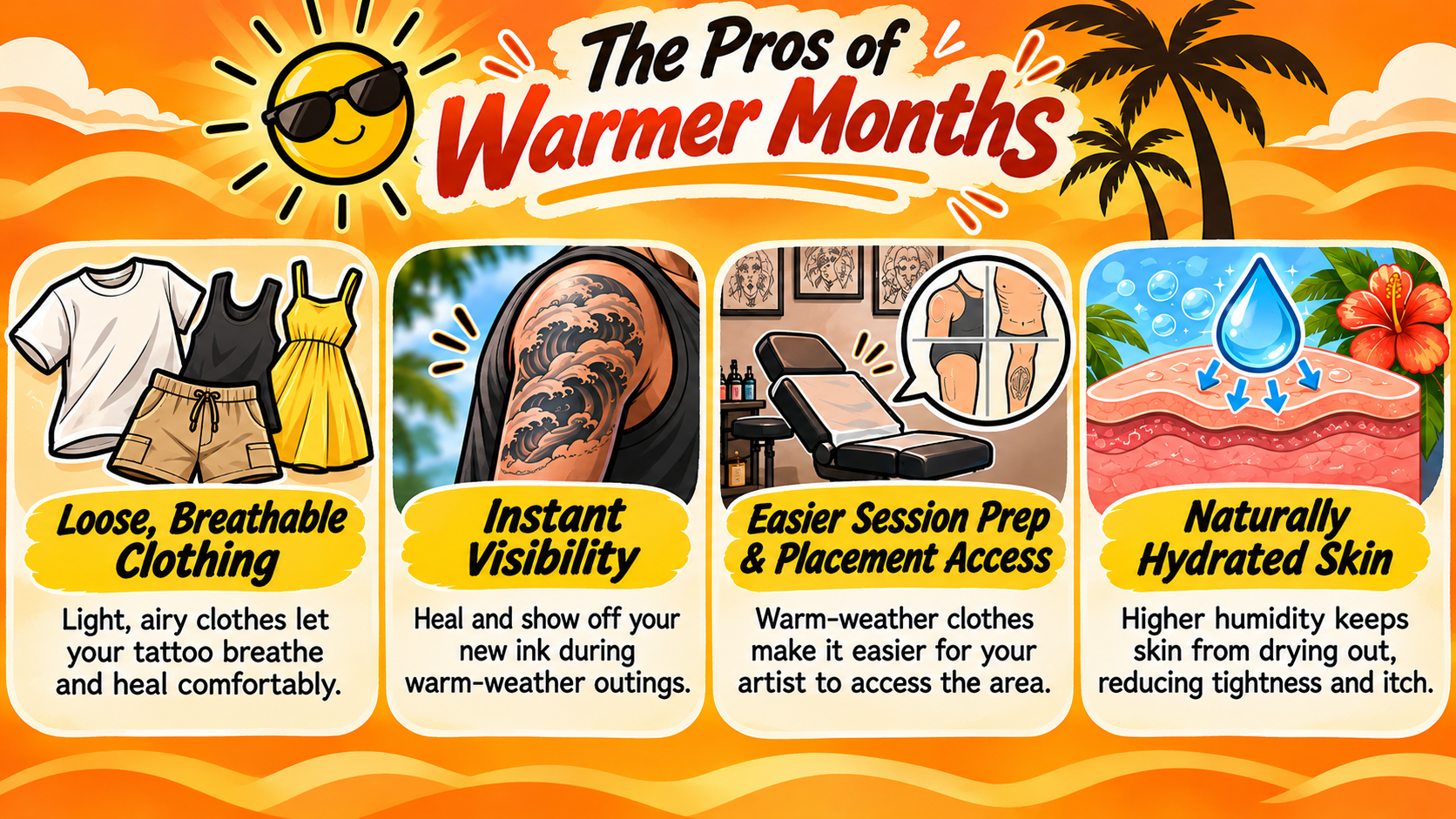
The Pros of Warmer Months
Loose, Breathable Clothing: T-shirts, tank tops, shorts, and sundresses let fresh ink breathe without fabric constantly grinding against tender skin. You won’t have to worry about peeling a stuck sleeve off weeping plasma at the end of a long day.
Instant Visibility: Nobody wants to spend hard-earned money on a custom piece only to hide it under three layers until April. Getting tattooed in late spring or summer means your healed art is ready for warm-weather outings right away.
Easier Session Prep & Placement Access: Depending on where you are getting tattooed—like ribs, thighs, shoulders, upper arms, or calves—wearing warm-weather clothes makes it effortless for your artist to access the area without you having to strip down bulky layers in the studio.
Naturally Hydrated Skin: Higher humidity levels in spring and summer keep your skin from drying out as fast, which can make the peeling and flaking stage feel slightly less tight and itchy than it does in dead winter.
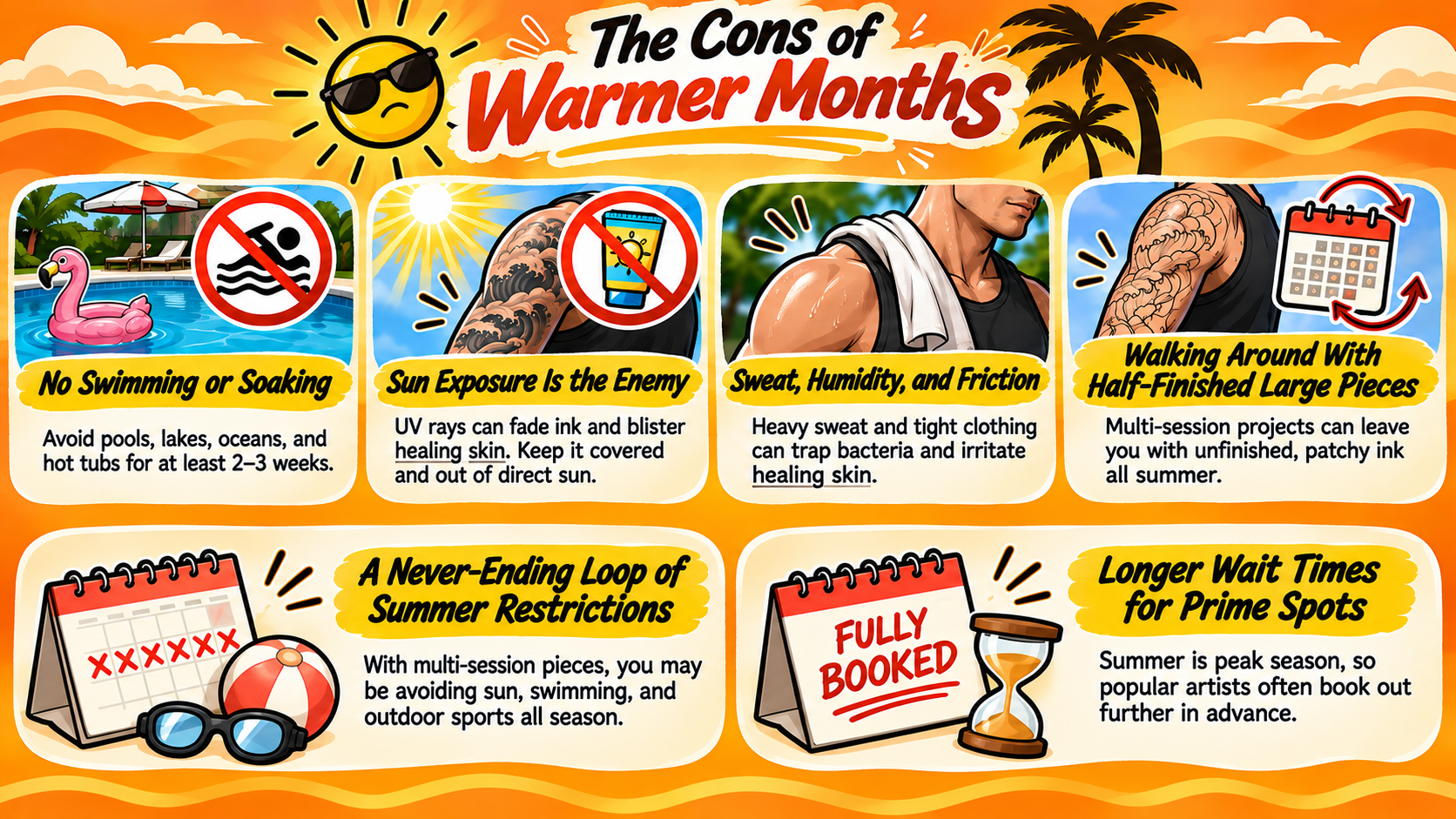
The Cons of Warmer Months
No Swimming or Soaking: Submerging a fresh tattoo in pools, lakes, oceans, rivers, or hot tubs is a hard NO for at least two to three weeks. Chlorine strips moisture and irritates raw skin, while bacteria in natural bodies of water can turn a great tattoo into a serious infection—and no, waterproof bandages aren’t a magic pass for deep water soaking.
Sun Exposure Is the Enemy: Direct UV rays break down fresh pigment fast and can easily blister sensitive, healing skin. Because you cannot apply sunscreen to a fresh tattoo until the skin is completely closed and healed, you have to keep it covered with UPF clothing or stay strictly in the shade.
Sweat, Humidity, and Friction: Heavy sweating from summer heat or outdoor workouts can trap bacteria, clog pores around a healing piece, and cause prolonged redness or heat rash—especially in high-movement spots like inner elbows, behind the knees, or under tight athletic gear.
Walking Around With Half-Finished Large Pieces: Bigger projects like full sleeves, leg sleeves, or detailed back pieces take multiple sessions spaced weeks apart to allow your skin to heal in between. Starting a multi-session piece in the summer means you will likely spend warm-weather months walking around in short sleeves or shorts with bare outlines, patchy shading, or an awkward half-finished tattoo on display until your next appointment.
A Never-Ending Loop of Summer Restrictions: Starting a large, multi-session piece during the summer likely means you won’t be able to swim, spend time in the sun, or play outdoor sports for the entire season. Just as one session finally finishes healing and you’re cleared to get back outside, you’ll be right back in the chair for your next appointment—resetting the aftercare clock in a never-ending cycle until the piece is completely done.
Longer Wait Times for Prime Spots: Because warm weather triggers a rush of clients wanting "summer-ready" ink, popular artists often book out further in advance during late spring and summer.
Getting Tattooed in the Winter & Colder Months
Ask most veteran tattoo collectors and working artists when they prefer to start big projects, and you will hear the exact same answer: fall and winter. Once the temperature drops and beach season wraps up, the pressure to rush a heal disappears. Colder weather creates a built-in protective bubble that makes following aftercare rules almost effortless, even if you have a busy daily schedule.
Of course, getting inked when it’s freezing outside isn’t completely trouble-free. Between dry indoor heating, static-heavy winter sweaters, and cold and flu season making the rounds, winter brings a few practical quirks of its own. Knowing how to dress for your appointment and keep your skin hydrated makes all the difference between a textbook heal and a flaky,irritated mess.
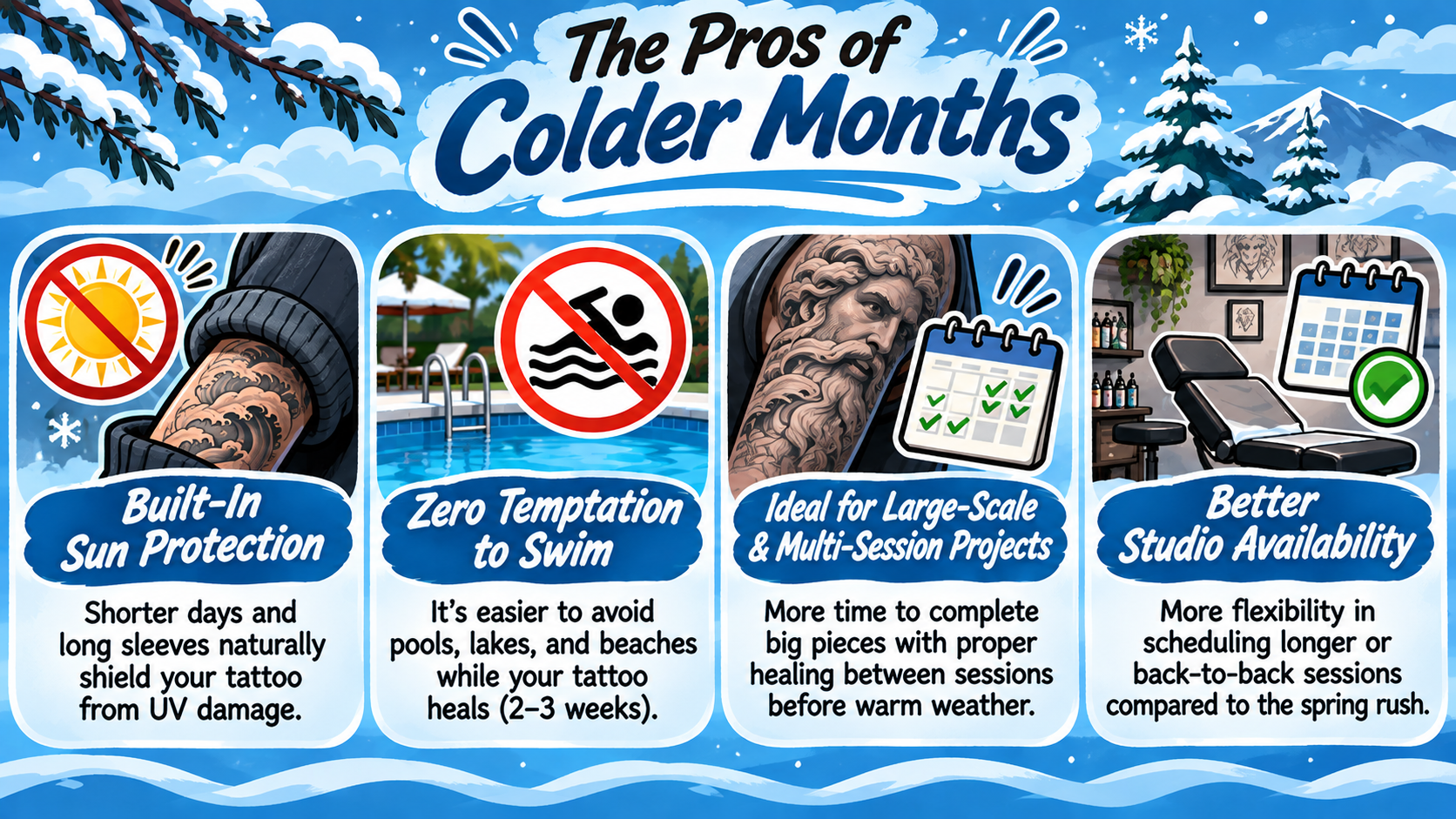
The Pros of Colder Months
Built-In Sun Protection: Shorter days, overcast skies, and long sleeves naturally shield your fresh tattoo from UV damage without you having to actively dodge the sun or carry extra layers every time you step outside.
Zero Temptation to Swim: Skipping the beach, cottage lake, or neighborhood pool is effortless when it’s cold outside. You won’t feel like you are missing out on social plans while waiting two to three weeks for your skin to seal up.
Ideal for Large-Scale & Multi-Session Projects: Full sleeves, leg sleeves, back pieces, and detailed realism work require weeks of healing between appointments. Starting in autumn or winter gives you plenty of runway to finish and fully heal before warm weather returns—without having to show off an in-progress piece mid-way through.
Better Studio Availability: While great studios stay busy year-round, winter often gives you a little more flexibility when scheduling multi-hour sessions or back-to-back dates compared to the spring pre-summer rush.
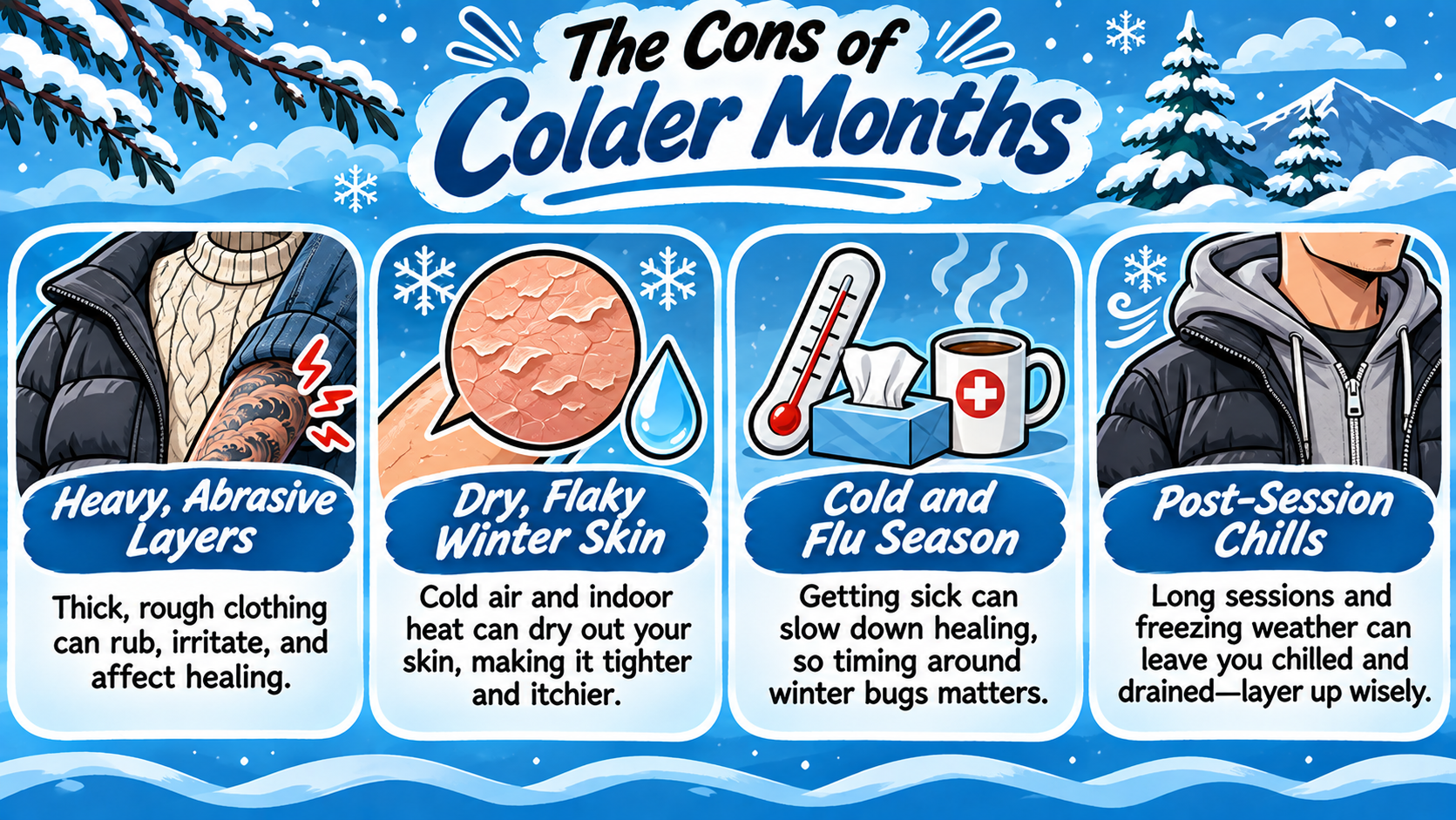
The Cons of Colder Months
Heavy, Abrasive Layers: Tight denim, rough wool sweaters, fleece linings, and stiff coat cuffs can rub against fresh scabs, trap fabric lint in healing ointment, and pull ink out prematurely. You’ll need to wear soft, clean, loose cotton layers directly over your fresh tattoo.
Dry, Flaky Winter Skin: Freezing wind outside and cranked-up furnaces inside strip moisture right out of your skin. Healing tattoos get noticeably tighter and itchier in winter, meaning you have to stay consistent with a thin layer of fragrance-free moisturizer.
Cold and Flu Season: Your immune system is the engine that heals your tattoo. Coming down with a winter bug right before or after a long session can slow down your recovery—and getting tattooed while sick is never safe for you or your artist.
Post-Session Chills: Sitting still for hours can drop your body temperature, and stepping out into freezing weather right after a long session can leave you feeling drained. Dressing in easy-to-remove layers (like a zip-up hoodie over a soft tee) helps keep you comfortable before and after.
Factoring in the Holidays, Christmas & Winter Vacations
One thing people often overlook when planning a winter tattoo is the December holiday crunch—and everything that comes with it. Between buying Christmas gifts, hosting family, attending holiday parties, and booking winter getaways, your wallet and your calendar both take a hit at the end of the year.
Holiday Budgeting: Quality custom tattoos are an investment. Trying to squeeze a big multi-hour session into the same month you are buying gifts for everyone on your list can put unnecessary stress on your budget. Planning ahead—or saving your session for January or February once the holiday dust settles—makes it much easier to invest in the piece you actually want without cutting corners.
Winter Sun Vacations: Escaping the cold for a week in Mexico, the Caribbean, or Florida is one of the best perks of winter, but it brings summer aftercare rules right back into play. If you have a tropical trip booked, make sure you get tattooed at least three to four weeks before you fly so your skin is fully healed before hitting the beach or resort pool.
Holiday Gift Cards: On the flip side, the holidays are the best time to ask family or friends for tattoo studio gift cards—giving you a head start on funding your next session in the new year.
The Verdict: Which Season Should You Choose?
At the end of the day, there is no single "wrong" time of year to get tattooed—only the season that best matches your placement, piece size, and daily lifestyle. A great artist can execute clean, lasting work in January just as easily as in July, and your body knows how to heal year-round as long as you give it the right conditions. The real difference comes down to how much effort you want to put into protecting your fresh ink during those critical first few weeks.
If you are planning a smaller piece, love showing off fresh ink right away, and don’t mind staying out of the pool and keeping your new tattoo shaded for a couple of weeks, the warmer months work great. On the other hand, if you are gearing up for a large custom project, spend your summer weekends at the lake or beach, work outdoors, or simply want the lowest-maintenance healing routine possible, the colder months win hands down.
Our Studio’s Honest Take
If you ask our artists for their honest, behind-the-chair recommendation, waiting until after summer is almost always the smartest move you can make. Years of tattooing—and seeing how different pieces heal across all four seasons—have shown us time and time again that post-summer appointments give your skin the easiest, most stress-free recovery. You don’t have to dodge the sun, skip out on vacations, worry about sweat and water ruining fresh ink, or walk around in tank tops with a half-finished sleeve. Instead, you get to heal comfortably through the fall and winter and walk into next summer with crisp, fully settled artwork that’s ready to show off from day one.
Ready to Bring Your Next Idea to Life?
No matter what the forecast looks like outside, the most important decision you will make is choosing the right artist for the job. Looking for the best tattoo shop in Toronto, Vaughan and Greater Toronto Area? Take a look through our Misfits Tattoo Artists to explore their portfolios, check out their specialties, and find the style that fits your vision. When you’re ready to lock in your date, reach out to book your free consultation with our studio—we’ll help you plan the timing, placement, and design so your tattoo heals right and looks sharp for decades.