Everyone loves a good bargain. Finding a half-price flight, scoring a clearance jacket, or snagging two-for-one tacos? Absolute victory. Finding a "budget" tattoo artist? That is a plot twist nobody wants on their body for the next fifty years.
In professional tattooing, an artist’s rate covers way more than just the hours spent buzzing ink into your skin. You are paying for commercial studio rent, medical-grade sterilization, blood-borne pathogen training, single-use needles, tattoo supplies and inks, and the years of experience through trial, error, and hand cramps required to pull a straight line on a moving, breathing human being. When a quote comes back suspiciously cheap, it is rarely because the artist just feels like doing charity work. It is usually a clue that corners are being cut somewhere, and you definitely don’t want those corners cut on your skin.
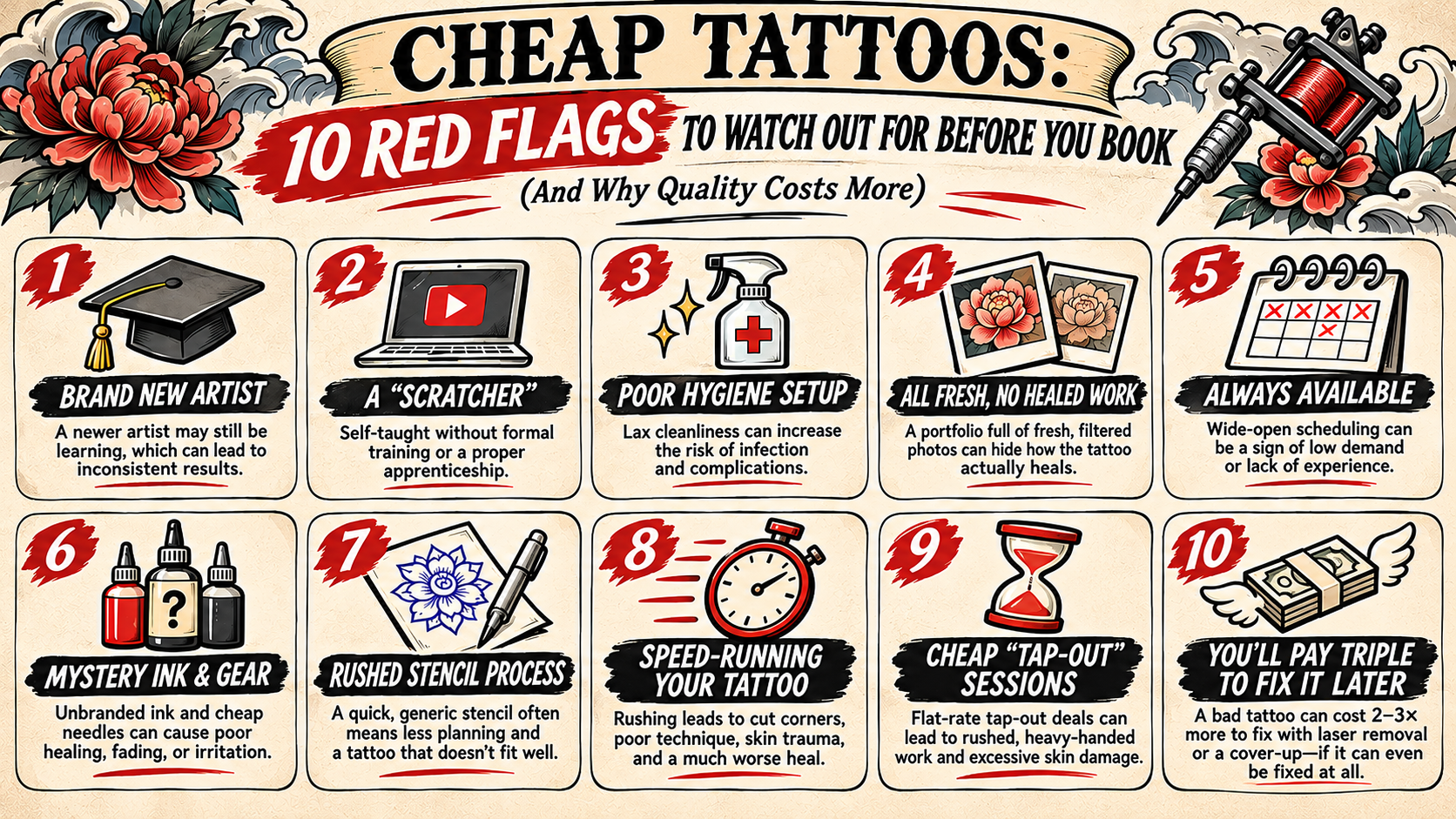
Before you hand over a deposit for a deal that sounds too good to be true, keep an eye out for these ten red flags (and see why holding out for the right artist is always the smartest move).
1. They’re Inexperienced (And Your Skin Is Their Practice Pad)
Every great artist starts at square one, and charging discounted rates is a normal way for junior artists or apprentices to get real-world experience. Supporting up-and-coming talent is great, as long as you actually know you are signing up to be part of their learning curve.
Tattooing a flat outer forearm is one thing; tattooing ribs, knees, or an inner bicep where the skin stretches like a rubber band is a completely different sport. Without years of hands-on experience, a newer artist can easily misjudge needle depth or machine speed, leaving you with shaky lines or patchy shading once the scabs fall off.
How to spot it: Ask how long they have been tattooing on real skin (synthetic practice skin doesn’t bleed, flinch, or swell) and check for healed photos of the exact style and body placement you want. Do your research and go through their Instagram page too, and check the dates on when they started posting their tattoo work.
2. They’re a "Scratcher" Without Formal Training
In the tattoo world, a "scratcher" is someone who ordered a $70 tattoo kit off the internet, watched a few free YouTube tutorials, and suddenly decided their kitchen, basement or garage is a private tattoo studio. Unlike licensed professionals who earn their spot through a gruelling, multi-year studio apprenticeship, self-taught operators skip the foundational mentorship that teaches proper hygiene, machine tuning, and safe skin handling.
Without veteran artists watching over their shoulder, bad habits become permanent, literally.
How to spot it: Make sure the artist works out of a legitimate, publicly accessible commercial shop, and don't be shy about asking where they did their apprenticeship and which artist they learned under.
3. Their Hygiene Setup Feels Like a Science Experiment
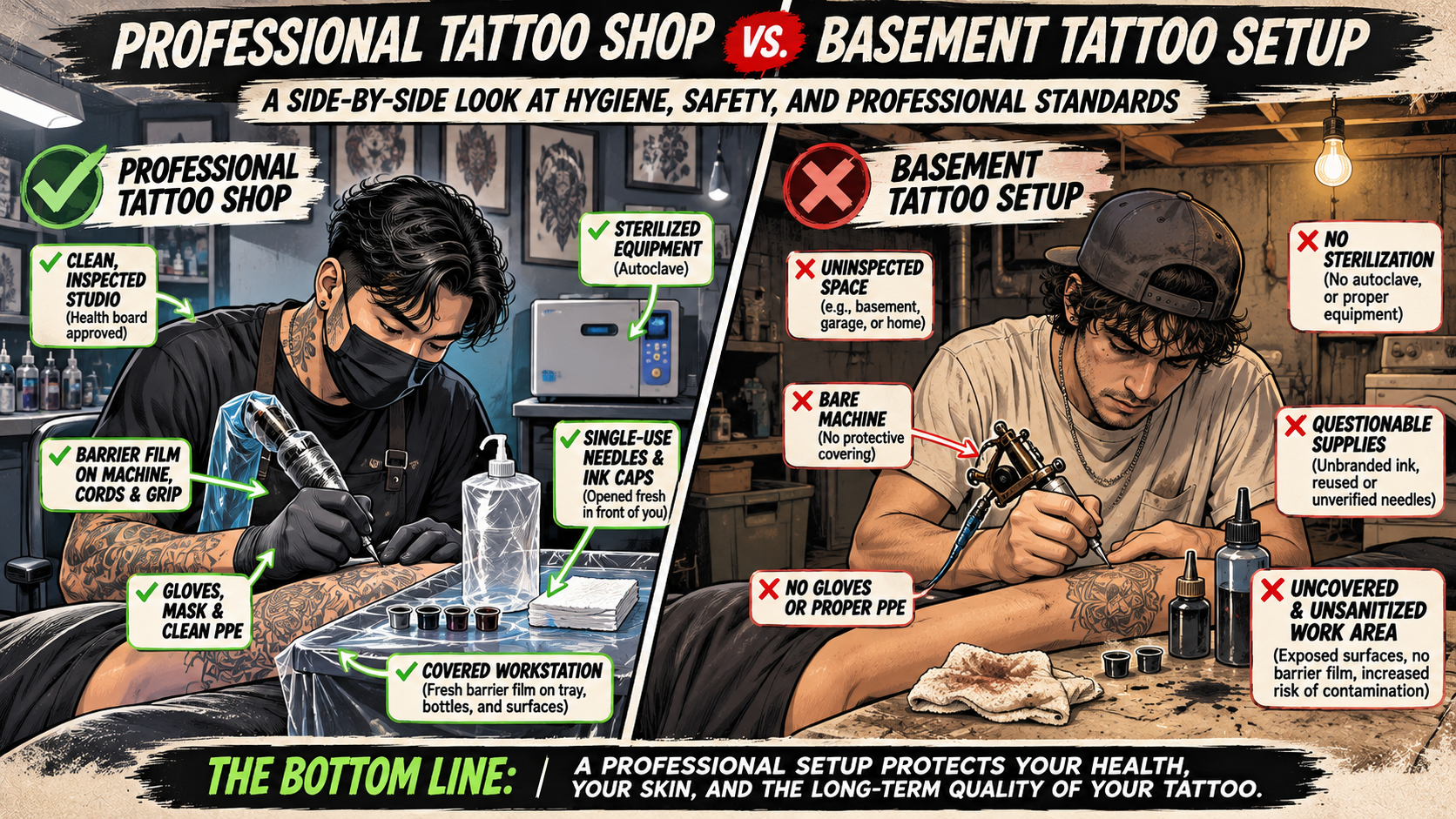
Tattooing involves needles breaking your skin barrier, which means infection control isn't optional, it’s everything. Legitimate shops spend a small fortune every month on hospital-grade disinfectants, single-use cartridges, barrier film, plastic covers and sleeves, and proper sharps disposal, all backed by regular public health inspections.
When someone is charging rock-bottom prices out of an uninspected space, hygiene is usually the first thing tossed out the window.
How to spot it: Check for a current health board inspection certificate on the wall, make sure needles and ink caps are opened fresh right in front of you, and walk out immediately if their machine, cords, squeeze bottles, hands, and work tray aren't wrapped in fresh barrier film, covers, sleeves and gloves.
4. Their Portfolio Is All Fresh Ink and Heavy Filters
Fresh tattoos are total catfish. Right after a session, even mediocre work can look crisp and dark because the ink is sitting right on the surface of swollen skin. The real truth shows up six months later once your skin has fully healed and settled.
Bargain operators often mask wobbly lines and overworked skin with high-contrast photo filters, ring lights, and suspiciously tight cropped angles.
How to spot it: Scroll past the fresh, glossy photos and hunt for healed work that is at least six months to a year old. Unedited videos of finished tattoos are also what you should look for. Filters can hide a lot, but video doesn't lie.
5. Their Schedule Is Wide Open Tonight, Tomorrow, and Forever
Sure, every great artist gets the occasional last-minute cancellation. However, seasoned pros with a solid reputation are usually booked out weeks or months in advance, and they have a structured booking and consultation process to plan custom work.
If an artist can squeeze a massive, detailed sleeve into their calendar tonight at half the normal going rate, pause and ask yourself why nobody else is sitting in their chair.
How to spot it: Pay attention to how they book you. A true professional will ask detailed questions about sizing, placement, and reference ideas before tossing out a final price or locking in a date. Be weary of artists offering full day sessions or sleeves for prices that seem too good to be true too.
6. They’re Using Mystery Ink and Bargain-Bin Gear
High-end wireless rotary machines, precision needle groupings, and batch-tested pigments cost real money. When an artist is charging pennies, they have to keep their supply costs low—which often means buying unbranded cartridges and generic bulk ink from sketchy third-party sites.
Cheap needles can snag and chew up your skin (hello, raised scarring), while low-grade pigments can fade unevenly, turn weird shades of blue-green, or irritate your skin years down the line.
How to spot it: Ask what ink brands and needle cartridges they use. Reputable artists take pride in their gear and will gladly tell you (we have a separate blog post on tattoo inks and popular brands that you can find here).
7. The Stencil Process Feels Like a Pit Stop
Great tattoos are won or lost before the machine ever turns on. Customizing a design so that it flows naturally with your muscles and checking symmetry takes time and patience. When an artist undercharges, they often skip custom design tweaks altogether and end up slapping a generic, unedited image onto your skin and rushing through placement just to get the needle moving.
How to spot it: Never let anyone rush you past the mirror check. Look at the stencil standing up naturally in a relaxed posture, and make sure you are 100% happy with the sizing, symmetry, and flow before a single drop of ink goes in.
8. They’re Speed-Running Your Tattoo (And Your Skin Pays the Price)
When an artist charges rock-bottom rates, the only way they pay their bills is by cramming as many clients into a day or week as possible. That financial pressure turns your appointment into a race against the clock—and rushing a tattoo is a recipe for disaster.
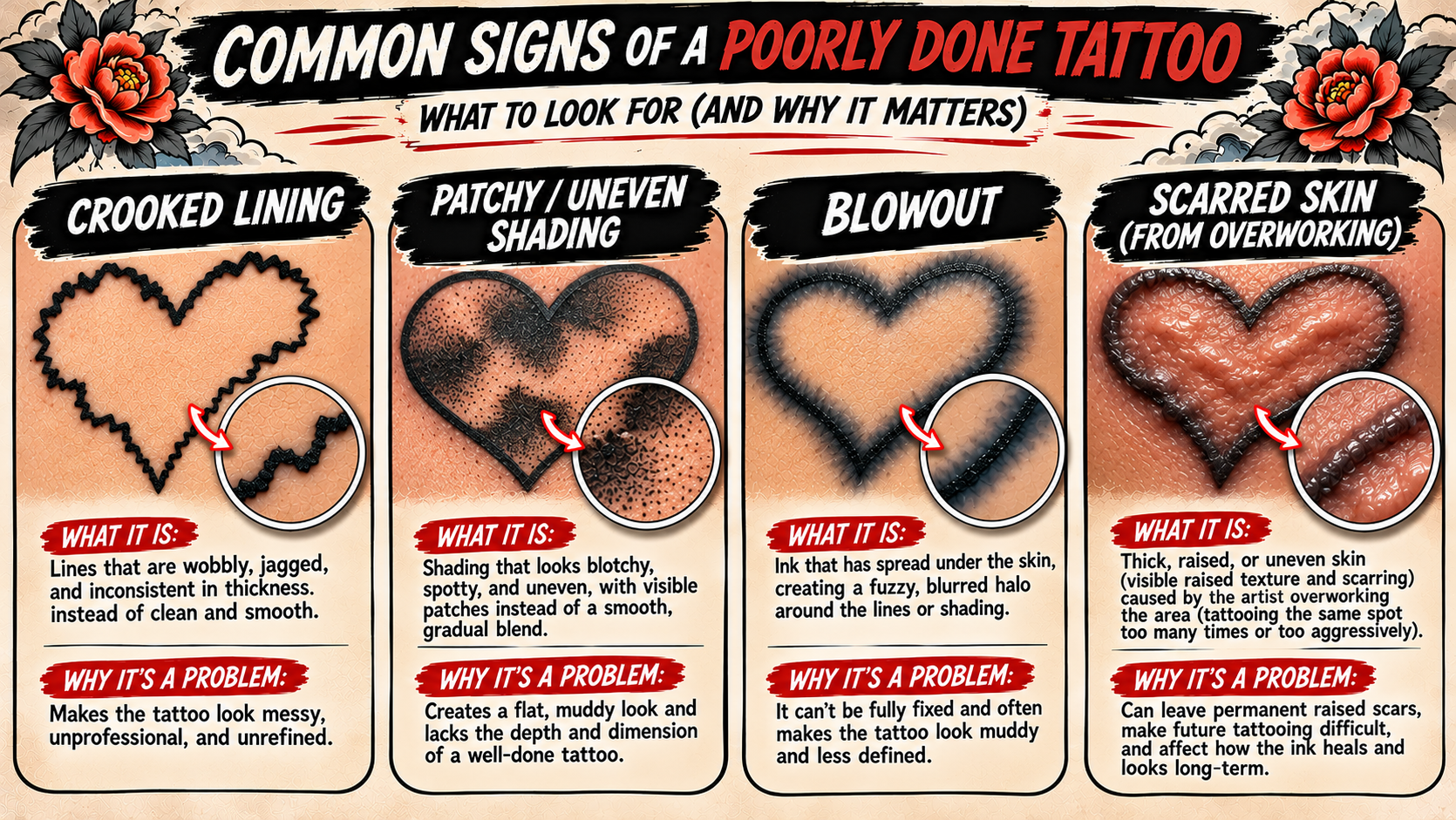
To shave hours off a session, a rushing artist will cut out intricate details, skip smooth shading transitions, and zoom through linework way too fast. When an artist moves carelessly or lacks the technical control to match their machine speed to their hand speed, your skin takes a beating. Going too deep causes blowouts (fuzzy, bruised-looking halos where ink spreads under the skin), while working too shallow leaves the tattoo too light and patchy once it heals. Worse yet, repeatedly chewing up the same spot in a hurry causes severe tissue trauma—leading to thick, raised scarring, heavy scabbing, and ink that heals muddy, overly dark, or blown out.
How to spot it: Ask how long they expect your piece to take and look closely at their zoomed-in work. If a complex, detailed design is quoted at an unrealistically fast timeframe—or their lines look choppy and transitions look scratchy—they are rushing the process.
9. Cheap "Tap-Out" Sessions That Turn Into an Endurance Trap
"Tap-out" deals—where you pay one flat, heavily discounted rate to get tattooed for as long as you can handle the pain—sound like an unbeatable bargain on paper. In reality, they create a messy conflict of interest between you and the artist. Because the artist is locked into a flat fee, there is zero financial incentive to pace the work properly, take thoughtful breaks, or focus on delicate, time-consuming details.
Even worse, tap-out sessions often turn into a painful game of chicken. Some tattooists (not all) will deliberately turn up their machine voltage, work heavy-handed, or jump straight into the most tender areas to make you "tap out" early so they can collect the full flat rate in half the time. On the flip side, if you try to tough it out for eight or ten straight hours, your skin becomes overly swollen, exhausted, and resistant to taking ink—leading to severe tissue trauma, poor saturation, and a brutal healing process.
How to spot it: Be wary of artists constantly advertising cheap flat-rate tap-out specials on social media. Established pros price by the piece or by a transparent day rate with clear time boundaries, pacing your sessions around what your skin can actually handle.
10. You’ll End Up Paying Triple to Fix It Later (If It Can Even Be Fixed at All)
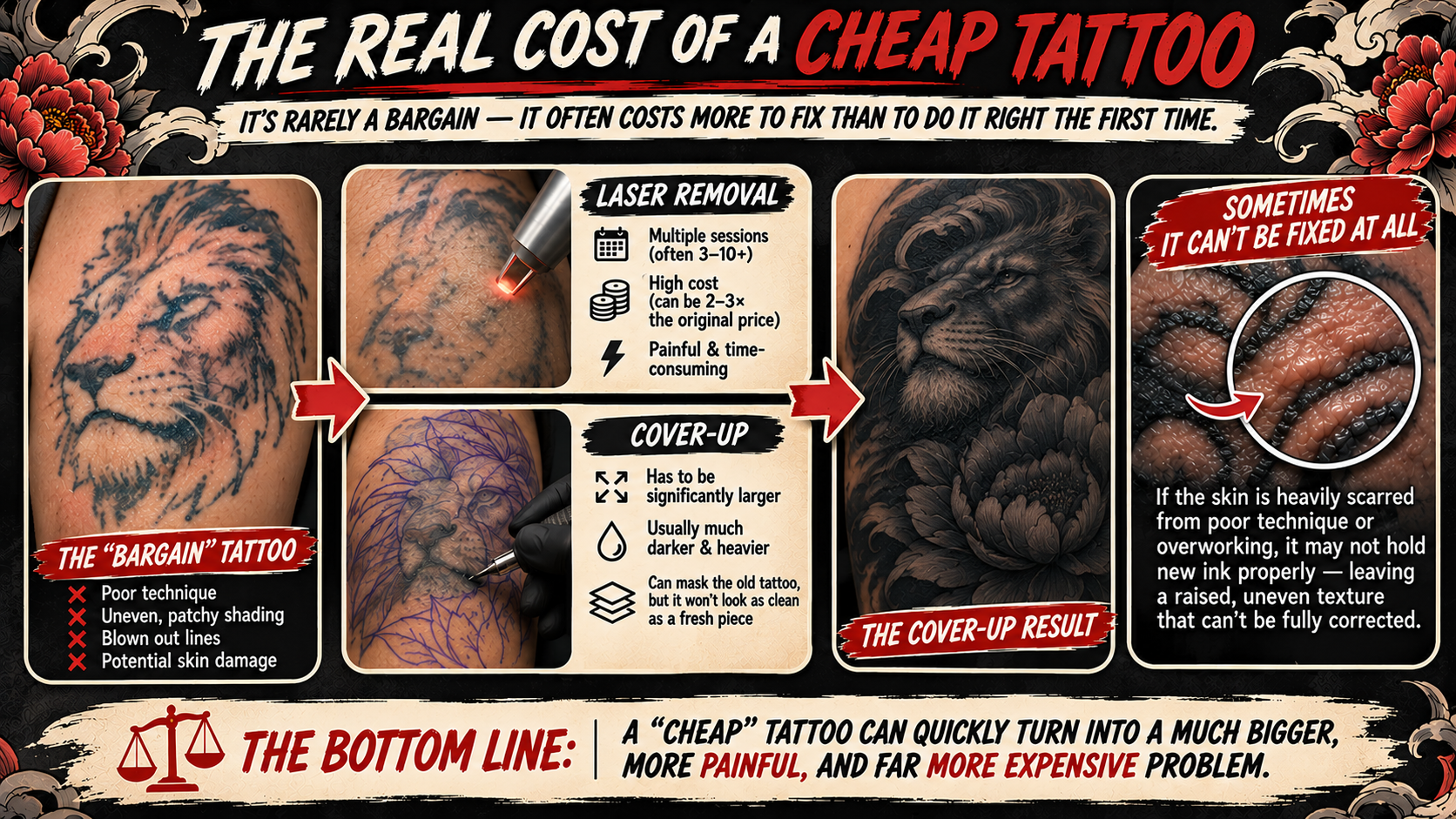
The ultimate plot twist of the "cheap" tattoo is that it ends up being wildly expensive and sometimes impossible to fully undo. Fixing a botched tattoo usually requires multiple rounds of painful, pricey laser removal or a heavy cover-up, which can easily cost two to three times what it would have cost to just do it right the first time.
Even worse, some bargain tattoos can’t be fixed at all. If an inexperienced artist lacks the proper technique and chews up your skin, the resulting thick, raised scar tissue won't hold new ink evenly, leaving the warped texture visible right through any attempt to rework it. Even when a cover-up is possible, it is never a magic reset button: a cover-up rarely looks as crisp, bright, or effortless as a tattoo applied to fresh, untouched skin, and you almost always have to go significantly larger and much darker just to mask the mistake underneath.
Why Great Artists Cost More (And Why It’s Worth Every Penny)
When you book with an experienced, sought-after artist, you aren't just paying for their time in the chair—you are paying for years of mastery, hours of behind-the-scenes drawing, top-shelf supplies, and peace of mind. An experienced pro knows how to pack ink cleanly with minimal trauma so your skin heals smoothly and your tattoo still looks sharp decades from now.
Think about it this way: you’ll drop $150 on a dinner you forget about by Tuesday, or $1,000 on a phone you’ll replace in three years. A tattoo is with you 24/7 for life. Split the cost of a great tattoo across 30 or 40 years, and paying a few hundred dollars more upfront literally comes down to pennies a day for art you actually love looking at and would want to show off.
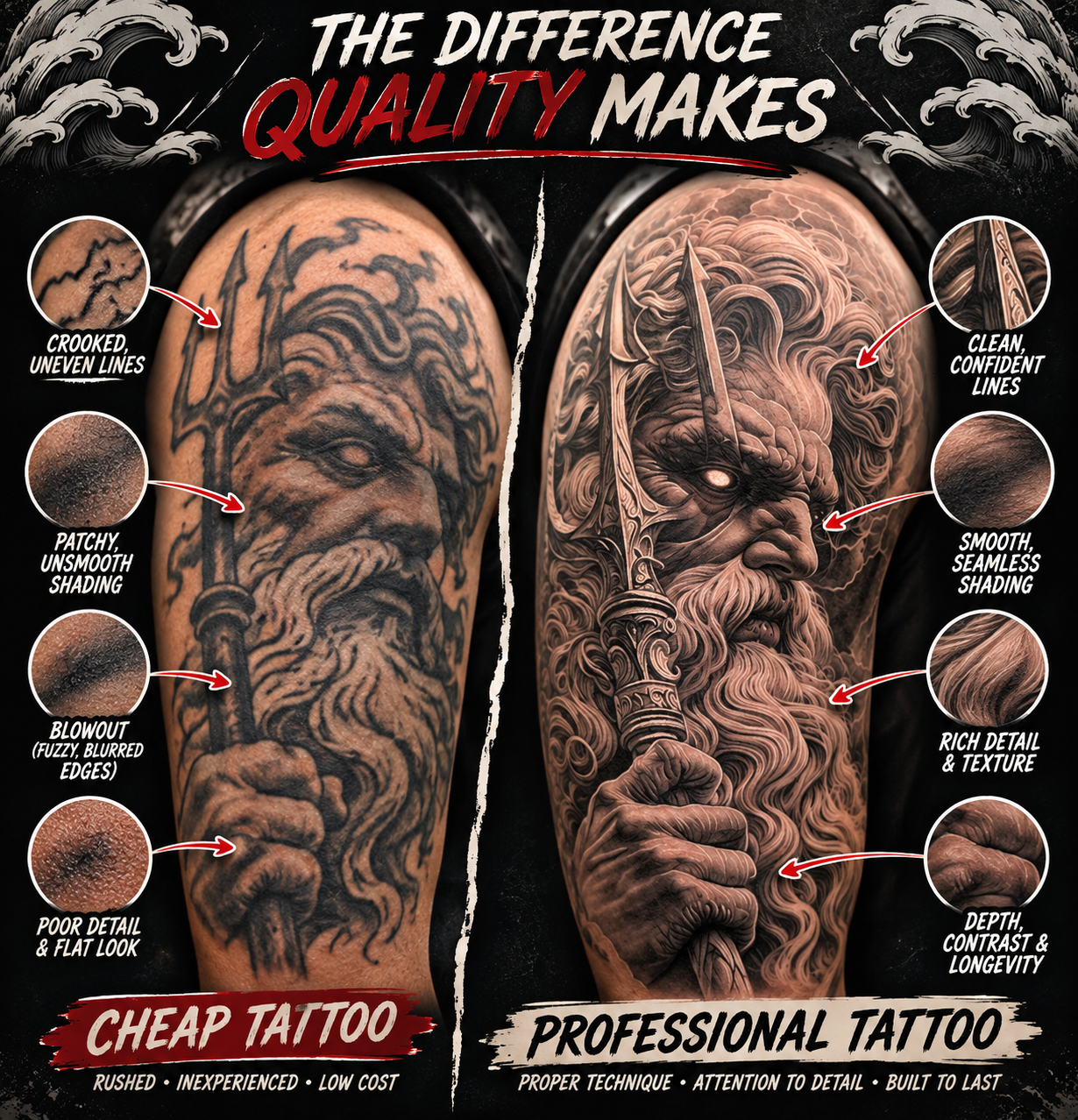
Examples of two different Poseidon tattoos. The second tattoo (on the right) is a piece done by our resident artist — Martin
Why Saving Up Beats Rushing Every Single Time
When you have a cool tattoo idea burning a hole in your brain, waiting months to save up (or sitting on a waitlist for your dream artist) can feel like torture. Do it anyway.
Prime skin real estate like your forearm, shoulder, or chest is non-renewable; once it’s tattooed poorly, that blank canvas is gone for good. Taking a few extra months to set money aside gives you time to refine your idea and lock in an artist whose healed portfolio blows you away. Patience is a small price to pay to avoid a lifetime of wearing long sleeves in July.
At the end of the day, a tattoo is one of the few things you buy in life that you truly cannot return, exchange, or leave in the back of your closet. Price shopping has its place, but permanent art on your body isn't it. Do your homework, check those healed portfolios, trust your gut when a quote feels suspiciously low, and hold out for an artist whose work makes you excited (not nervous) for appointment day. Your future self will thank you every time you catch a glimpse in the mirror.
Ready to Book Your Dream Tattoo? Book with the Professionals at Misfits Tattoo
At Misfits Tattoo in Vaughan, Ontario, our team of premier artists is committed to executing flawless, high-end custom designs tailored entirely to your personal aesthetic. We pair master-level craftsmanship with advanced wireless technology and a pristine and sterile studio environment to guarantee your absolute safety and comfort throughout the entire process.
Do your homework, check those healed portfolios, trust your gut when a quote feels suspiciously low, and hold out for an artist whose work makes you excited (not nervous) for appointment day. Ready to bring your next tattoo concept to life with confidence? Explore our talented artists' portfolios and secure your consultation before booking a session with us today. Your future self will thank you every time you catch a glimpse in the mirror.