What Is Tattoo Ink Made Of? Ingredients, Brands, and Safety Explained
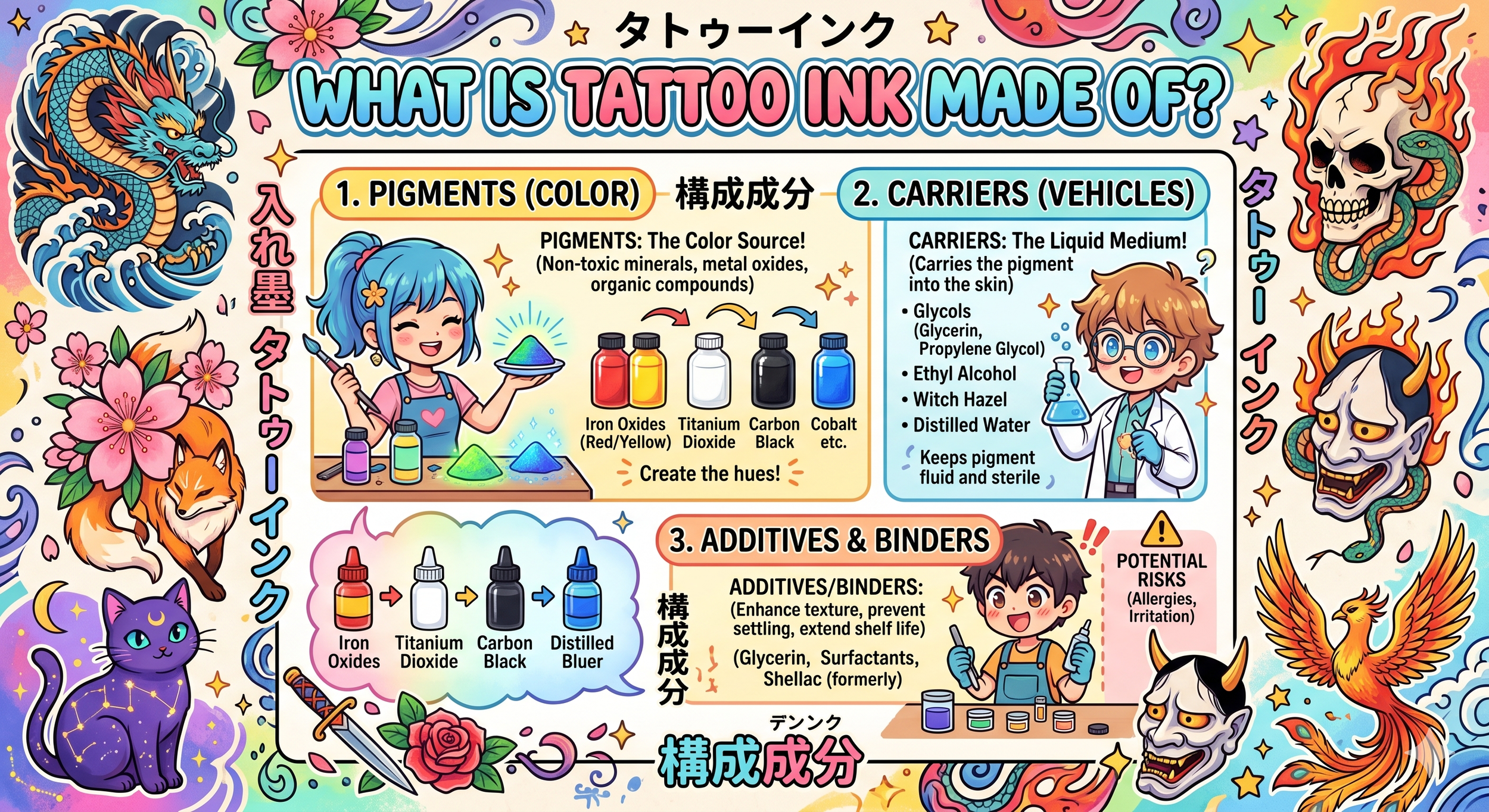
Ever wonder what actually happens when that needle makes impact? It’s not just generic "color" going into your skin. It is a highly engineered suspension of solid microscopic particles trapped permanently inside your dermis (the second layer of your skin).
Understanding tattoo ink ingredients is essential whether you are planning your first piece or adding to a full sleeve. Tattoo ink is a two-part chemistry project: pigments (the solid powders that provide color) and carriers (the liquids that keep everything sterilized, evenly blended, and fluid enough to flow smoothly out of a needle cartridge).
Let’s lift the curtain on what is in tattoo ink, breaking down the chemical spectrum by shade, the heavy-hitter professional brands dominating the industry today, and the health questions you should consider before getting inked.
The Anatomy of Color: Tattoo Ink Ingredients by Shade
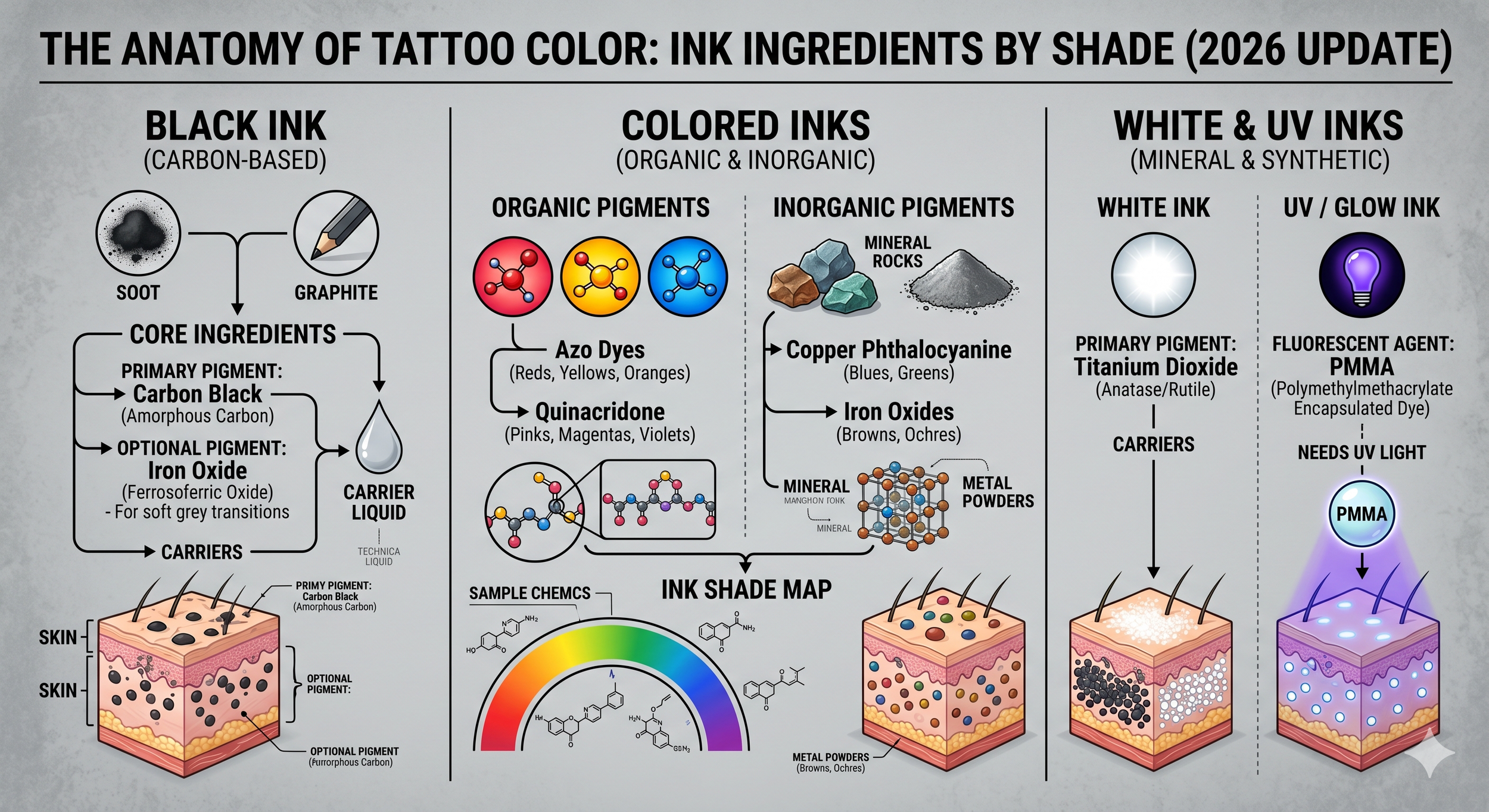
The core chemicals used to make your favorite shades vary immensely. While modern technology has largely phased out the genuinely dangerous heavy metals of the 20th century (like mercury and lead), the building blocks are still heavily mineral and chemical-based.
Black Tattoo Ink: The Carbon Workhorse
Black ink is the backbone of almost every tattoo style, and its recipe is surprisingly simple. Nearly every professional black ink relies on Carbon Black (soot collected from burning oil or wood). It creates a deeply saturated, lightfast black. For soft grays or shading washes, manufacturers sometimes blend in Iron Oxide, which yields a slightly more muted, slate-gray undertone when diluted.
Colored Tattoo Inks: Organic vs. Inorganic
Modern color formulations generally lean on a blend of two categories:
Organic Pigments: Carbon-based synthetic molecules, like azo dyes and quinacridone. They are the secret behind neon yellows, electric pinks, and ultra-vibrant reds, boasting an intense saturation ratio favorite for illustrative art.
Inorganic Pigments: Mineral-based elements derived from nature or synthesized in a lab. Think Copper Phthalocyanine for rich, deep blues and greens, or Iron Oxides for earthy, traditional browns and ochres.
White Tattoo Ink: The Brightener
White ink needs to be thick and completely opaque to cover or highlight darker pigments. Because of this, it is almost universally made from Titanium Dioxide, a natural mineral powder that reflects light perfectly.
UV and Glow-in-the-Dark Tattoo Ink: The Blacklight Trick
First things first: safe modern tattoo inks do not actually glow in total pitch black. If they do, they likely contain phosphorus, which is highly toxic and heavily banned.
True UV blacklight tattoos react exclusively to non-visible ultraviolet light through fluorescence. This effect is achieved using polymethylmethacrylate (PMMA)—microscopic plastic spheres that encapsulate a fluorescent dye safely so it doesn't leak directly into your tissue.
Regular Black Ink vs. Triple Black Ink: What's the Difference?
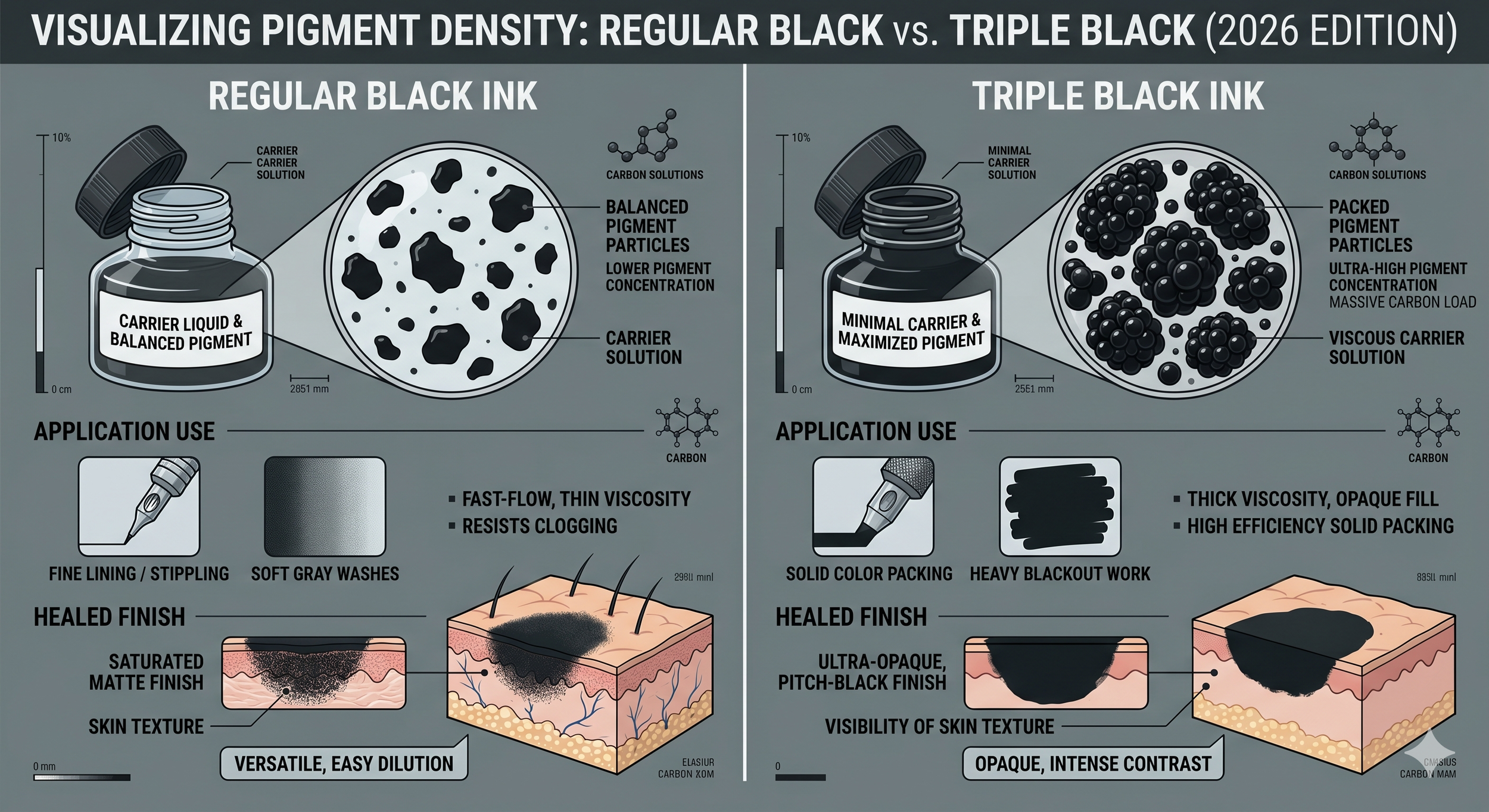
When browsing a professional setup, you'll constantly see artists using standard blacks alongside bottles labeled "Triple Black." The difference isn't a completely different chemical—it boils down to pigment density and viscosity (thickness).
Regular Black Ink: Formulated with a balanced, thinner consistency. It is engineered to flow fast and clean through tight round liner needles. Because it spreads predictably and dilutes easily with sterile water or witch hazel, it is the ultimate all-purpose choice for crisp outlines and smooth, soft gray shading washes.
Triple Black Ink: This features a massively increased pigment load—meaning there are up to three times the amount of concentrated Carbon Black particles packed into the same amount of carrier liquid. The ink is significantly thicker and heavier. It is explicitly designed for solid color packing, large tribal fill-ins, and deep-contrast heavy blackout work.
Artist Note: Because Triple Black is packed with denser, microscopic carbon particles, it absorbs light completely for a pitch-black finish. However, because of its thickness and intensity, using it for fine lining increases the risk of an accidental blowout if the depth isn't perfectly controlled.
The Brand Breakdown: Black Inks vs. Colored Inks
In 2026, the global tattoo community demands strict safety metrics, such as EU REACH compliance. Because manufacturing a perfect, fluid black requires a completely different chemical balance than engineering a stable, vibrant color palette, the top brands usually specialize in one or the other.
The Elite Black Inks (Lining, Shading, and Solid Fills)
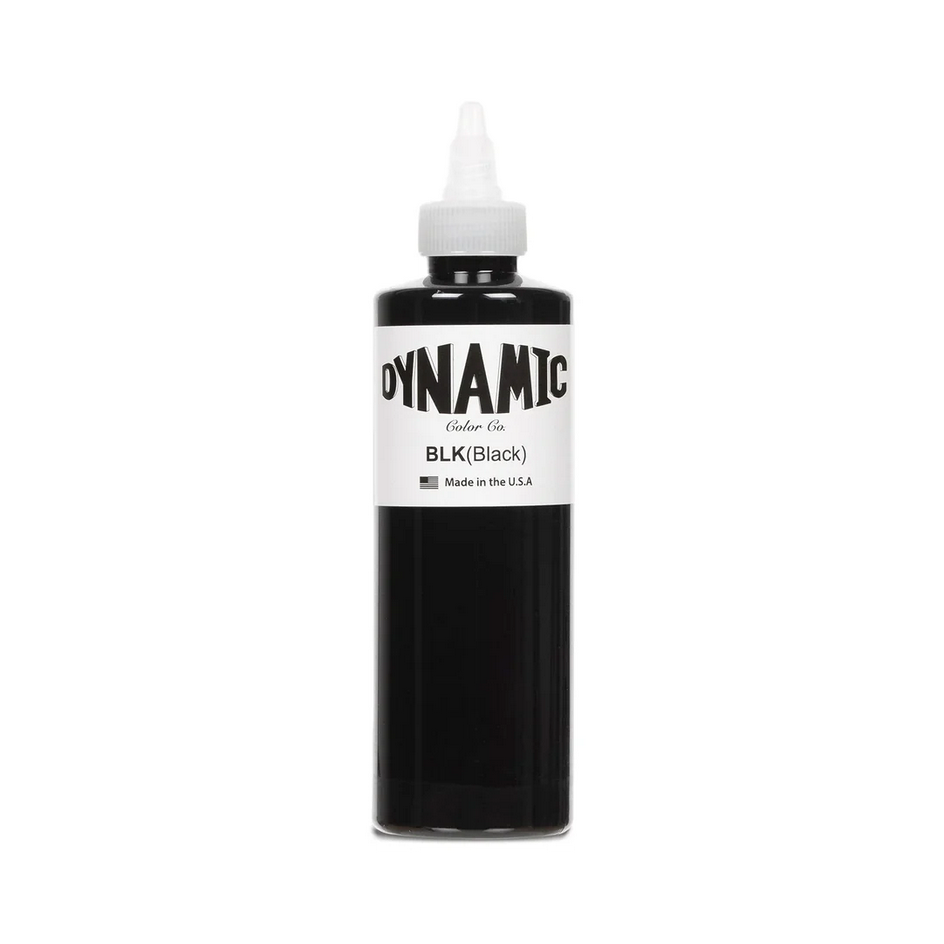
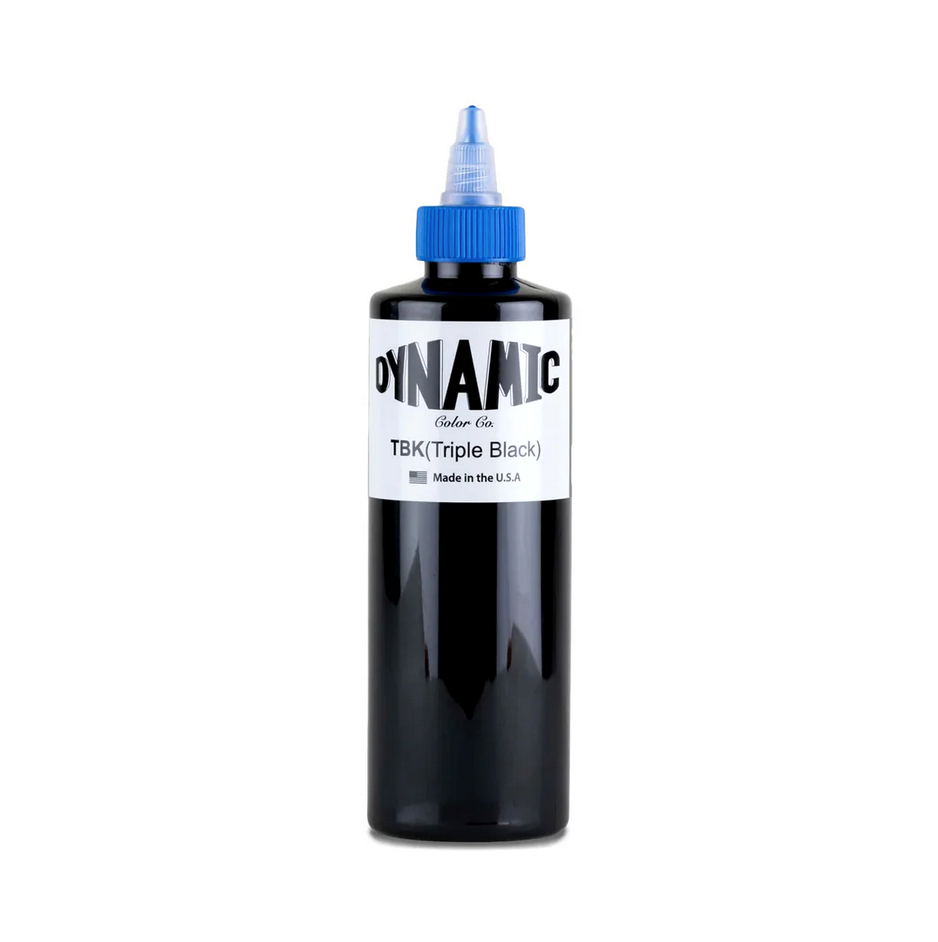
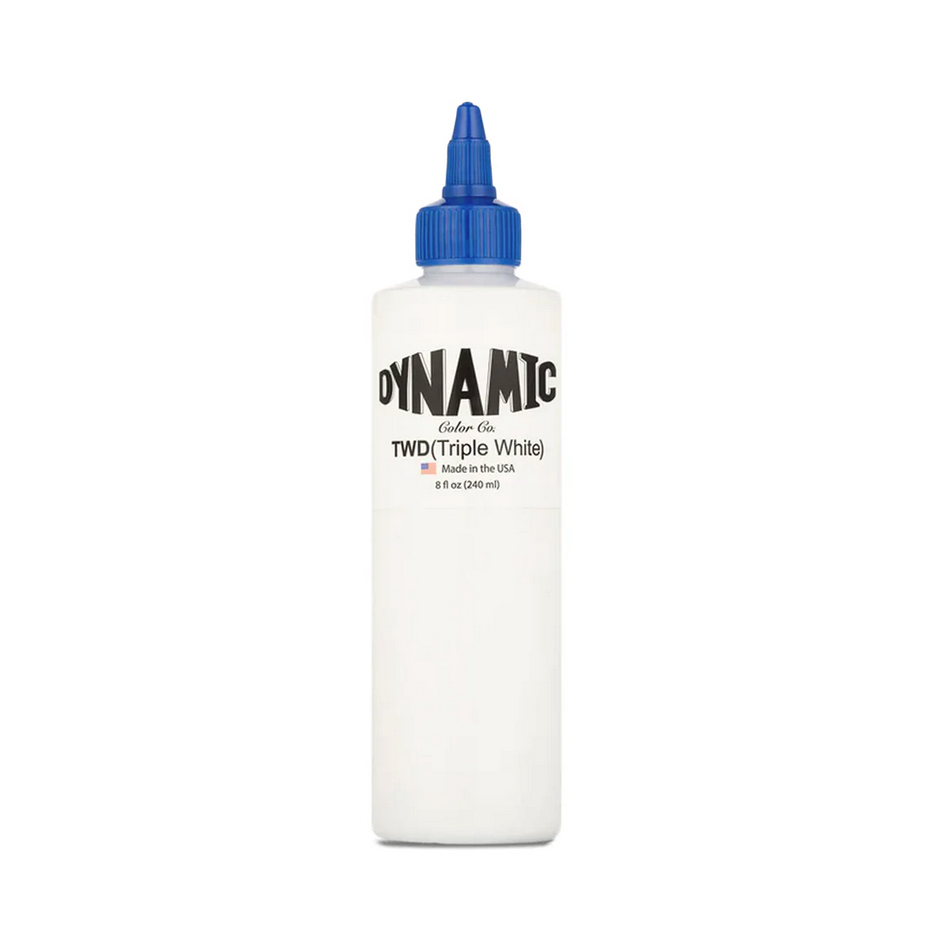
1. Dynamic Ink
The Reputation: The ultimate global industry staple for crisp lining and solid blackwork.
The Formulation Base: Dynamic keeps its carrier fluid incredibly thin and fast-flowing by blending distilled water, isopropyl alcohol, and witch hazel. This combo creates a highly fluid dynamic ink that flows effortlessly out of a cartridge needle.
Key Ingredients: Their legendary Dynamic Black and Triple Black are built on a heavy concentration of pure Carbon Black. They pride themselves on a completely vegan, acrylic-free formula that resists turning blue or green as it ages.
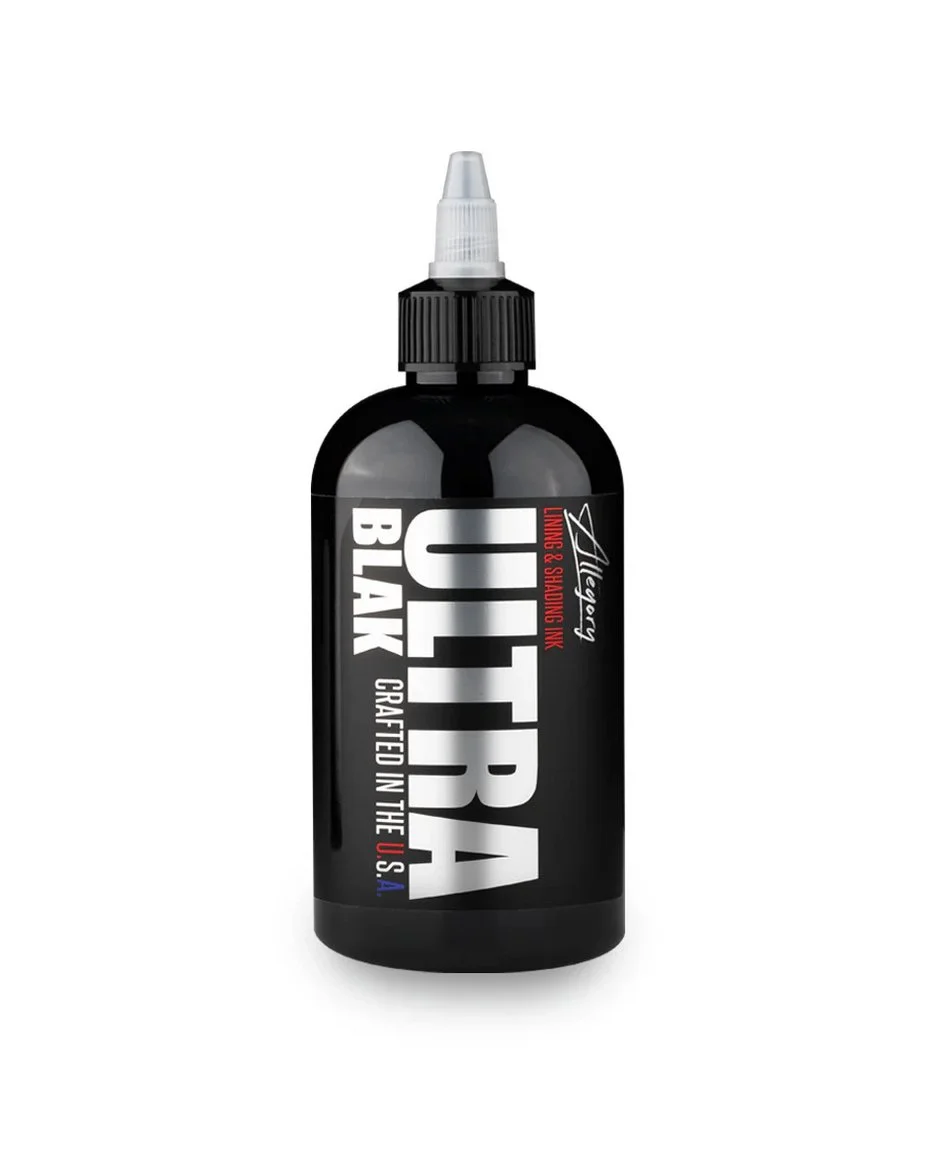
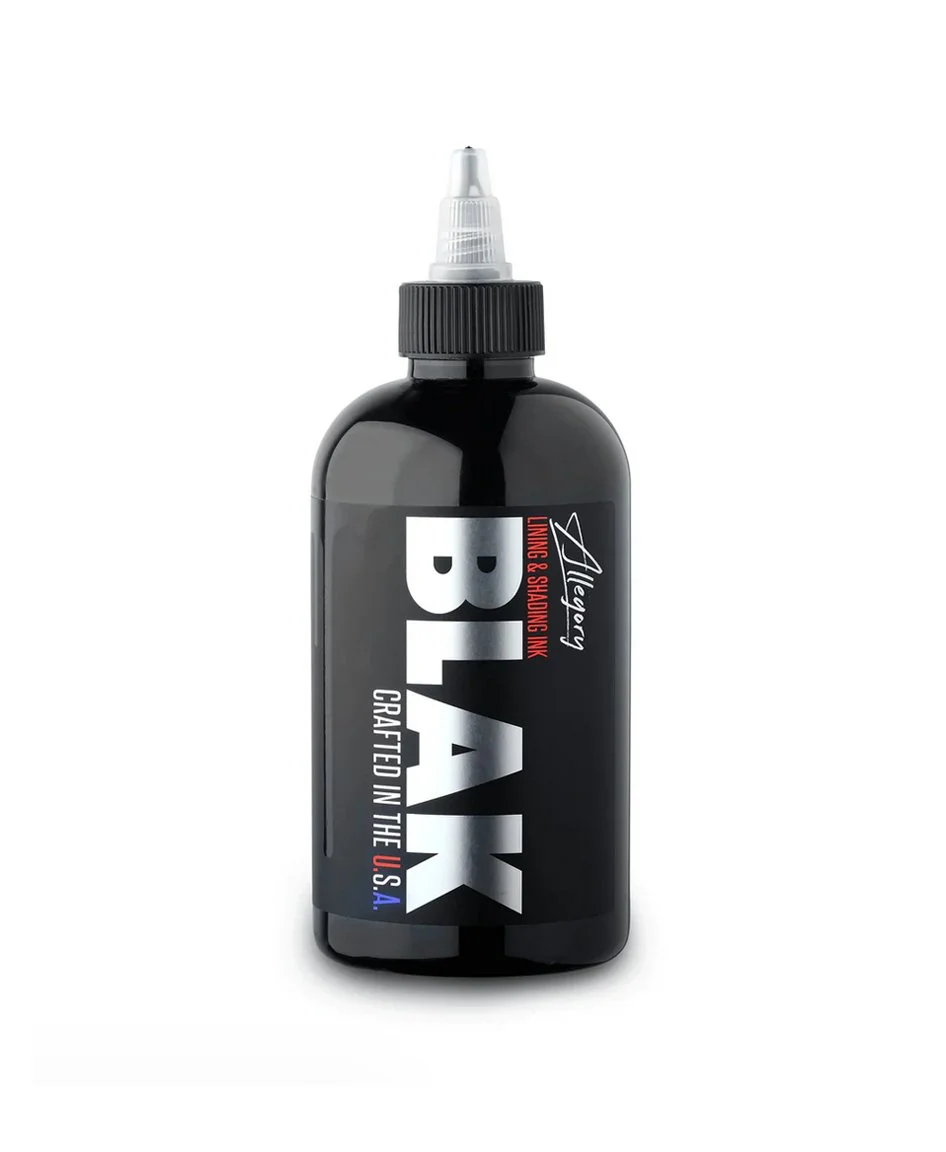
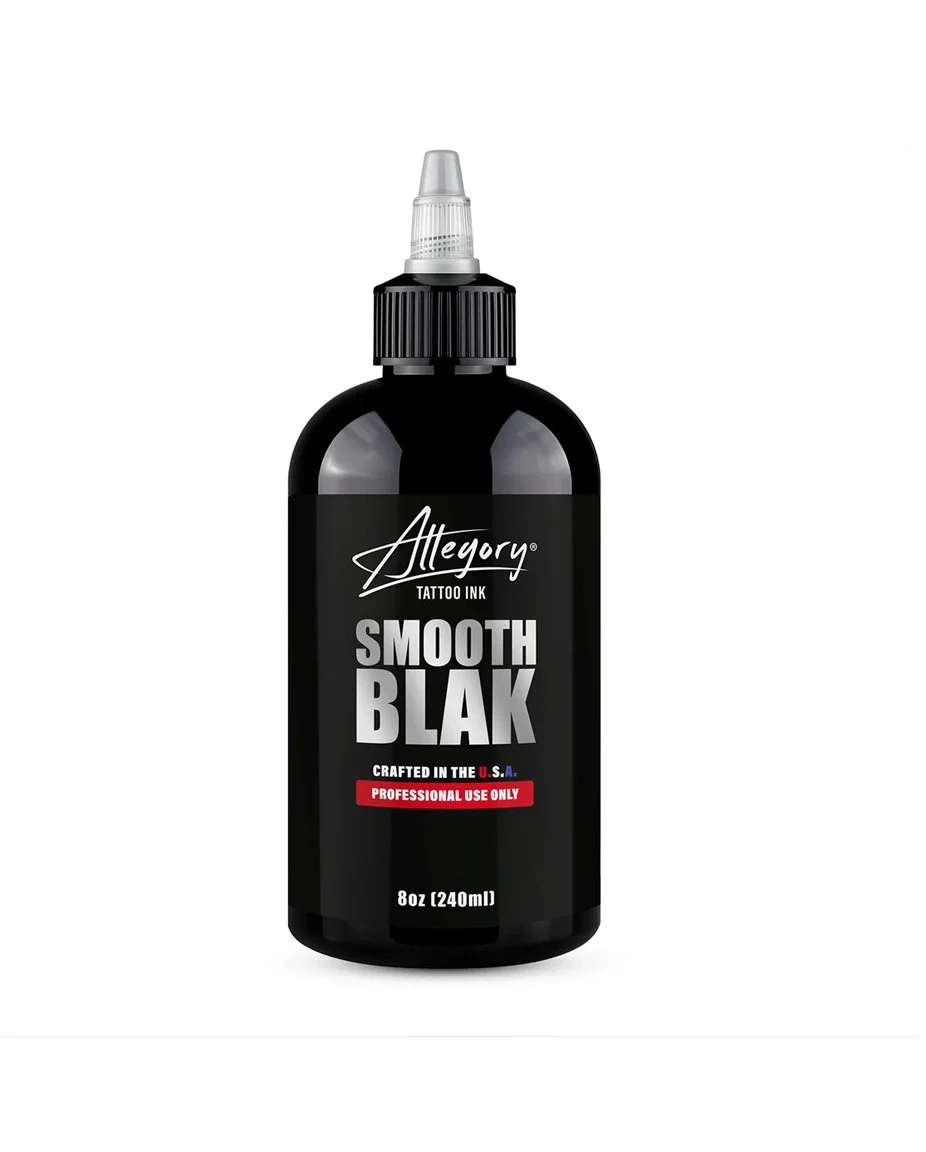
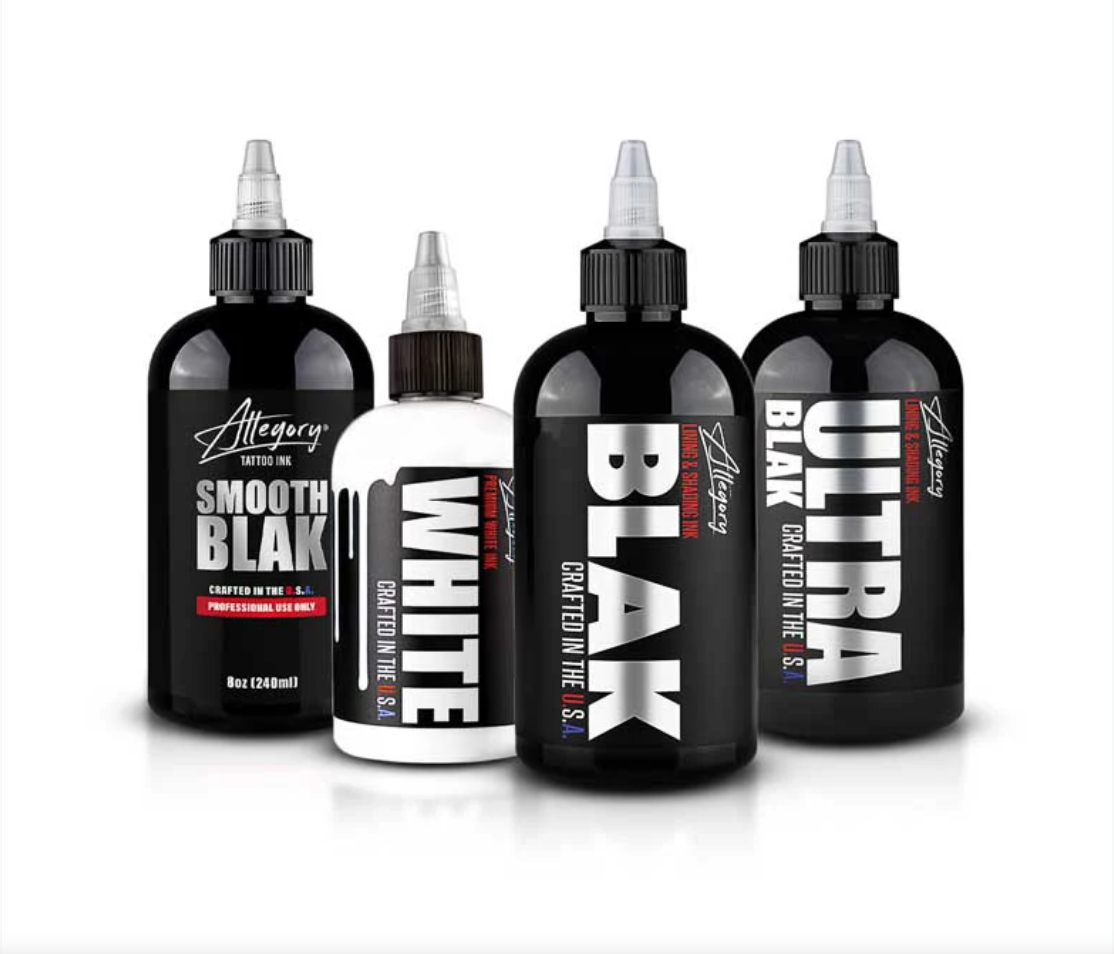
2. Allegory Ink
The Reputation: A premium, hyper-consistent American brand that has quickly become a holy grail for ultra-smooth fine line work, precise lining, and rich, predictable shadows.
The Formulation Base: Allegory avoids complex synthetic fillers, utilizing a highly refined, silky liquid-dispersed pigment matrix. Their carrier base is composed of purified water, alcohol, and high-purity palm oil glycerin, which gives it an exceptionally smooth, uniform flow that glides into the skin effortlessly.
Key Ingredients: Their flagship formulas like Allegory BLAK and the hyper-saturated Allegory Ultra BLAK are 100% vegan and organic. They include a built-in glass marble agitator in every bottle to ensure the carbon particles blend flawlessly before every pour.
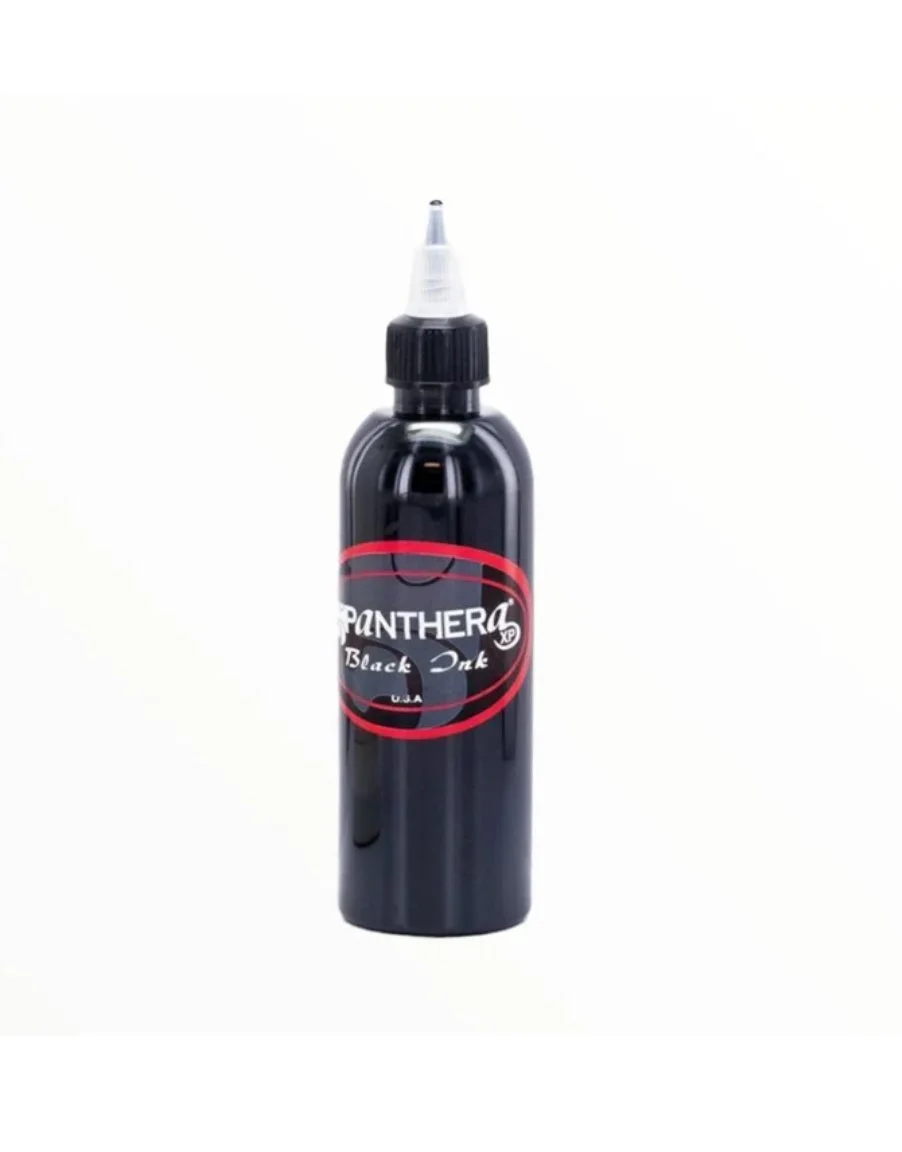
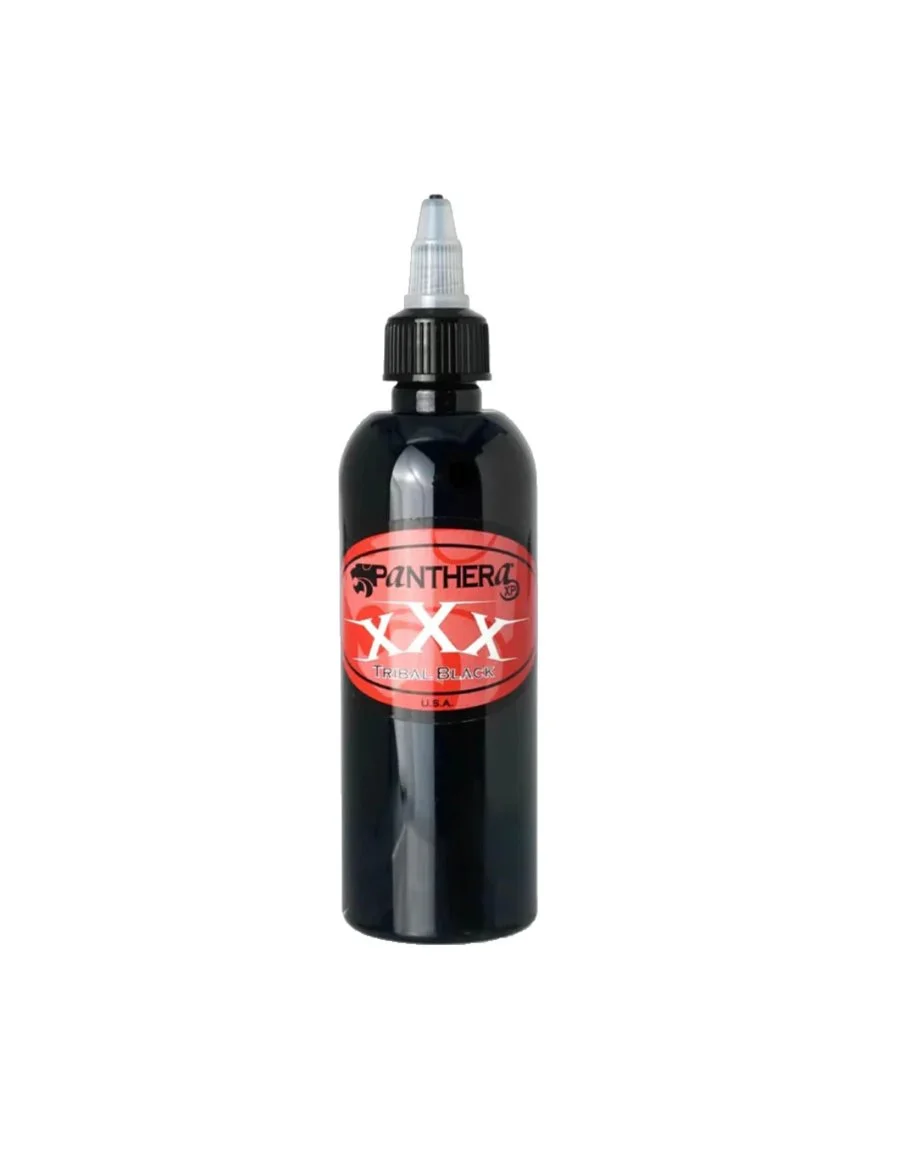
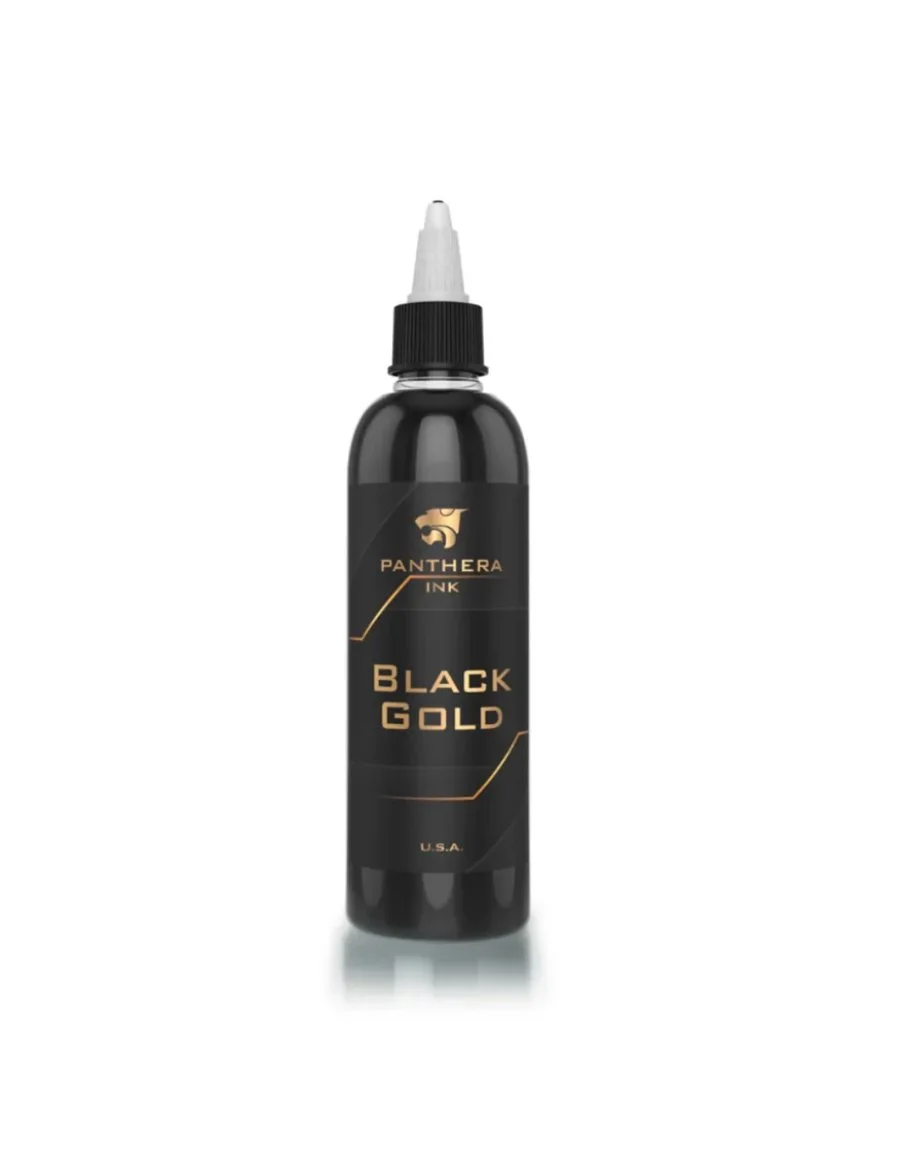
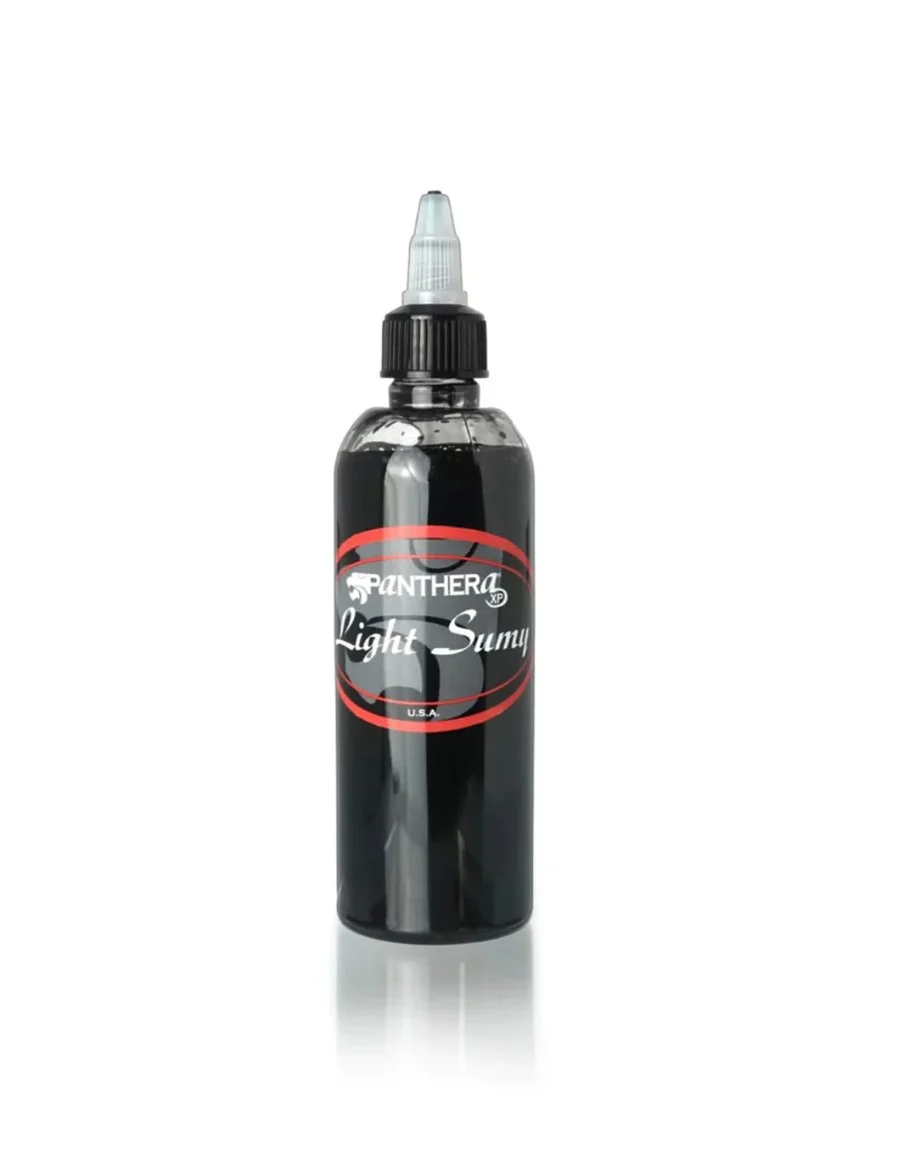
3. Panthera Ink
The Reputation: A premium European brand revered by realism and fine-line artists for producing ultra-velvety grays and deep, dark shading washes.
The Formulation Base: Engineered to cause less skin irritation, Panthera utilizes a highly refined, sterile water and glycerin matrix that carries the pigment molecules evenly without clumping.
Key Ingredients: Utilizing high-purity Carbon Black, their formulas (like Panthera Liner and XXX Tribal Black) are completely sterilized via gamma radiation. They are heavily celebrated for healing with a stark, "chalkboard matte" dark finish rather than a glossy look.
The Elite Colored Inks (Saturation, Vibrancy, and Smooth Packing)
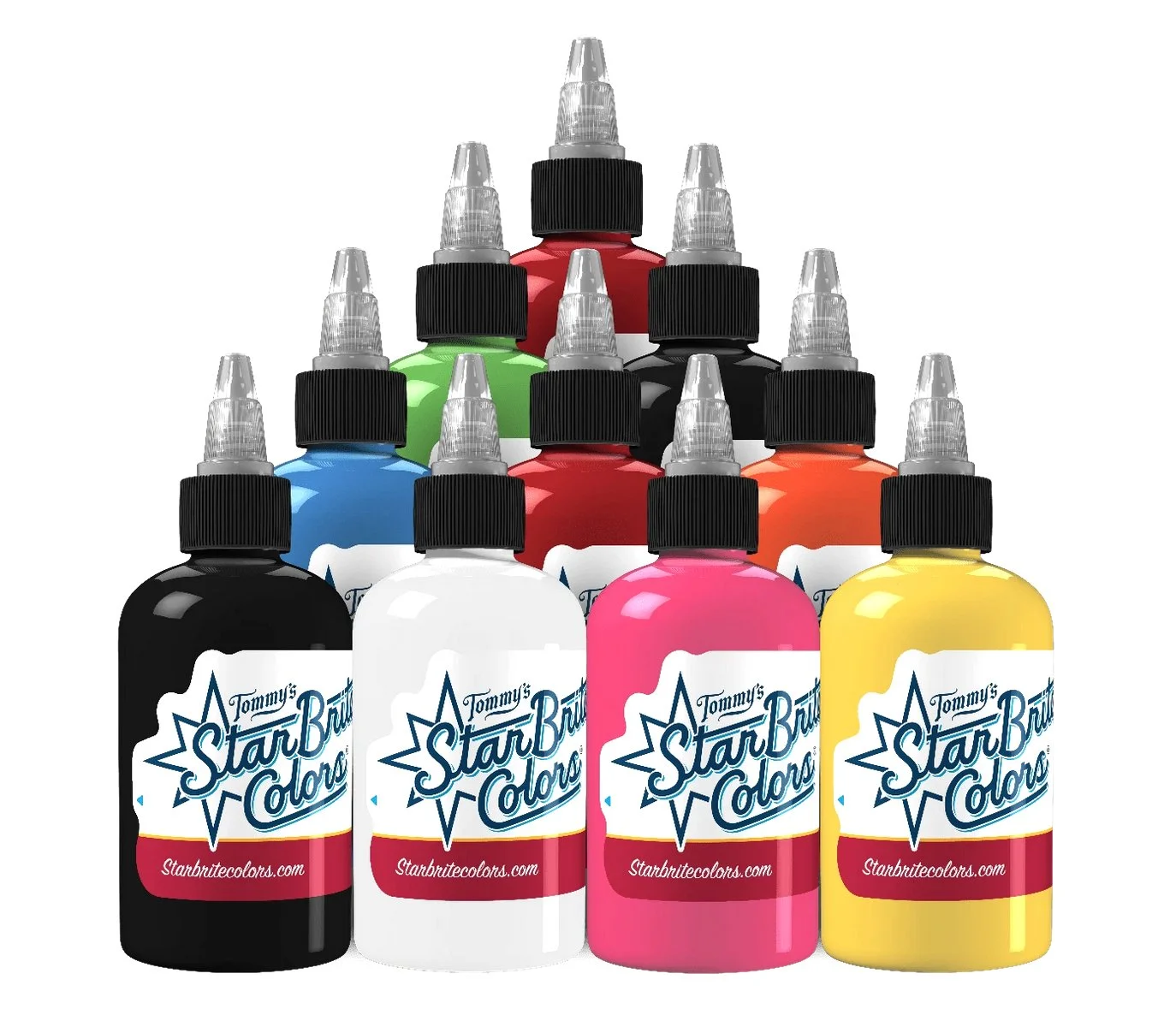
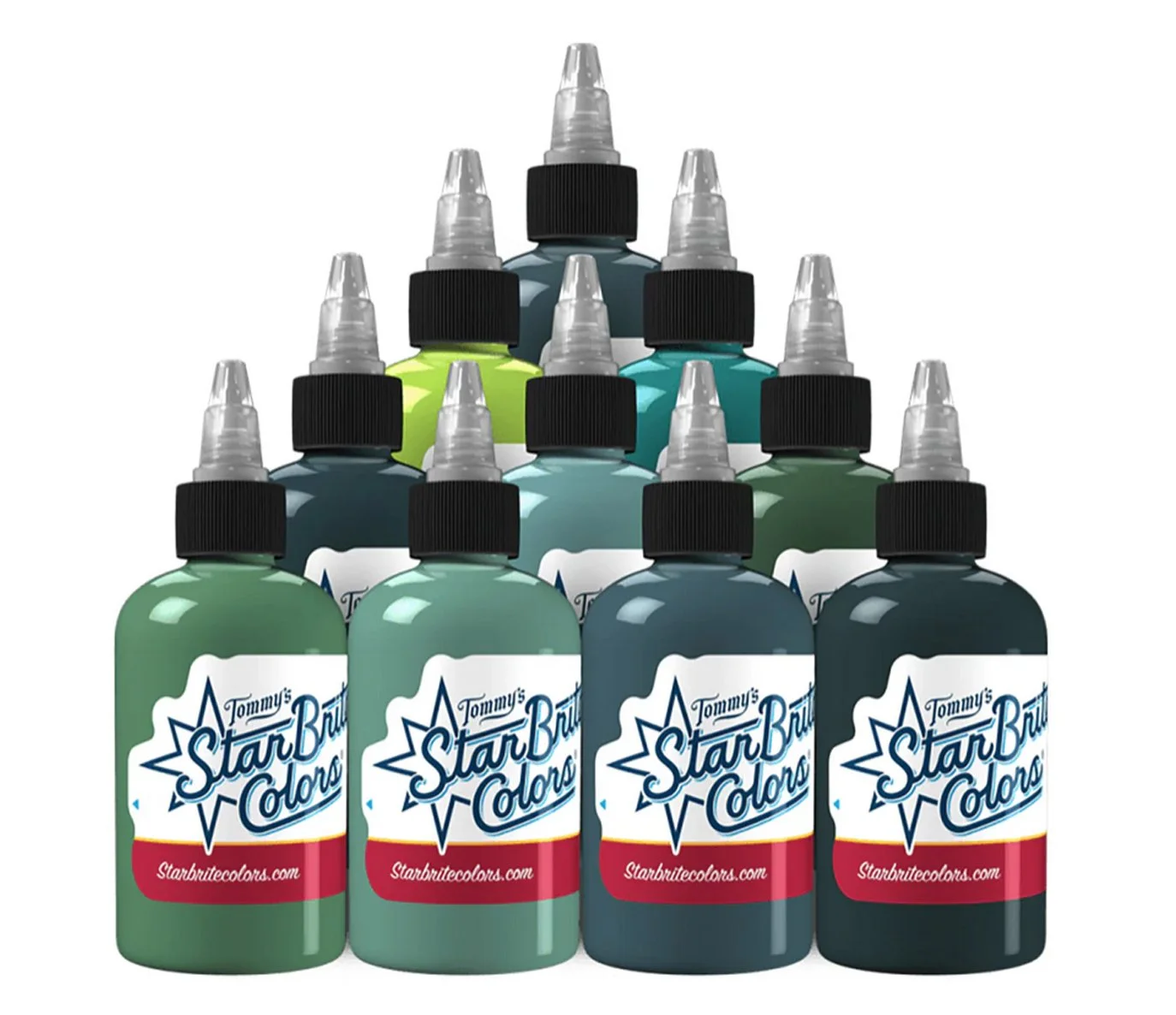
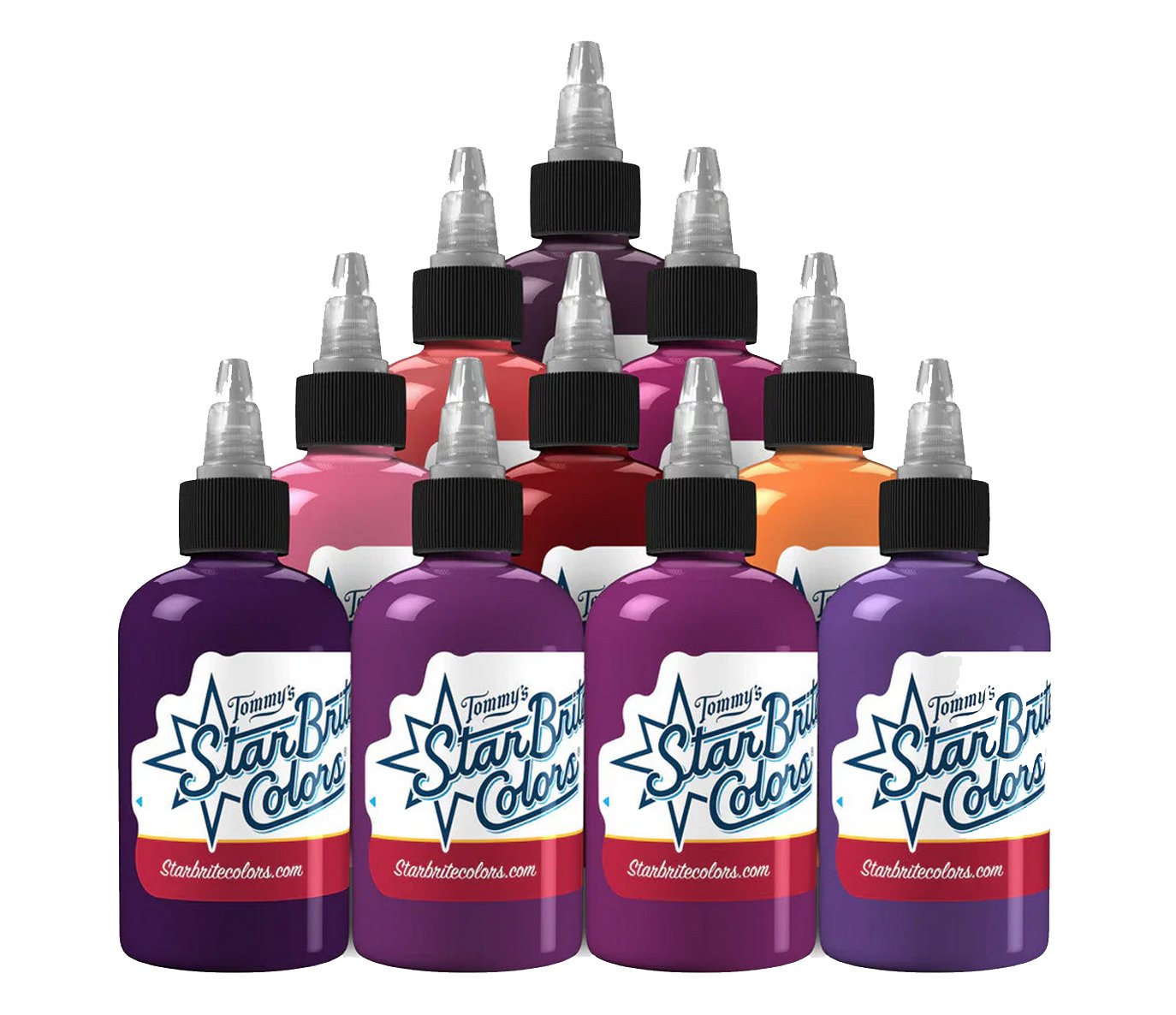
4. StarBrite Colors
The Reputation: A legendary, time-tested American brand known for its exceptional history of safety and hyper-vivid consistency. It is an elite, trusted staple utilized for saturated color packing by high-caliber studios like Misfits Tattoo.
The Formulation Base: StarBrite utilizes a specialized surfactant-based aqueous dispersion. Their carrier liquid is a highly refined, medical-grade matrix of purified water, isopropyl alcohol, and vegetable-derived glycerol. This precise ratio keeps the pigment perfectly suspended, ensuring an incredibly smooth, fluid flow out of the tube.
Key Ingredients: Manufactured by Tommy’s Supplies in an ISO 8 certified cleanroom with strict HEPA filtration, StarBrite relies on premium, highly screened synthetic organic and inorganic powders (like Pigment Red 210). Every single batch undergoes rigorous gamma radiation sterilization, ensuring the ink is 100% sterile, entirely vegan-friendly, and free of toxic heavy metals.
5. Eternal Ink
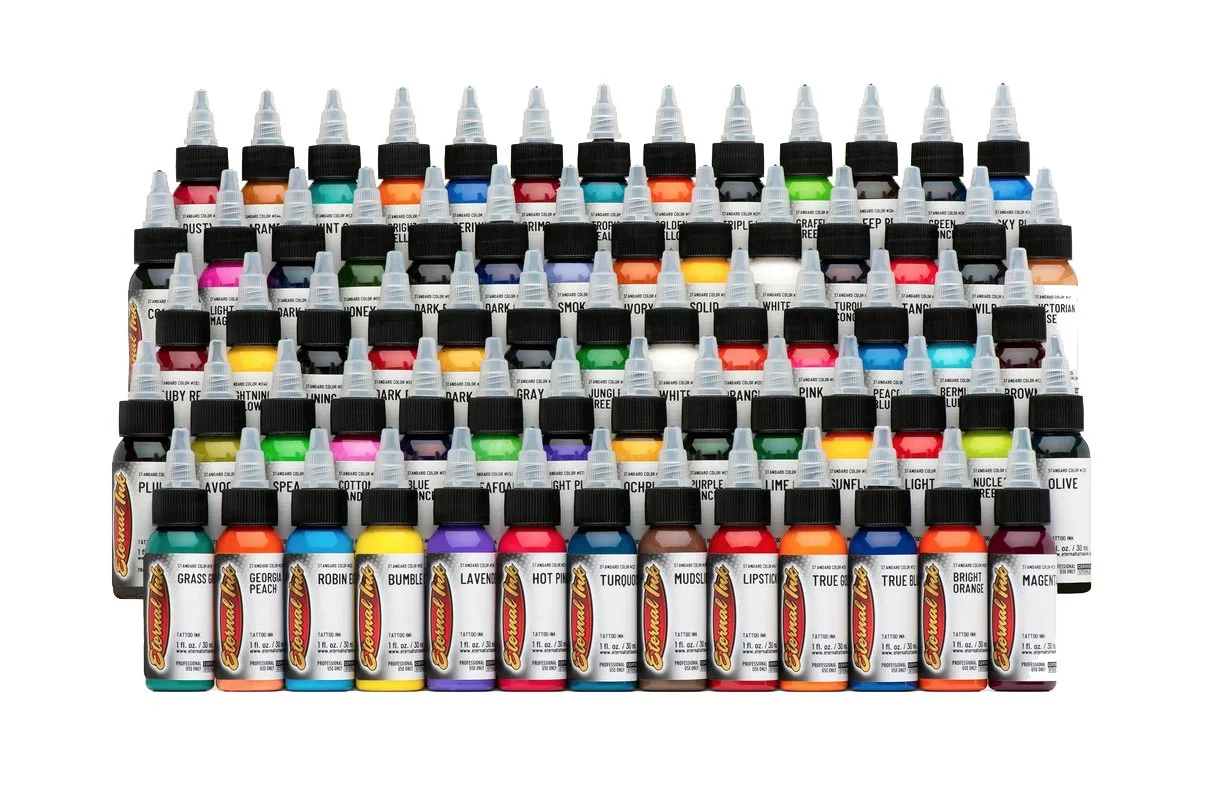
The Reputation: The undisputed heavyweight for massive, bright color palettes used in American traditional, Japanese Irezumi, and color realism styles.
The Formulation Base: Eternal focuses heavily on long-term shelf stability and a fluid mid-session experience. They use a standard medical-grade carrier mixture of water, ethyl alcohol, and high-purity glycerin. The glycerin adds a slightly thicker consistency, keeping the heavy volume of pigment from drying out in the ink cap.
Key Ingredients: They are heavily committed to vegan, cruelty-free synthetic organic pigments. Their massive color line relies on strict batch consistency, meaning a bottle of Bright Orange bought today uses the exact same molecular ratio as one bought five years ago.
6. World Famous Ink
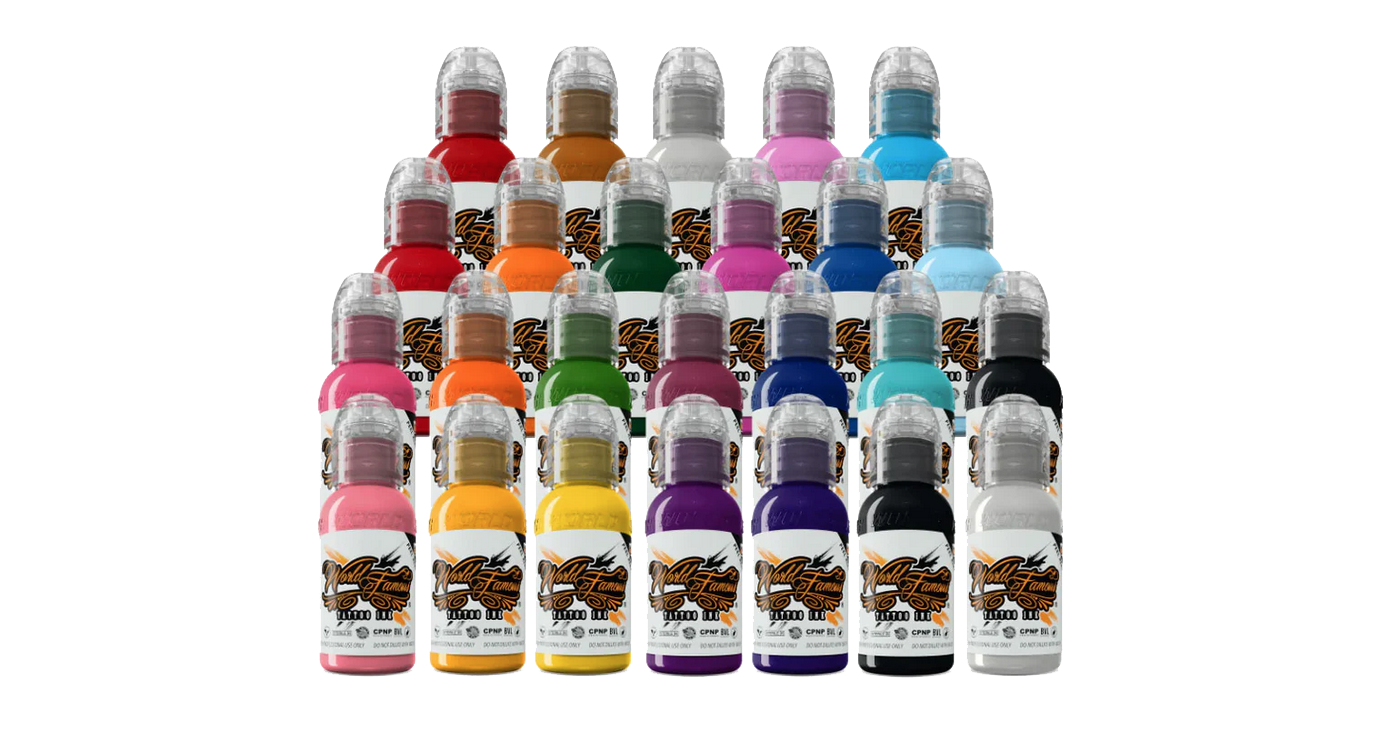
The Reputation: Renowned for high-saturation density, fast skin entry, and smooth, even packing.
The Formulation Base: World Famous has heavily adjusted its global lineup to match modern global safety standards. Their Limitless line is specifically engineered to be entirely EU REACH-compliant, omitting thousands of traditional pigment elements while maintaining brightness.
Key Ingredients: They rely heavily on highly purified, non-toxic azo compounds and iron oxides. Their carrier base balances water and a mild sterile alcohol matrix to ensure high saturation with minimal passes, lowering overall skin trauma.
7. Solid Ink
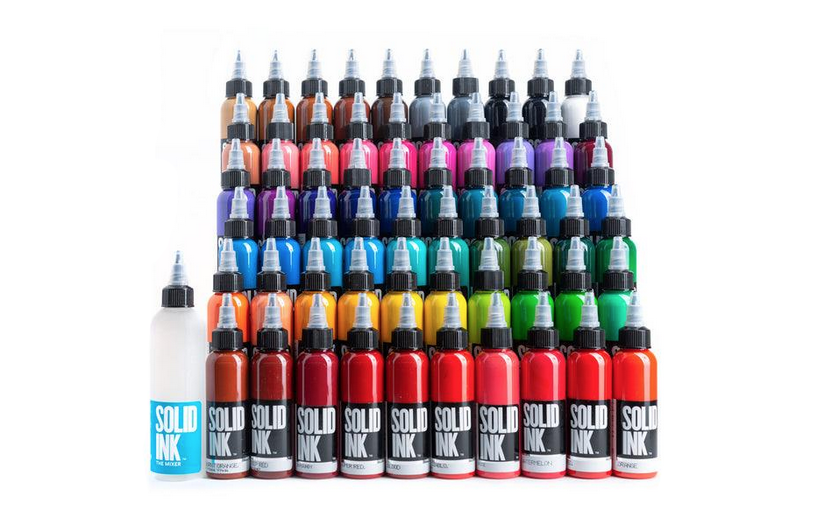
The Reputation: Created by a professional tattoo artist specifically for dense, punchy color packing that heals incredibly bright.
The Formulation Base: Solid Ink avoids unnecessary chemical additives, keeping a minimal, classic carrier mix of distilled water, isopropyl alcohol, and witch hazel.
Key Ingredients: This brand boasts an exceptionally high pigment load, utilizing hyper-concentrated organic powders. Because they don't dilute their colors down with excessive fillers, the ink goes in easily and stays extraordinarily vibrant long after the healing phase is over.
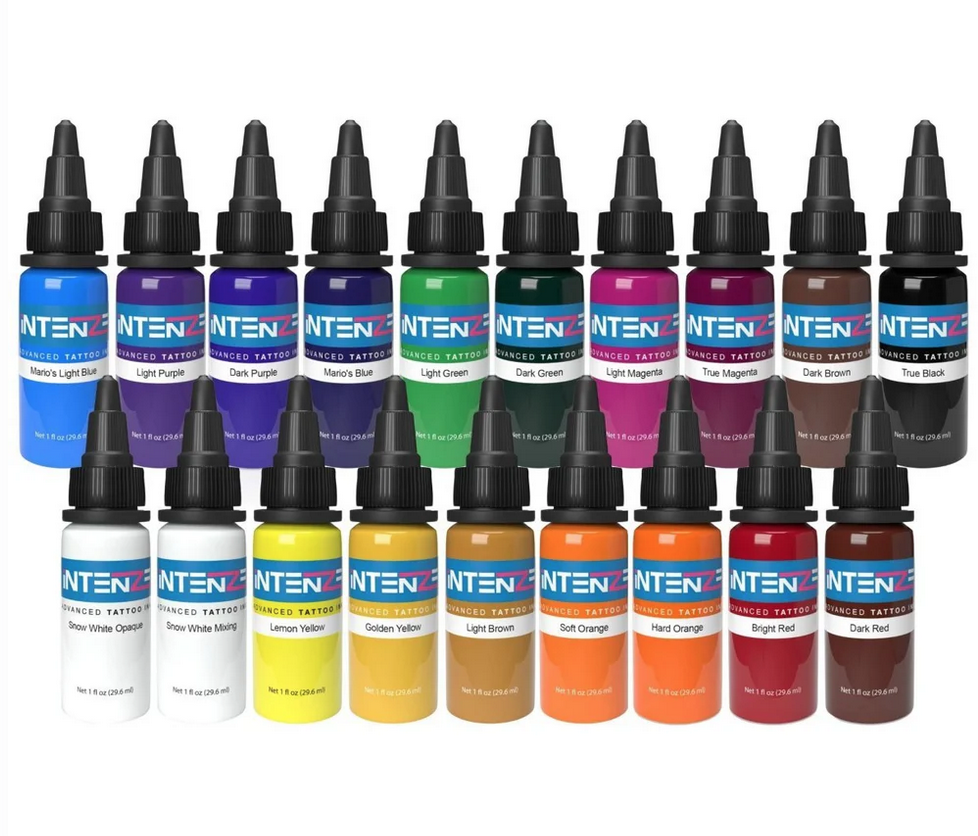
8. Intenze Ink
The Reputation: Founded in 2002 by Mario Barth, Intenze revolutionized the industry by becoming the first brand to independently sterilize every batch. It is globally trusted for its exceptional healed longevity and rich color saturation.
The Formulation Base: The ink utilizes a balanced blend of distilled water, vegetable glycerin, and isopropyl alcohol for a smooth, medium-thin consistency. This carrier network maximizes flow efficiency and prevents the ink from drying out during long sessions.
Key Ingredients: The line pairs vibrant organic color pigments with stable mineral pigments for deep, solid blacks and whites. The 100% vegan formulation includes soothing witch hazel extract and is completely free of acrylic thickeners and heavy metals.
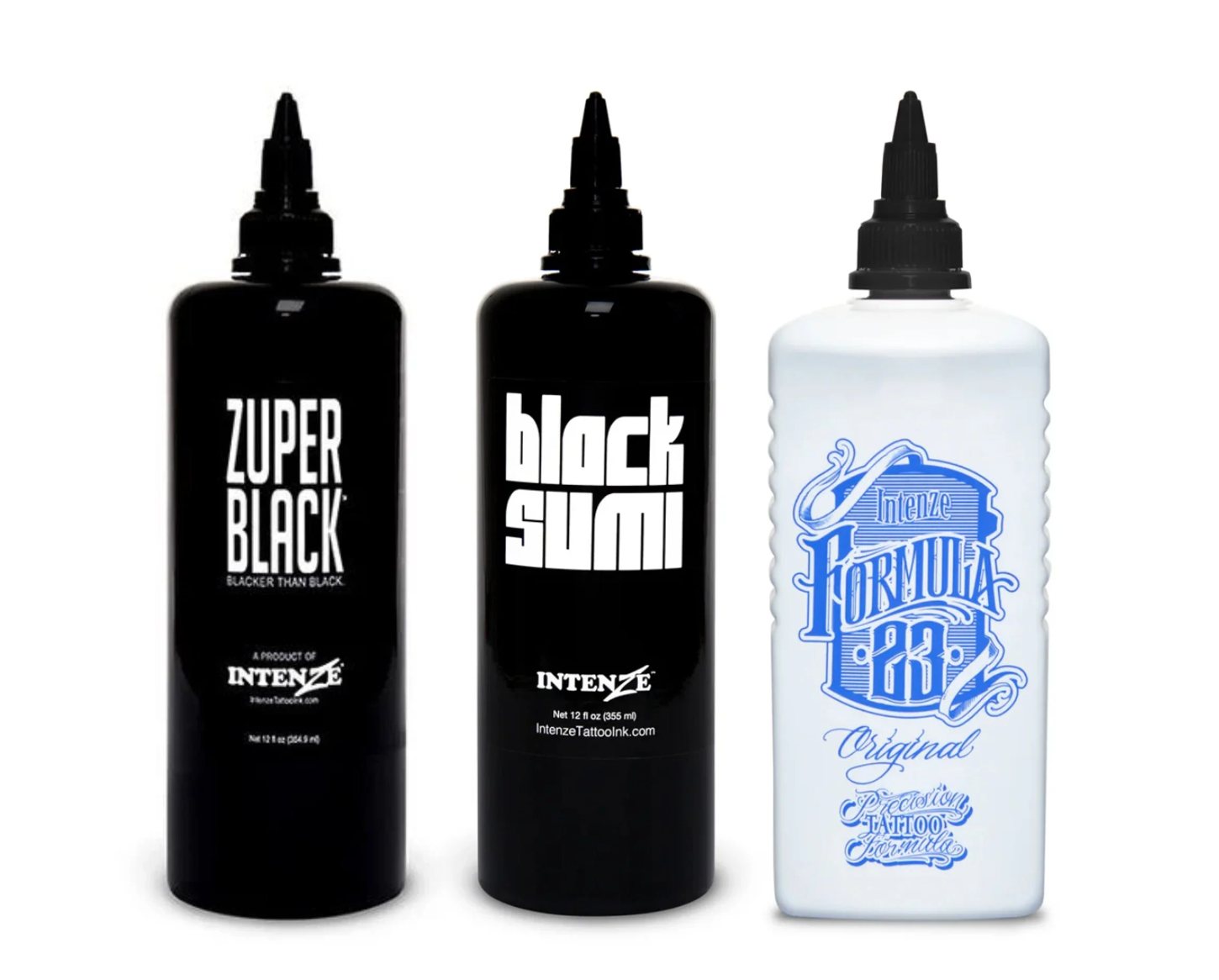
Zuper Black & Black Sumi: Intenze's specialty blacks are industry benchmarks, led by Zuper Black, an ultra-dense, highly concentrated pigment famous for being one of the darkest, most light-absorbent outlining and solid-fill inks on the market. In contrast, Black Sumi is a legendary, medium-viscosity shading ink specifically engineered to replicate traditional Japanese wash-painting gradients and seamless grey washes. Both formulas utilize high-purity, sterile carbon black mineral pigments suspended in the brand's classic vegan base of distilled water, vegetable glycerin, isopropyl alcohol, and soothing witch hazel extract.
Shading Secrets: How Artists Mix Custom Gradients and Shading Washes
When you see a flawless black and grey realism piece with soft, smoky transitions, the artist didn't just magic that into the skin. They achieved those perfect gradients by precision-diluting their lining black ink right at their station using a series of ink caps and a specialized diluent.
To break down a heavy black ink into smooth, stepping-stone shades—often arranged in a 3-cap to 5-cap gradient setup ranging from dark to light—artists mix the ink with highly specific liquids.
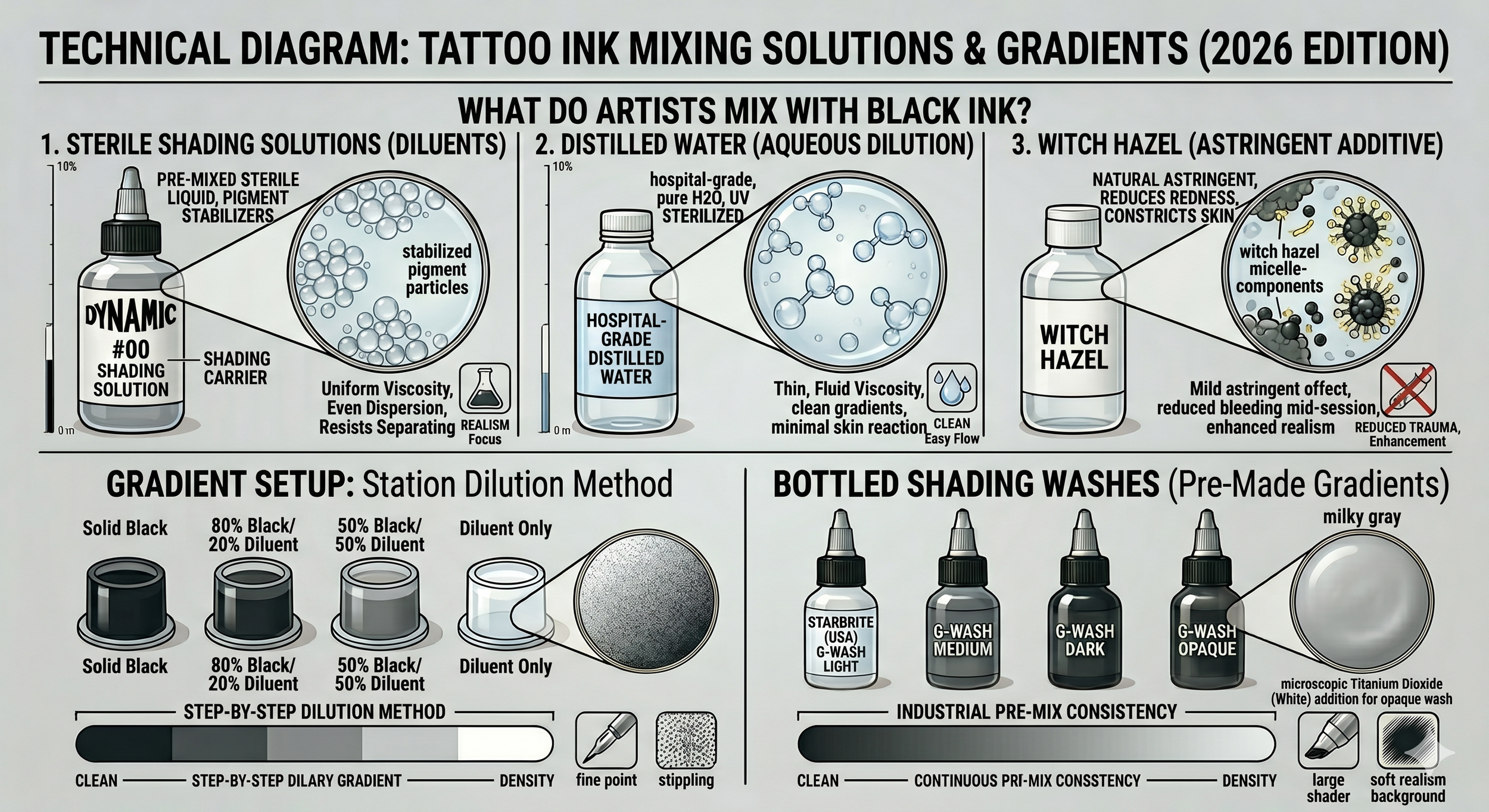
What Do Artists Mix With Black Ink?
You should never use standard tap water, as it is loaded with microscopic bacteria and mineral impurities that can easily trigger an aggressive skin infection. Instead, professional artists rely on three safe, predictable mixing agents:
Pre-Made Shading Solutions (Diluents): Brands like Dynamic (#00 Mixing Solution) or Eternal manufacture sterile liquids explicitly engineered to break down black ink. These solutions match the chemical properties of the ink’s original carrier fluid, meaning the diluted ink stays completely uniform without the pigment separating or separating into layers in the cap.
Distilled Water: Purified through steam distillation and UV-sterilized, this hospital-grade water thins out the black pigment safely, creating incredibly clean, fluid gray washes.
Witch Hazel: A natural, alcohol-free or low-alcohol herbal distillate. Witch hazel is highly favored by black and grey realism artists because it acts as a mild skin astringent. When mixed into ink caps, it instantly constricts broken blood vessels and reduces surface redness during the session. This prevents the skin from looking inflamed, allowing the artist to see the true, unclouded value of the light gray wash they are packing.
The Secret Behind Shading Solutions: What Else Is in Bottled Gray Wash?
When you buy a pre-made gray wash set or look at an artist's custom shading cups, you aren't just looking at black ink watered down with standard tap water (which is a massive health hazard and full of bacteria).
To dilute the intense pigment density of a lining black into a smooth gradient of gray washes, manufacturers use highly specialized shading solutions (also known as mixing solutions or diluents). A bottled gray wash—like StarBrite's pre-diluted sets or Dynamic's legendary #00 Mixing Solution—is carefully formulated using specific chemical carriers to maintain the ink's consistency and heal beautifully.
The primary clear ingredients added to create these flawless gradients include:
Ultra-Pure Distilled Water: The foundation of any shading solution. This is hospital-grade water that has been filtered, distilled, and UV-sterilized to ensure zero microbial contamination.
Witch Hazel (Hamamelis): A natural astringent that serves a dual purpose. On the chemical side, it helps thin out the pigment particles smoothly. On the skin, it constricts blood vessels, drastically reducing redness, swelling, and localized bleeding mid-session. This allows the artist to see the true tone of the gray wash they are packing without the skin's natural trauma masks getting in the way.
Vegetable Glycerin: A thick, clear humectant (moisture-binding agent). If you diluted black ink with just water, the mixture would become watery, spray wildly off the needle, and dry out in the ink cap within minutes. Glycerin adds a "buttery" weight and viscosity back into the wash, ensuring it clings evenly to the needle and goes into the skin smoothly.
Isopropyl Alcohol: Added in incredibly precise, minute percentages to act as an extra sterilization layer and stabilizer, preventing any bacteria from breeding inside the solution once the bottle is opened.
A Touch of White Ink (The "Milky" Trick): While standard gray washes are transparent, some premium, pre-made gray wash sets blend in a microscopic amount of Titanium Dioxide (White Ink) into their lightest shades. This creates an opaque, milky gray. Instead of relying solely on the client's skin peeking through a transparent wash, the white pigment adds an extra layer of true gray tone, allowing ultra-subtle background fades to stand out flawlessly on all skin tones.
When Ink Goes Dry: The Science of Expiration and Dried Ink Safety
A common issue artists face is opening an older bottle of ink only to find it thick, sludge-like, or completely dried out.
Why does tattoo ink dry out?
Tattoo ink doesn't "spoil" like food; rather, its liquid carrier components evaporate. Every time a bottle is opened, air enters. Over time, the sterile water and alcohol elements escape, leaving behind a hyper-concentrated, clumpy sludge of raw pigment powder and thick glycerin.
Is it safe to use dried or expired tattoo ink on a client?
Absolutely not. If a bottle of ink has dried out significantly or has passed the manufacturer's expiration date (usually 2 to 3 years from production), it must never be used on human skin.
While the raw mineral or organic pigment powders themselves don't technically go bad, the broken sterile seal and liquid evaporation create a massive safety risk. Airborne bacteria, mold, and pathogens can easily find their way into an open bottle over months of sitting on a shelf. Furthermore, when ink dries out or clumps permanently, the pigment particles bind together into a grainy texture that flows poorly, tears up the skin, causes excessive trauma, and heals unpredictably patchy.
FAQ: Safety, Allergies, and the Science of Wear
Why do some tattoo inks look brighter or darker than others?
It comes down to pigment load and skin chemistry. Brands like Solid Ink and StarBrite pack a higher percentage of raw pigment powder into their bottles, resulting in a more vivid layer under the skin. Furthermore, tattoo ink sits beneath your epidermis. Your natural skin tone acts as a filter over the ink; a shade will look vastly different depending on the melanin levels of the skin sitting on top of it.
Do tattoo inks cause cancer or other chronic illnesses?
To date, there is no definitive, large-scale medical study directly linking professional tattoo ink to skin cancer or systemic illnesses. However, low-quality counterfeit inks can contain trace impurities or polycyclic aromatic hydrocarbons (PAHs), which are classified as carcinogens. This is why buying from highly regulated, reputable brands who actively test for heavy metals and impurities is non-negotiable.
Why does red tattoo ink cause the most allergic reactions?
If a tattoo is going to act up, it’s almost always the red. Historically, red pigment was made from mercury sulfide (cinnabar). While that is banned now, modern red dyes still rely on complex chemical compounds like Naphthol AS or azo pigments, which have a molecular structure that your immune system is far more likely to flag as a foreign invader. This can lead to localized itching, swelling, or granulomas (small bumps).
How does UV light affect tattoo ink and cause fading?
Sunlight is the ultimate tattoo killer. Ultraviolet (UV) radiation penetrates the skin and breaks down the chemical bonds of the pigment molecules over time. Once these particles are shattered into smaller pieces, your body’s white blood cells (macrophages) can finally carry them away, which is exactly how a tattoo fades. Photodegradation affects lighter organic pigments (like yellows and light pinks) much faster than heavy mineral pigments or carbon black.
Conclusion
At its core, tattoo ink is a highly specialized blend of solid pigments suspended in sterile liquid carriers. While black ink relies almost entirely on time-tested carbon black, colored inks utilize a complex mix of organic dyes and natural minerals, and white ink depends heavily on opaque titanium dioxide.
Choosing elite black ink brands like Dynamic, Allegory, or Panthera ensures sharp lines and rich shading, while utilizing top-tier color innovators like StarBrite, Eternal, World Famous, or Solid Ink guarantees a highly regulated, vegan-friendly formula designed to maximize longevity. By understanding what goes into your skin—and how variables like UV light and immune responses affect the pigment—you can ensure your body art stays safe, bold, and vibrant for decades.
Are you ready to bring your vision to life? Head over to our website to browse our resident artist portfolios and lock in your session.
👉 [Click Here to See Our Artists & Book Your Next Tattoo!]